
Reviewed · FLORENCE WALKING TOURS
The Best of Florence Walking Tour in a Small Group
Florence’s best introduction is often a walk that connects the city’s big sights into one clear story. This tour follows the Medici trail from San Lorenzo and the Duomo to Piazza della Signoria, the Uffizi, and Ponte Vecchio, with a local guide explaining how power, art, religion, and money shaped the city.
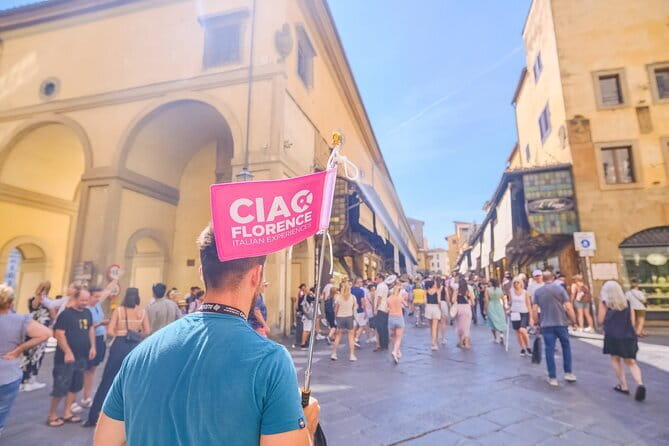
I like the small maximum of 15 people and the whisper system, which should make it easier to hear in crowded squares. I also like the practical local advice, including places to eat, street food, backstreet churches, and sights worth returning to. The main consideration is time: at about 1 hour 45 minutes, most stops are exterior viewpoints rather than full museum or church visits.
Key points at a glance
- Medici story from San Lorenzo to Palazzo Pitti: The route gives Florence a useful family-centered storyline instead of treating each monument as an isolated stop.
- A compact introduction to the historic center: You cover major sights on foot without spending hours inside one museum.
- Local guides with different strengths: Manuel, Camilla, Simona, Samona, Sarah, and Julio are among the guides praised for humor, local advice, and clear storytelling.
- Whisper system included: You can hear the guide while moving through busy streets and crowded piazzas.
- Small-group format: The group is capped at 15, though the actual size can vary and one account found the group somewhat larger than ideal.
- Best taken early in your stay: Use the walk to decide which churches, museums, restaurants, and shops deserve more of your time.
Why this Florence walk works as a first-day orientation
Florence can feel compact on a map but confusing on foot. The Duomo, Medici quarter, Uffizi, Palazzo Vecchio, and Ponte Vecchio are close together, yet each carries a different piece of the city’s story. This walk ties them together in a way that helps you understand what you are seeing later.
The central theme is the Medici family. You begin near their church and burial chapels, pass the palace where their banking power became political power, then move toward the civic and artistic center of Florence. By the time you reach the Arno, you have a basic framework for understanding why so much art and architecture is concentrated in such a small area.
I especially like this approach for a first visit. You are not spending the whole tour inside one building, so you get a feel for Florence’s streets and public spaces. Guides also point out details you could easily miss on your own, from architectural features to small side streets and local food stops.
The tour is offered in English and begins at 12:15 pm outside Caffè Scudieri Firenze in Piazza di San Giovanni. That timing can work well after a morning arrival or an early museum visit, though the midday sun may matter in warmer months. Wear comfortable shoes, bring water, and expect a steady walk over busy city paving.
More walking tours in Florence:
- Florence: Guided Walking Tour
★ 4.5 · 3,334 reviews - Skip the line: Uffizi and Accademia Small Group Walking Tour
★ 4.5 · 3,135 reviews - Florence: Guided Walking Tour
★ 4.6 · 1,602 reviews
San Lorenzo and the Medici family’s first address
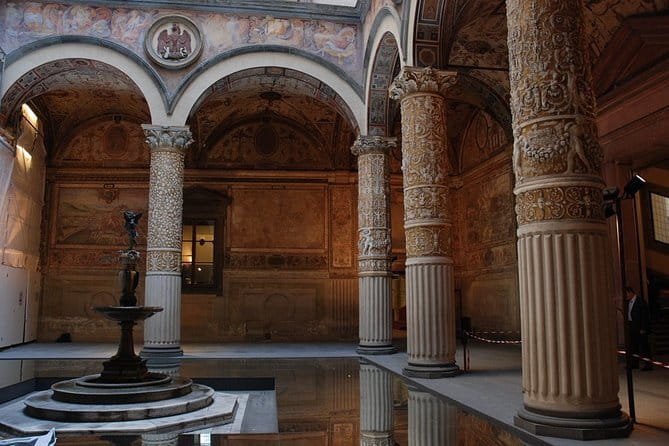
The first stop is the Basilica di San Lorenzo, one of Florence’s major churches and the burial place of principal Medici family members from Cosimo il Vecchio through Cosimo III. The guide uses this area to introduce the family that helped turn Florence into a center of banking, politics, and art.
The listed stop is only about five minutes and does not include admission. That means you should think of it as an exterior orientation and historical explanation, not a church visit. If San Lorenzo interests you, plan separate time to return and see the interior and Medici Chapels at your own pace.
Nearby, the Biblioteca Medicea Laurenziana adds another piece to the story. The library was backed by Medici Pope Clement VII and contains books and manuscripts from the family’s private collection. Its design by Michelangelo is especially important, as it shows how the Medici used architecture and learning to present themselves as more than wealthy merchants.
The guide can explain the library’s Mannerist design and its political purpose, but admission is not included. Five minutes is enough to understand why the building matters, not enough for a full look inside.
Medici Chapels and Palazzo Medici Riccardi
The Cappelle Medicee were built as extensions to Brunelleschi’s earlier church. Their purpose was direct: to celebrate the Medici family as patrons of the church and Grand Dukes of Tuscany. The New Sacristy was designed by Michelangelo, giving this short part of the walk a strong connection to Florence’s most famous artist.
Again, admission is not included, and the tour does not promise an interior visit. I see this as a useful preview. You learn why the chapels matter, then you can decide if you want to return for a longer visit.
The next stop, Palazzo Medici Riccardi, was built for Cosimo de’ Medici between 1444 and 1484. This is where the family’s private wealth began to look like public authority. The palace is a good reminder that Florence’s Renaissance was not simply a story of artists working in isolation. Bankers, churchmen, rulers, architects, and patrons were closely linked.
The guide’s job here is to give you the connections. Manuel, Camilla, Simona, and Samona have been singled out for making these links clear and lively, often adding humor or personal details. Sarah is also noted for explaining the city’s famous families and artists in a way that works well for a first visit.
The Duomo complex: Florence’s most famous view
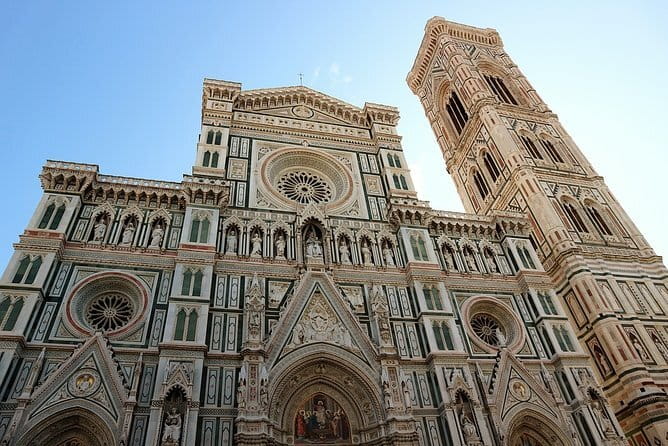
The walk then reaches Piazza del Duomo, where you see Santa Maria del Fiore, the Baptistery of San Giovanni, Brunelleschi’s Cupola, and Giotto’s Campanile. This is Florence at its most visually intense, so a guide helps you know where to look and what each building contributes.
The cathedral began in 1296 in the Gothic style, based on a design by Arnolfo di Cambio. Its façade uses white, green, and pink marble, while the wider cathedral complex forms part of the UNESCO-listed historic center.
The Baptistery across from the cathedral is one of Florence’s oldest buildings. It was built between 1059 and 1128 in the Florentine Romanesque style. Its position opposite the cathedral makes the square easy to understand once someone explains how the buildings worked together in religious and civic life.
Brunelleschi’s dome gets about ten minutes, more than most other stops. It remains the largest brick dome ever constructed and was once the largest dome in the world. A short explanation here can make a major difference. Instead of seeing only a huge orange roof, you begin to understand the engineering problem and the ambition behind it.
Giotto’s Campanile brings a different kind of beauty. Its colored marble, sculpture, and Gothic design make it one of the key architectural features of the square. The tour includes several short views of the cathedral area, so do not expect a full climb, museum visit, or guaranteed interior access. Tickets and admissions are generally not part of the tour, apart from the exterior viewing of the cathedral area.
One useful tip is to take notes here. You may later want to book a separate visit to the cathedral complex, dome, bell tower, or chapels. This walk helps you choose, but it is not a substitute for those longer visits.
A completely different way to spend an afternoon in Florence:
- Florence: Skip-The-Line Uffizi Gallery Timed Entry Ticket
★ 4.5 · 27,832 reviews - Tuscany Day Trip from Florence: Siena, San Gimignano, Pisa and Lunch at a Winery
★ 5.0 · 21,634 reviews - Florence: Timed Entrance Ticket to Michelangelo’s David
★ 4.6 · 16,983 reviews - Florence: Michelangelo’s David Skip-the-Line Entry Ticket
★ 4.5 · 12,764 reviews
Piazza della Signoria and the civic heart of Florence
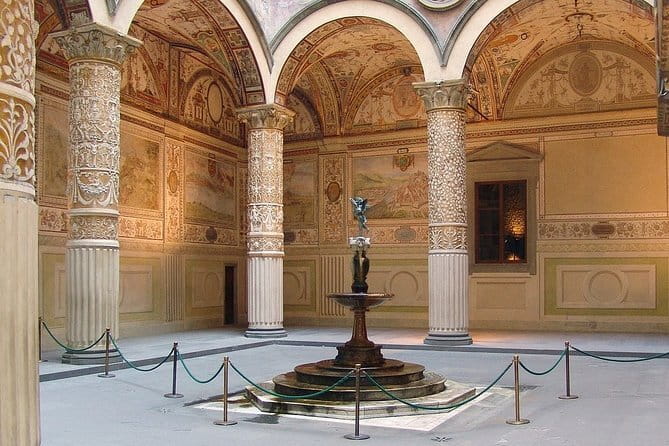
From the Duomo, the route continues to Piazza della Signoria. This L-shaped square is one of Florence’s key public spaces and sits in front of Palazzo Vecchio. It also provides the approach to the Uffizi Gallery.
The square is free to view and works well as an outdoor lesson in Florentine politics. Palazzo Vecchio was the city hall, built in the form of a fortress-palace. Its severe exterior makes more sense once you understand that Florence needed a seat of government that could project strength.
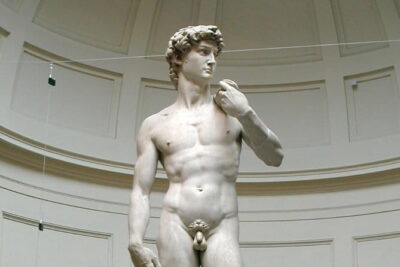
Outside, you can see the copy of Michelangelo’s David and the statues in the adjacent Loggia dei Lanzi. The tour does not include Palazzo Vecchio admission, so the focus is on the square, exterior architecture, and the people and events connected with the space.
I like this portion because the city’s political and artistic stories meet in one place. A guide can explain why certain sculptures were positioned here and how public art could send a message. Julio has been praised for handling the crowded central areas while keeping the walk moving, which matters in a square that can quickly fill with tour groups.
The Uffizi and the road toward the Arno
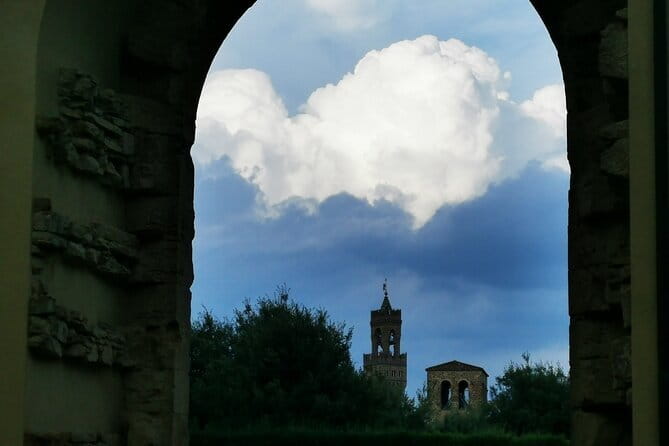
The Uffizi Gallery is next, although the tour does not include entry. The building began in 1560 under Giorgio Vasari for Cosimo I de’ Medici, who intended it to house the offices of Florentine magistrates. The name uffizi comes from the Italian word for offices.
That original purpose helps explain the building before you think of it only as an art museum. Inside, the Uffizi holds major Renaissance works, but this walking tour gives you the outside setting and the Medici reason for creating the complex. If you plan to visit the gallery, reserve separate time. Five minutes at the exterior cannot do justice to its collection.
This is also where the route begins to shift from political Florence toward the river and commercial Florence. Guides often use this part of the walk to offer advice on what to see next. You may get suggestions for museums, churches, food, drinks, and places that are less obvious than the main tourist streets.
That advice is one of the tour’s better features. It turns the walk into a planning tool. You can ask about restaurants or street food, and you can mention whether you prefer famous sights or quieter corners. One visitor specifically requested less-touristy places and received a route with more local context and side streets.
Ponte Vecchio and the final view toward Palazzo Pitti
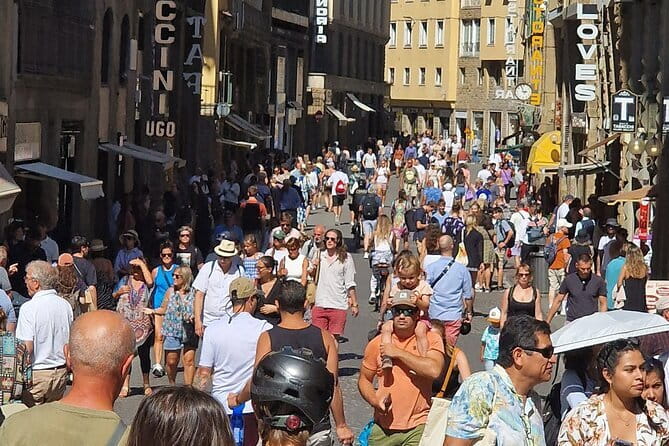
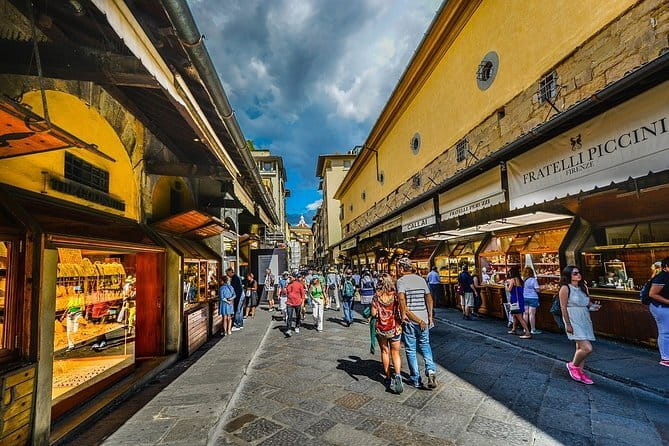
The tour finishes in the Ponte Vecchio area. This medieval bridge is the oldest bridge over the Arno in Florence and is known for its shops. Butchers, tanners, and farmers once occupied them. Today, jewelers and art dealers fill the bridge.
Ponte Vecchio is free to cross and is one of the most memorable places on the route. It can be crowded, so the whisper system remains useful if the guide continues speaking as the group moves. The endpoint may vary slightly within the indicated area, so treat Ponte Vecchio as the general finish rather than a precise meeting point.
Palazzo Pitti is included as the final landmark in the route’s story. The Medici bought the palace in 1549, and it became the main residence of the ruling families of the Grand Duchy of Tuscany. Later generations filled it with paintings, plates, jewelry, and other costly possessions.
The practical point is important: the walking tour does not include admission to Palazzo Pitti. If you want to visit the palace, plan another block of time. The guide’s explanation gives you a reason to return, especially if you are interested in how the Medici moved from a merchant family into grand-ducal life.
How the guides shape the experience
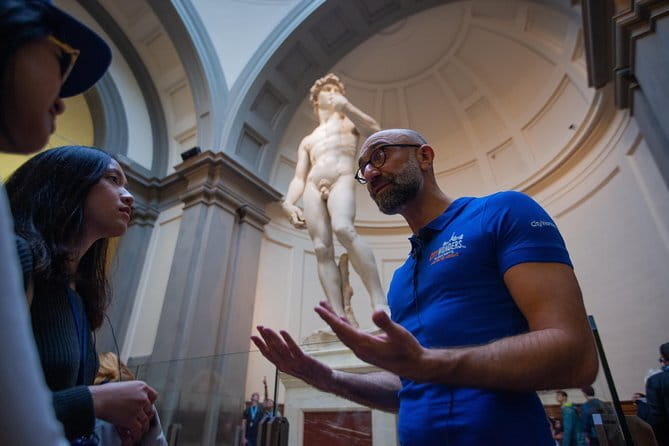
The tour’s strongest feature is the guide rather than any single monument. Manuel is repeatedly praised for turning the walk into a story, adding humor, adapting explanations for children, and offering tips that are not obvious in guidebooks. He also adjusted the pace for a group that could walk faster than usual.
Camilla is noted for combining art, architecture, and local suggestions, including backstreet shops and churches. Simona and Samona are described as engaging and clear, with personal stories and humor alongside the facts. Sarah is praised for answering questions and explaining Florence’s leading families and artists.
These individual styles can vary, but the pattern is useful. You are not signing up for a silent march from one famous façade to another. You can expect a guide who talks about the city as a lived-in place, points out details along the way, and gives practical ideas for the rest of your stay.
The group limit is 15 people, which is a sensible size for narrow streets and busy squares. One account found the group a little large, so do not assume every departure will feel private. The whisper system helps, but you should still stay near the guide when the group is moving.
Price, pace, and who gets the best value
At $59.26 per person, this is not the cheapest way to see Florence’s exteriors. It is also not priced like a full museum tour, and that distinction matters. Your fee pays for about 1 hour 45 minutes with a licensed guide, a small-group format, and the convenience of having the city explained in a sensible order.
I think the value is strongest if this is your first time in Florence, you have only a day, or you want a clear introduction before choosing your museums. It is also useful if you enjoy asking local questions about food and neighborhoods.
The value is weaker if you already know the historic center well or want long interior visits. Admission to San Lorenzo, the Medici Chapels, the Laurentian Library, Palazzo Vecchio, the Uffizi, Palazzo Pitti, and other paid sites is not included. You will need separate tickets and time for those places.
The pace is described as comfortable, but this remains a walking tour through a busy center. Most stops last about five minutes, with ten minutes at the dome. You will cover a lot of ground quickly, so comfortable footwear matters. Most people can participate, and service animals are allowed. The tour is near public transportation, but the supplied details do not specify a particular bus or tram route.
Free cancellation is available up to 24 hours before the 12:15 pm start. Poor weather or failure to meet the minimum group size can lead to a different date, another experience, or a full refund.
Should you book this Florence walking tour?
Book it if you want a clear first look at Florence, especially with local food advice and a guide who can explain the Medici connection between churches, palaces, museums, and bridges. It is a good fit for first-time visitors, short stays, families, and anyone who prefers context before entering major sights.
Skip it if your main goal is interior access to the Uffizi, Duomo, Medici Chapels, or Palazzo Pitti. For the best use of your money, take this walk early in your stay, listen for the guide’s recommendations, and then return to the places that deserve more time.
FAQ
How long does the tour last?
The walk lasts approximately 1 hour 45 minutes.
Where does the tour begin?
It begins at Caffè Scudieri Firenze, Piazza di San Giovanni, 19R, Florence.
What time does the tour start?
The scheduled start time is 12:15 pm.
Where does the tour end?
It ends in the Ponte Vecchio area. The exact endpoint may vary slightly within the indicated area.
Are entrance tickets included?
No. Admission is not included for most listed sites. The cathedral area includes a free exterior viewing, while the tour does not provide entry to the Uffizi, Palazzo Vecchio, Medici Chapels, Palazzo Pitti, or other paid attractions.
How many people can join the group?
The group is capped at 15 travelers, although the actual size may vary by departure. A whisper system is included so you can hear the guide more easily.
Recently added around Florence
- Accademia and Uffizi Small-group Guided Tour★ 4.5 · 8 reviews
- The David from Michelangelo.★ 5.0 · 3 reviews
- Combo: Accademia + walking + Uffizi Galleries Guided Tour★ 3.5 · 6 reviews
- The Complete Wine Tour Brunello, Nobile, Chianti wine experience★ 4.0 · 7 reviews
- The Best of Tuscany in 3 Days★ 4.5 · 13 reviews
- The Cooking Lab – Authentic Food Experience★ 5.0 · 113 reviews
- Florence Central Market Food Tour – Private Tour★ 4.0 · 7 reviews
- Family Friendly Florence Private City Tour★ 5.0 · 47 reviews
Florence Walking Tours, compared.
Skip the line: Uffizi and Accademia Small Group Walking Tour
Read our review →
Renaissance and Medici Tales Guided Walking Tour
Read our review →
Skip-the-Line Florence Highlights and David Walking Tour
Read our review →
Dark Mysteries and Legends Guided Walking Tour
Read our review →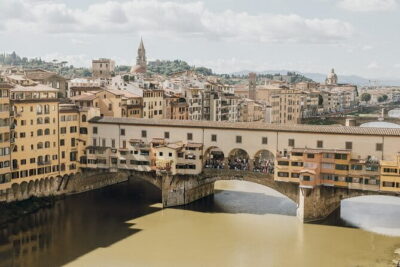
Florence in a Day: Michelangelo’s David, Uffizi and Guided City Walking Tour
Read our review →Browse the lists this tour appears in