
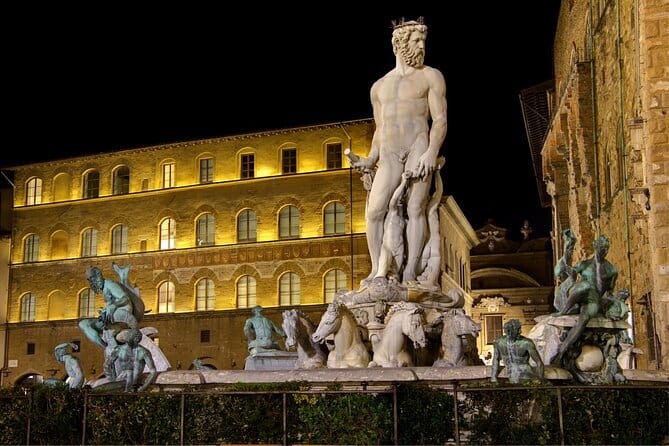
Reviewed · FLORENCE SUNSET AND EVENING TOURS
Florence Evening Walking Tour: Stories of Power, Love & Betrayal
Florence looks different after sunset, when the crowds thin and its palaces become backdrops for stories of Medici power, family feuds, forbidden love, and murder. This 90-minute walk begins at Palazzo Strozzi and crosses the Arno, linking famous sights with lesser-known corners of the old city.
I like two things here: the route gives you a quick orientation to central Florence, and the audio headsets help you hear the guide even on noisy streets. Guides such as Stefano, Francesca, Valentina, and Angelo have brought strong local knowledge and storytelling to the walk. The main drawback is the amount of talking. If you prefer architecture, photographs, and quiet wandering, the long historical tales may test your patience.
Key points to know
- The story begins with the Strozzi and Medici families: Florence’s grand buildings make more sense when you understand the rivalries behind them.
- The route crosses much of the historic center: Expect about four miles of walking, with frequent stops but little indoor sightseeing.
- Audio headsets are provided: You can follow the guide without standing shoulder to shoulder with the group.
- The evening setting helps: Cooler temperatures and softer light make this a useful choice on a hot day.
- The focus is scandal and storytelling: Tales of betrayal, political plots, romance, and violence matter more here than detailed art analysis.
- The tour ends near Ponte Santa Trinita: You finish close to restaurants and bars in Florence’s central district.
Florence after dark, told through family rivalries
This tour is less a standard sightseeing walk than a moving history lesson with Florence as its stage. You are not simply shown the Duomo, Palazzo Vecchio, or Ponte Vecchio. Instead, you hear how powerful families used palaces, marriages, politics, and violence to control the city.
The Medici family receives plenty of attention. That makes sense, since the family ruled Florence for more than 300 years and shaped many of the buildings and institutions you see. But the route also brings in the Buondelmonti and Strozzi families, along with the Guelf and Ghibelline divisions that split medieval Florence into rival camps.
At the listed price of $21.72 per person, I consider this a reasonable way to spend an evening, especially if you are new to Florence. You get an English-speaking guide, a group capped at 20 people, and an organized route through a large part of the center. The value depends heavily on your taste. If you enjoy stories and context, the price is modest. If you want to enter museums or spend time studying facades, you will need separate visits.
More sunset and evening tours in Florence:
- Winner 2025 Florence Sunset Food & Wine Tour by Eating Europe
★ 5.0 · 5,015 reviews - Florence: Evening Classical Music Concert
★ 4.6 · 574 reviews - Florence: Statue of David Evening Tour
★ 4.6 · 442 reviews
Palazzo Strozzi sets the tone
Meet in Piazza degli Strozzi, in front of the imposing Palazzo Strozzi. This is a fitting starting point because the building itself grew from a family contest for status and influence.
The guide introduces the Strozzi, Medici, and Buondelmonti families and explains how rivalry shaped Florence. The palace is impressive even from the outside, with its heavy stone facade and orderly Renaissance design. You do not go inside, so this opening stop is about setting the story rather than examining the building’s interior.
The first few minutes help you place the rest of the walk. Florence can feel like a series of beautiful streets without a clear pattern. Here, you begin to see the city as a place where powerful households competed for political control and public prestige.
Buondelmonti feuds and medieval Florence
A short walk brings you to Palazzo Buondelmonti. The stop introduces one of Florence’s most bitter family conflicts and the violence that followed.
This is where the tour’s dark tone becomes clear. The guide does not treat Florence as a postcard city of art alone. You hear about grudges, factional politics, and the way one family dispute could affect the whole city.
The stop lasts only a few minutes, but it gives the later stories a useful frame. If you like the political side of medieval history, you will find these connections engaging. If you came mainly for Renaissance art, the focus may feel far removed from Botticelli and Michelangelo.
Saint Apostoli and stories beneath the surface

At Chiesa dei Santi Apostoli, the group pauses outside the Church of Saint Apostoli in Borgo Santi Apostoli. The church is linked to old rituals, legends, and unsettling tales that are easy to miss if you hurry toward Florence’s larger attractions.
This is one of the tour’s strengths. The route does not spend all its time at the most photographed squares. You get a look at streets and buildings that you might pass without noticing during a daytime stroll.
The stop is outdoors, and admission is free. Bring your attention rather than expecting a formal church visit. The guide provides the meaning and atmosphere; you are not receiving a detailed architectural tour.
More walking tours in Florence:
- Florence: Guided Walking Tour
★ 4.5 · 3,334 reviews - Skip the line: Uffizi and Accademia Small Group Walking Tour
★ 4.5 · 3,135 reviews - Florence: Guided Walking Tour
★ 4.6 · 1,602 reviews - Florence: Renaissance and Medici Tales Guided Walking Tour
★ 4.8 · 1,549 reviews
Palazzo di Parte Guelfa and the city divided
At Palazzo di Parte Guelfa, the talk turns to Florence’s political factions. The building was tied to the Guelf side, one of the forces that divided the city during the medieval period.
The palace helps explain why Florence’s history can feel so complicated. Families were not only competing with one another for money and status. They were also tied to larger political loyalties, which could bring allies together one day and turn them into enemies the next.
This is a good place to ask questions if your guide welcomes them. Several guides on this tour have been praised for explaining connections and inviting questions, though the presentation style can vary. Some guides tell lively stories with humor. Others deliver a denser stream of facts.
The Tower of the Amidei and a violent past
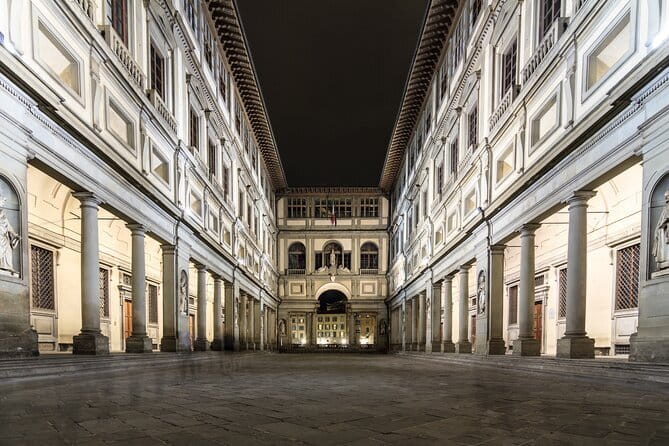
The Torre degli Amidei is another brief but memorable stop. The tower is presented as a witness to one of Florence’s bloodier family disputes.
The value here is not the tower’s size. It is the way the guide connects an otherwise easy-to-miss structure with the city’s social order. Medieval towers were not just defensive buildings or symbols of wealth. They also represented family power in a city where rival households lived close together and political arguments could become physical conflict.
You will spend only about five minutes here. The quick pace keeps the walk moving, but it also means you should listen closely. There is little time to study each place on your own.
Santo Stefano al Ponte and lesser-known intrigue

At the former church of Santo Stefano al Ponte, the guide continues with stories of forgotten plots and local scandals. The church is near the route toward Piazza della Signoria and the Arno, so this stop helps connect the quieter early streets with Florence’s most famous public spaces.
The building is not treated as a museum visit. You remain outside and hear about its associations with old intrigues and legends. That pattern repeats throughout the tour: the guide supplies the narrative, while the city provides the setting.
I would not choose this walk if you want long pauses for photography. Most stops last five or ten minutes, and much of that time is spent listening.
Piazza della Signoria, Florence’s political stage
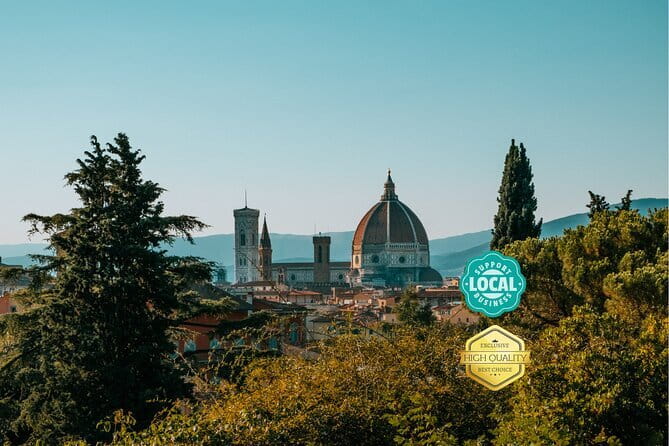
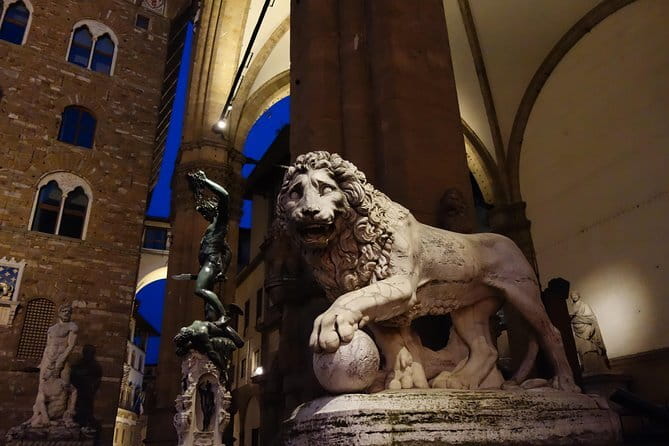
Piazza della Signoria is one of the most important stops. This was Florence’s political heart, and the surrounding buildings carry stories of power struggles, betrayal, and executions.
The square gives the guide a large public stage for explaining Palazzo Vecchio and the Uffizi. You will see famous sculptures and grand architecture, but the emphasis is on what happened around them. Florence’s public beauty is matched by a record of political maneuvering and personal danger.
This is also a useful orientation stop. If you are visiting Florence for the first time, you will likely return to this square during daylight. Hearing the stories first can make the next visit more meaningful, although you should plan a separate visit if you want to enter Palazzo Vecchio.
Palazzo Vecchio and the Uffizi from outside
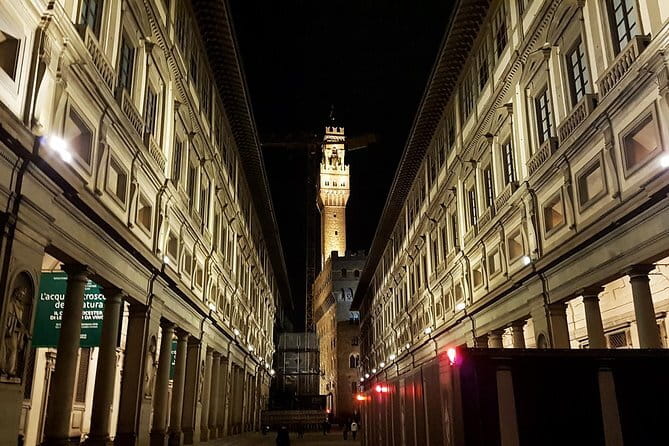
Outside Palazzo Vecchio, the guide focuses on assassinations, conspiracies, and struggles inside Florence’s seat of government. It is a short stop, but the building is one of the clearest examples of how politics and architecture meet in the city.
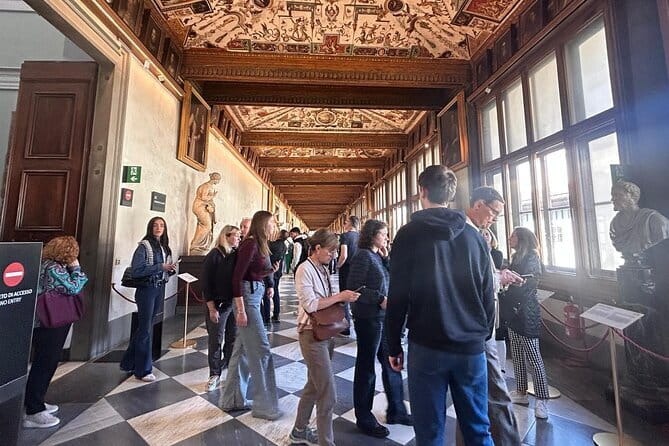
The group then passes the Uffizi Gallery. You hear about the Medici connection and the Botticelli and Michelangelo works held inside. The tour does not include Uffizi admission, and you do not receive a gallery visit, so think of this as a preview rather than an art tour.
That limitation matters. The Uffizi deserves several hours on its own, and a five-minute exterior stop cannot replace it. Still, the guide can give you a reason to notice the building and understand why the Medici family’s influence reached beyond government.
Ponte Vecchio and the crossing to Oltrarno
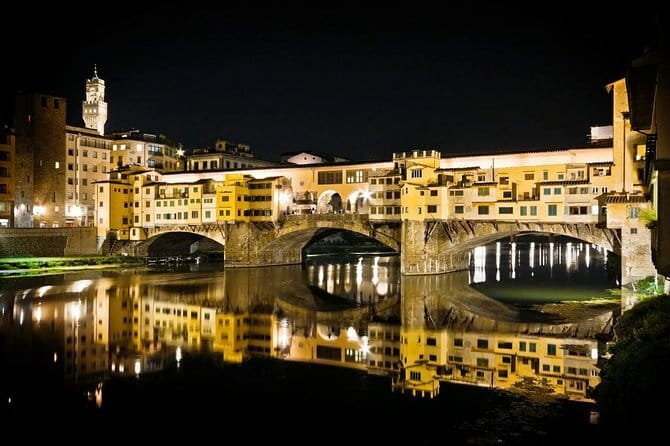
The walk continues across Ponte Vecchio, Florence’s most famous bridge. The bridge is presented through stories of secret dealings, romance, and old scandals rather than only its shops and views.
Crossing the bridge at night is one of the more atmospheric moments of the route. The river, the narrow span, and the surrounding buildings create a natural pause between the political center and the Oltrarno side of Florence.
The bridge can be busy, even in the evening, so the headset is particularly useful here. You can keep moving without losing the thread of the story. Be ready to walk at a steady pace and keep track of the group.
Palazzo Pitti and the Medici court
On the Oltrarno side, the group reaches Palazzo Pitti. The palace represents Medici wealth and authority, but the talk turns toward court politics, secrets, and the more troubling side of dynastic power.
Again, the stop is outside. You will not tour the palace interiors or its collections. The benefit is seeing how the Medici presence extended across the river and how the palace fits into the broader route through Florence.
This section may appeal most to people who enjoy political history. The palace is visually impressive, but the guide spends more time on the people who used it than on its rooms, art, or construction.
Bianca Cappello and a scandalous love story
Palazzo di Bianca Cappello is one of the most distinctive stops. The building, originally linked to the Corbinelli family, recalls Bianca Cappello’s relationship with a Medici duke.
Her story brings together love, social ambition, scandal, and an untimely death. It also gives the tour a personal angle after so much discussion of factions and public power. Florence’s history was shaped not only by laws and battles, but by marriages, affairs, family pressure, and the desire to rise in society.
This stop is a good example of the tour’s appeal. You are not just being told who lived in a palace. You are shown how a private relationship could become a public crisis.
Ponte Santa Trinita closes the walk
The tour ends at Ponte Santa Trinita, a graceful Renaissance bridge with views toward the river and surrounding palaces. The final stories bring together love, loss, political ambition, and Florence’s ability to rebuild after periods of conflict.
The end point is practical. You are close to restaurants and bars in the centro storico, making it easy to continue the evening. Several people have used the walk as a pre-dinner activity, though one useful warning is worth taking seriously: the route can feel long if you start hungry.
The advertised duration is about an hour and a half, but past descriptions of the walk refer to roughly four miles of movement. You stop often, yet you should wear supportive shoes and expect to remain on your feet. The tour is not suggested for strollers or baby carriages.
Guides, headsets, and the walking pace
The guide can make or break this experience. Stefano has been praised for his command of Florence’s ruling families and for clear historical explanations. Francesca has been noted for bringing the stories to life, while Valentina and Angelo have led walks with a strong focus on unusual tales, humor, and local character. Annette and Mel have also guided versions of the tour.
That does not mean every departure will have one of these guides. It does mean the tour can range from a lively storytelling performance to a more formal lecture, depending on who leads it.
The audio headsets are a real practical advantage. People who have trouble hearing in crowded places can follow every word more easily, and the group does not need to crowd around the guide. The group limit of 20 also helps, though this remains a walking tour through public streets.
The main concern is focus. Some guides provide a clear thread from one family and event to the next. Others may move quickly between unrelated facts. If you want a polished story with a strong beginning, middle, and end, guide style matters here.
Who should book this evening walk?
I would recommend it to you if:
- You are visiting Florence for the first time and want a quick orientation.
- You enjoy Renaissance politics, family rivalries, romance, and scandal.
- You want to see central Florence after dark.
- You prefer stories about people and power to a formal art lecture.
- You can comfortably walk for about 90 minutes or more.
- You want a reasonably priced activity before dinner.
I would hesitate if you want substantial time inside museums, detailed architectural analysis, or a relaxed photography walk. Families with young children should also consider the subject matter. The tour includes violence, murder, adultery, and political betrayal, and it is designed for adults who enjoy darker historical stories.
The activity is offered in English, uses a mobile ticket, and is available near public transportation. Most people can participate, but the walking distance and lack of stroller suitability are worth noting before booking.
Is the $21.72 price good value?
At $21.72, the tour is inexpensive by Florence standards for a guided activity. You are paying for a small-group guide, headsets, and a route that covers both famous sights and less obvious streets.
You are not paying for museum admission, food, or transportation. Some versions of the experience have ended with gelato, and the gelato stop has been warmly remembered, but it is not listed among the included features here. Treat any such stop as something that may vary, not as part of the guaranteed package.
For the best value, take the tour early in your stay. You can use the route to mark places you want to revisit in daylight, including Piazza della Signoria, Ponte Vecchio, Palazzo Pitti, and the Uffizi. If you already know Florence well and dislike long spoken explanations, the value will be lower.
Should you book it?
Book this walk if you want Florence told as a human drama, with Medici ambition, medieval feuds, political plots, and Bianca Cappello’s doomed romance replacing a standard list of monuments. The evening timing, headsets, compact group, and low price make it a useful first-night activity.
Skip it if you want interiors, art study, or a quiet stroll. Also skip it if you lose focus during long explanations. For the right audience, this is an entertaining way to connect Florence’s grand buildings with the people and conflicts that gave them meaning.
Free cancellation is available up to 24 hours before the start time. After that point, the amount paid is not refunded, and changes are not accepted.
FAQ
How long does the Florence Evening Walking Tour last?
The tour lasts approximately one hour and 30 minutes. The route includes several stops and covers a substantial distance through central Florence.
Where does the tour start?
The meeting point is Piazza degli Strozzi, 50123 Firenze FI, Italy.
Where does the tour end?
The walk ends at Ponte Santa Trinita, near restaurants and bars in Florence’s centro storico.
What language is the tour offered in?
The tour is offered in English and includes an English-speaking guide.
Are museum admissions included?
No. The route passes the Uffizi Gallery, Palazzo Vecchio, Palazzo Pitti, and other buildings, but admission tickets are not included for those stops.
How many people can join the group?
The group has a maximum of 20 travelers.
Is the tour suitable for strollers and baby carriages?
The tour is not suggested for strollers or baby carriages. Most people can participate, but you should be ready for considerable walking and wear comfortable shoes.
Recently added around Florence
- Accademia and Uffizi Small-group Guided Tour★ 4.5 · 8 reviews
- The David from Michelangelo.★ 5.0 · 3 reviews
- Combo: Accademia + walking + Uffizi Galleries Guided Tour★ 3.5 · 6 reviews
- The Complete Wine Tour Brunello, Nobile, Chianti wine experience★ 4.0 · 7 reviews
- The Best of Tuscany in 3 Days★ 4.5 · 13 reviews
- The Cooking Lab – Authentic Food Experience★ 5.0 · 113 reviews
- Florence Central Market Food Tour – Private Tour★ 4.0 · 7 reviews
- Family Friendly Florence Private City Tour★ 5.0 · 47 reviews
Florence Sunset and Evening Tours, compared.
Winner 2025 Florence Sunset Food & Wine Tour by Eating Europe
Read our review →


Chianti Wine Tastings Day Trip at Sunset from Florence
Read our review →

Browse the lists this tour appears in