
Reviewed · ACCADEMIA GALLERY AND DAVID TOURS
Florence: David’s Accademia timed Ticket with Audio APP
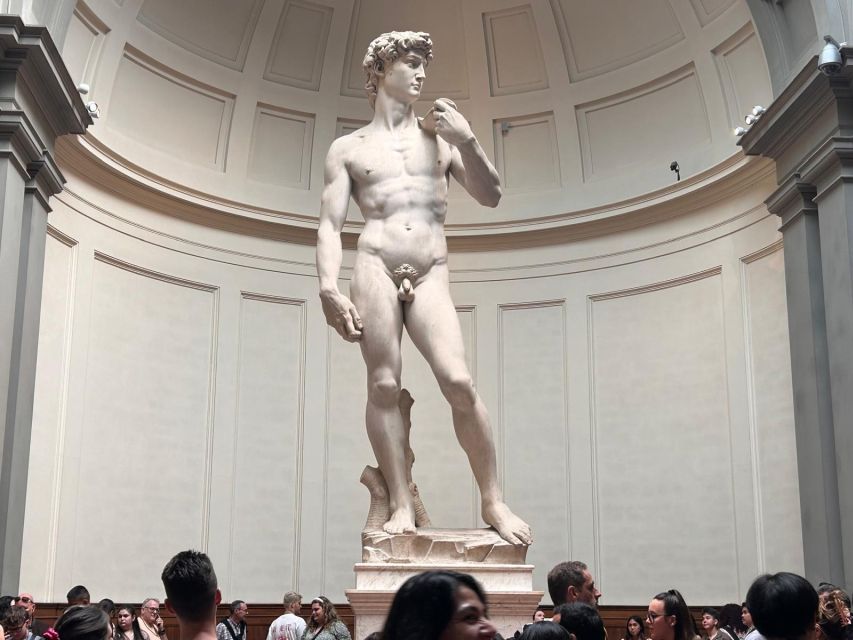
Michelangelo’s David is the reason most people come to Florence’s Accademia Gallery, and the sculpture rewards the trip. The timed ticket gets you past the ticket office queue, while the POP GUIDE audio app lets you explore without being tied to a live guide or group.
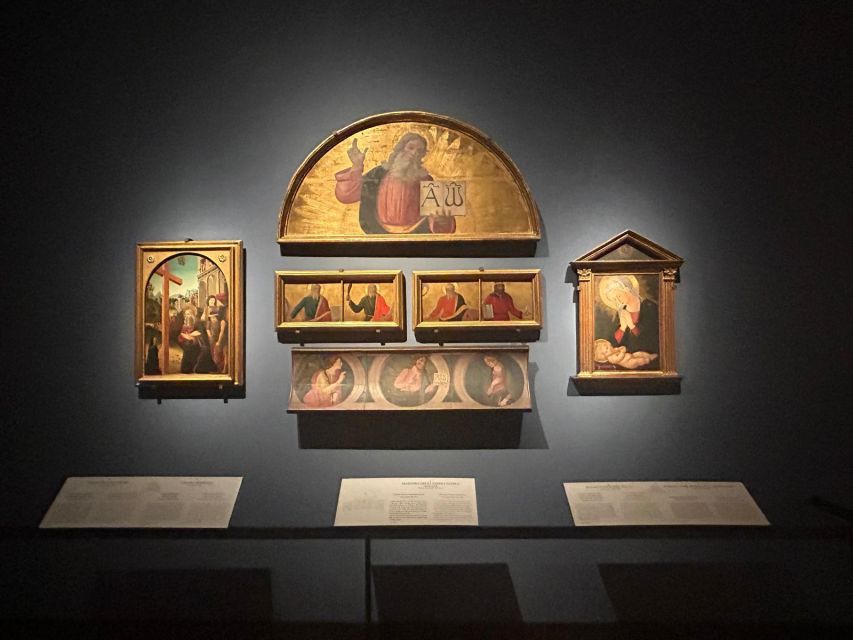
I like the easy-to-find meeting point on Via Ricasoli and the freedom to set your own pace inside. I also like that the visit includes more than David: Michelangelo’s unfinished figures, Medici musical instruments, plaster models, and medieval altarpieces give the small museum more substance.
The main caution is that priority entry does not always mean instant entry. Security and crowd limits can delay access by 15 or 20 minutes, and the gallery warns that longer waits can occur because of organizational issues. Bring headphones, download the app before arrival, and allow some flexibility.
Key Points Before You Book
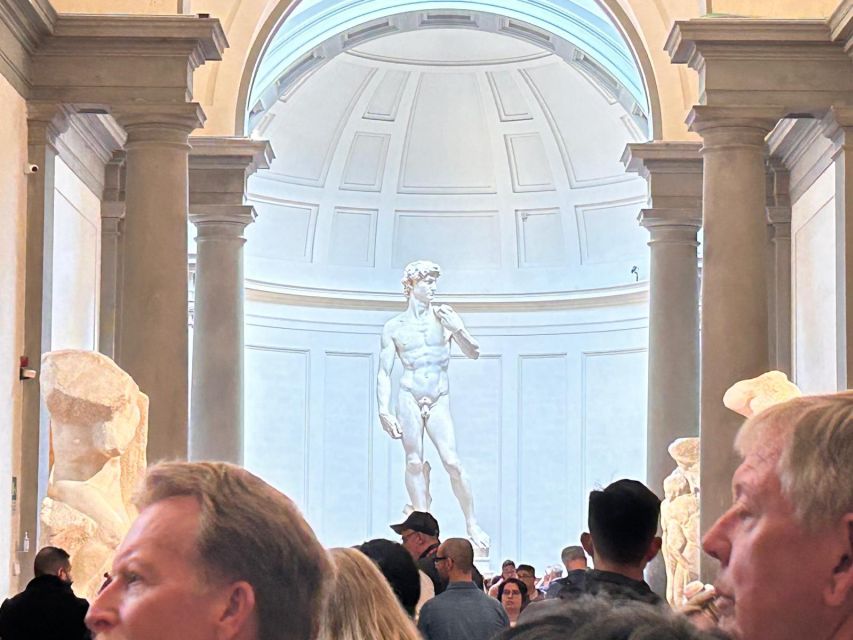
- Michelangelo’s David is the centerpiece: See the original marble statue in the Accademia’s main hall.
- Timed entry saves effort: You bypass the ticket office line through a separate entrance, though security delays are still possible.
- The audio app is self-guided: Download POP GUIDE before meeting the host and bring your own headset.
- The museum has more than one famous statue: Look for Michelangelo’s incomplete works, which reveal how he carved marble.
- Unexpected collections add variety: See three Stradivarius instruments from the Medici collection and plaster models by 19th-century sculptors.
- The price is about convenience: At $38 per person, the ticket makes the most sense when saving time matters to you.
Seeing David Without Losing Half Your Morning
Florence is full of beautiful things to see, but it is also full of queues. The Accademia Gallery sits in a central part of the city, and Michelangelo’s David draws a steady stream of visitors. A timed ticket removes one of the most annoying parts of the visit: waiting at the ticket office before you even enter.
Your meeting point is in front of the Carrefour Express supermarket at Via Ricasoli 115, marked by a red street number. Look for a staff member holding a white flag marked ENJOY ROME. You exchange your GetYourGuide voucher for a physical ticket there, then proceed to the gallery entrance.
That meeting arrangement is simple, but do not treat it as a casual detail. Arrive with enough time to locate the supermarket and staff member. The meeting point is easy to find, but a busy Florence street is not the place to begin searching on your phone at the last minute.
The host speaks English and helps with the ticket handoff. This is not a guided tour led by a historian. Once inside, you explore independently with the audio app and the gallery’s own rooms and displays.
More ways to see the David at the Accademia:
- Florence: Timed Entrance Ticket to Michelangelo’s David
★ 4.6 · 16,983 reviews - Florence: Michelangelo’s David Skip-the-Line Entry Ticket
★ 4.5 · 12,764 reviews - Florence Accademia Gallery Tour with Entrance Ticket Included
★ 4.5 · 6,148 reviews
The First Look at Michelangelo’s David
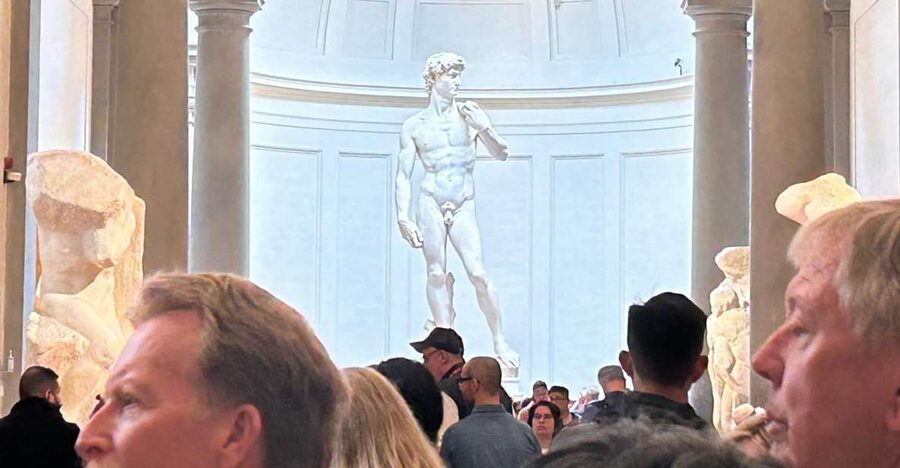
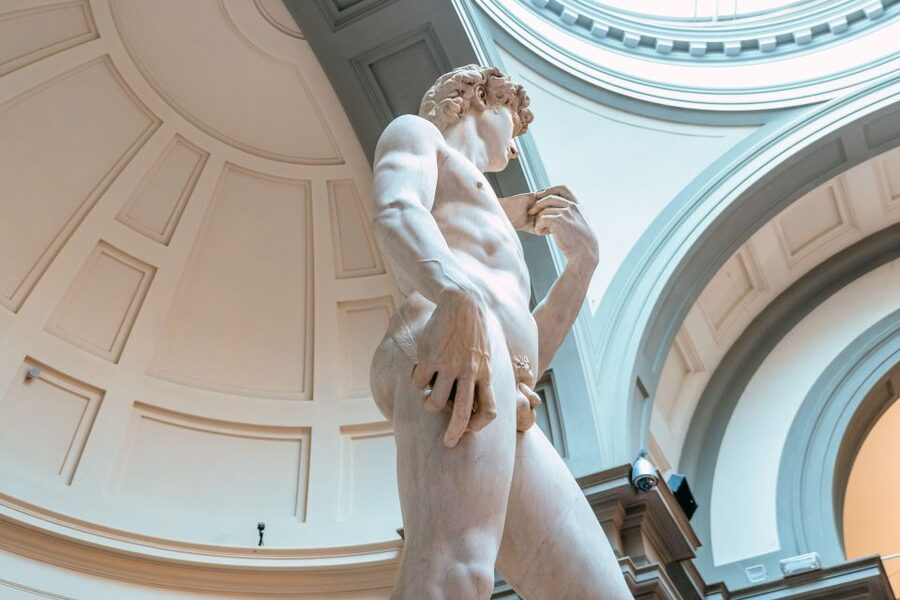
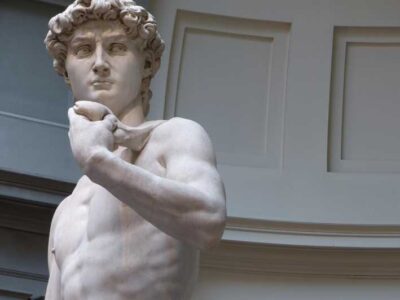
The main hall leads you toward David, and the first sight is powerful because the statue is much larger than many people expect. Michelangelo carved the figure from marble, showing David before his encounter with Goliath. The pose is alert rather than triumphant, with the body prepared for action.
Take time to walk around the statue and look closely at the hands, face, hair, and tension in the body. You can see how Michelangelo used the human form to create a sense of thought and movement in a still figure. From a distance, the statue reads as a complete image. Up close, the carving rewards a slower look.
The room can feel crowded, especially at popular times. You may not have a quiet, private encounter with David, and the best viewing position may take patience. The timed ticket helps you get through the entrance process, but it does not guarantee an empty gallery.
This is where the audio app can help. Rather than rushing through the room with a printed list of facts, you can pause, listen, and then look again. The app is useful for giving structure to an independent visit, but it does require preparation before you arrive.
Michelangelo’s Unfinished Figures
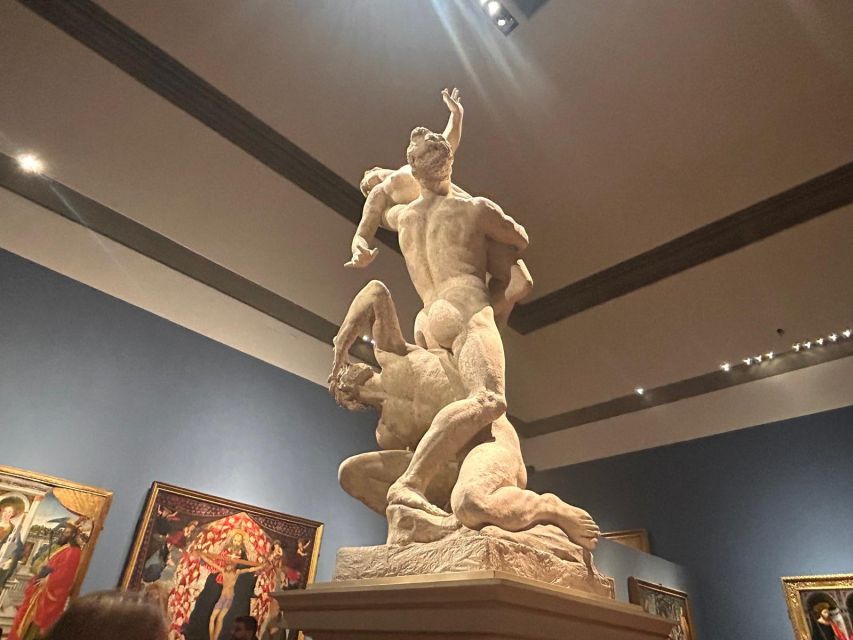
The main hall also contains several of Michelangelo’s incomplete sculptures. These works are valuable because you can see the figures emerging from the marble rather than only viewing a finished form.
The unfinished surfaces reveal the stages of carving. Parts of the bodies appear to remain trapped in the stone, while other sections are more fully shaped. This gives you a direct sense of the relationship between raw marble and finished sculpture.
I find these works especially useful after seeing David. David is polished and complete, so it can be easy to admire the result without thinking about the physical labor behind it. The incomplete sculptures shift your attention to the process, the tools, and the decisions involved in releasing a figure from a block of stone.
Do not hurry through this section on the way to the famous statue. If you have limited time, David comes first, but the unfinished works provide some of the best artistic context in the museum.
The Gipsoteca and Its Plaster Models
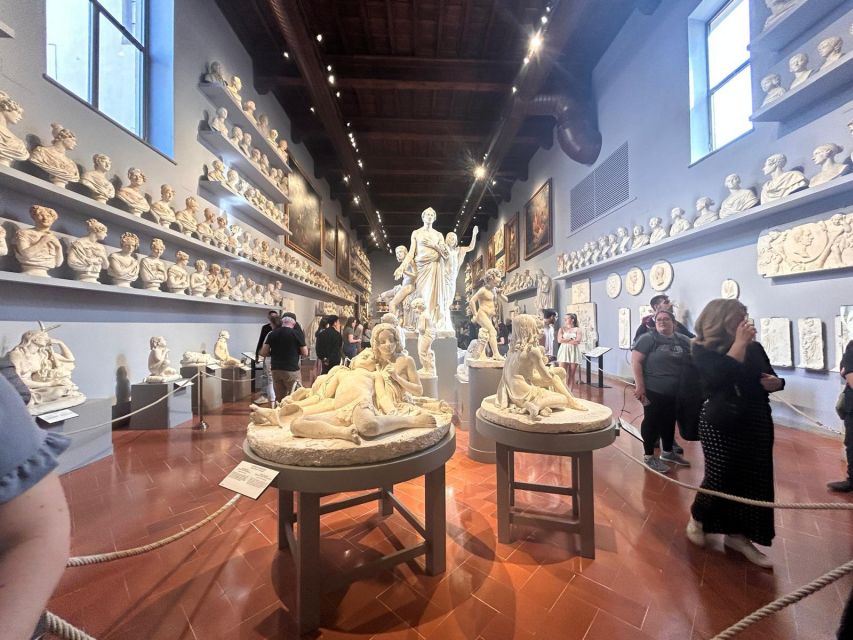
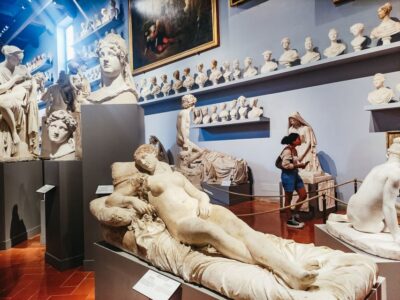
The Gipsoteca contains original plaster models made by 19th-century Florentine sculptors. These are not the same kind of experience as Michelangelo’s marble, but they add another view of the sculptor’s working method.
Plaster models could be used to plan, study, or present a sculpture before a final version was made. Here, you can compare the lighter material and different surface quality with the weight and finish of the marble works elsewhere in the building.
This room may appeal most to visitors who enjoy seeing how art is designed and prepared, rather than only admiring finished masterpieces. It also gives the museum a broader reach beyond Michelangelo and the Renaissance works that draw most of the attention.
The collection can feel less immediately dramatic than David. Still, it is a good stop when you want to understand the Accademia as a working museum of sculpture, not just a one-statue attraction.
More audio guide and self-guided tours in Florence:
- Florence: Uffizi Priority Ticket & Masterpieces Audio App
★ 4.2 · 6,402 reviews - Florence: Michelangelo’s David Entrance Ticket and Audio App
★ 4.3 · 1,901 reviews - Florence: Uffizi & Accademia Priority Tickets with Audio App
★ 4.4 · 1,253 reviews - Florence: Eco-Friendly Golf Cart City Tour with Audio Guide
★ 4.6 · 1,094 reviews
Medici Instruments, Including Three Stradivarius Violins
One of the more unusual sections holds musical instruments from the Medici collection. The display includes three instruments made by Stradivarius, giving you a change of pace after the sculpture galleries.
These instruments connect art, craftsmanship, and court life. Their presence also reminds you that the Medici collection was not limited to paintings and statues. Music and finely made objects were part of the same world of display and patronage.
You will not come here for a concert, and the instruments are viewed as museum objects. Their appeal lies in the workmanship and in the chance to see a different side of Florence’s collecting tradition.
If you are visiting with children or with someone who does not want room after room of paintings, this section can provide a welcome pause. It is also a good place to use the audio guide, since a short explanation can make an unfamiliar object much easier to understand.
Medieval and Renaissance Paintings on the Upper Floor
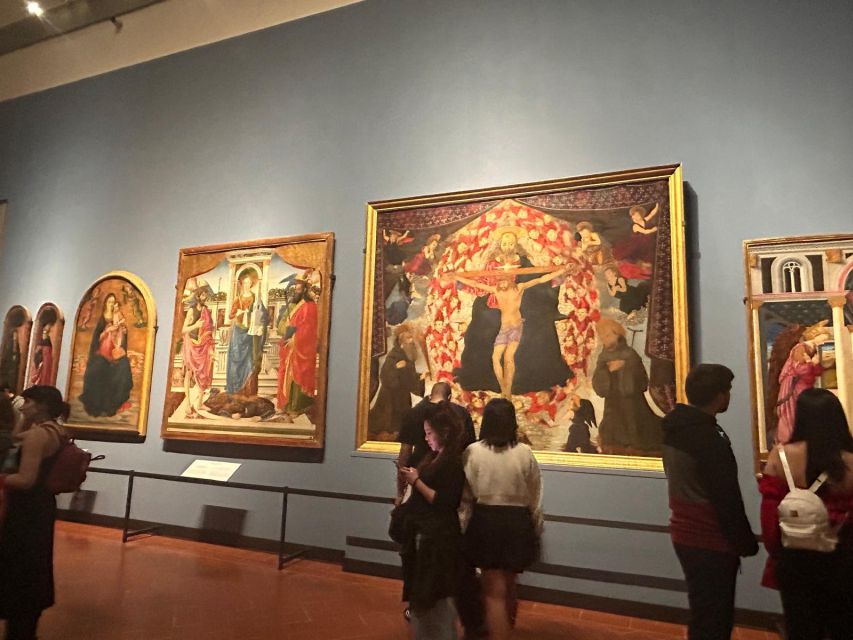
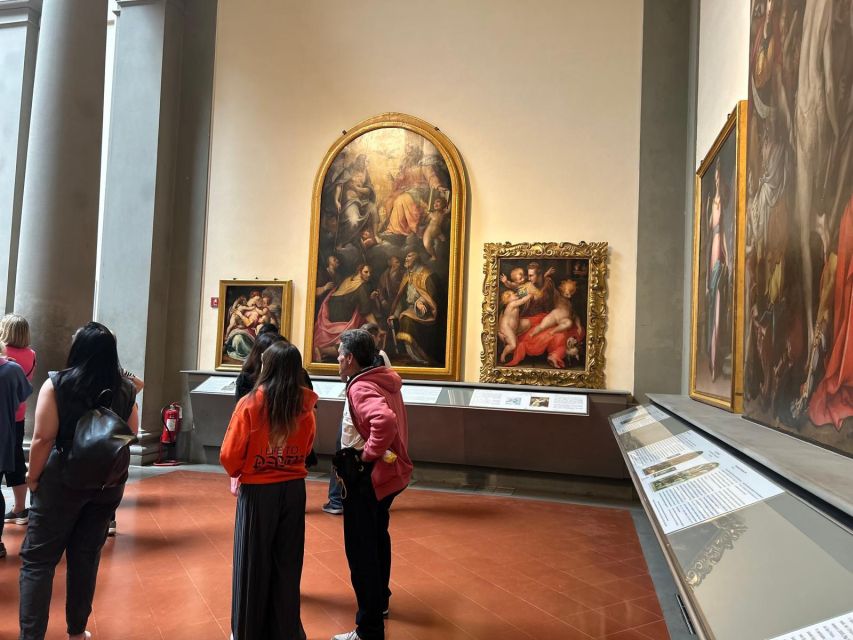
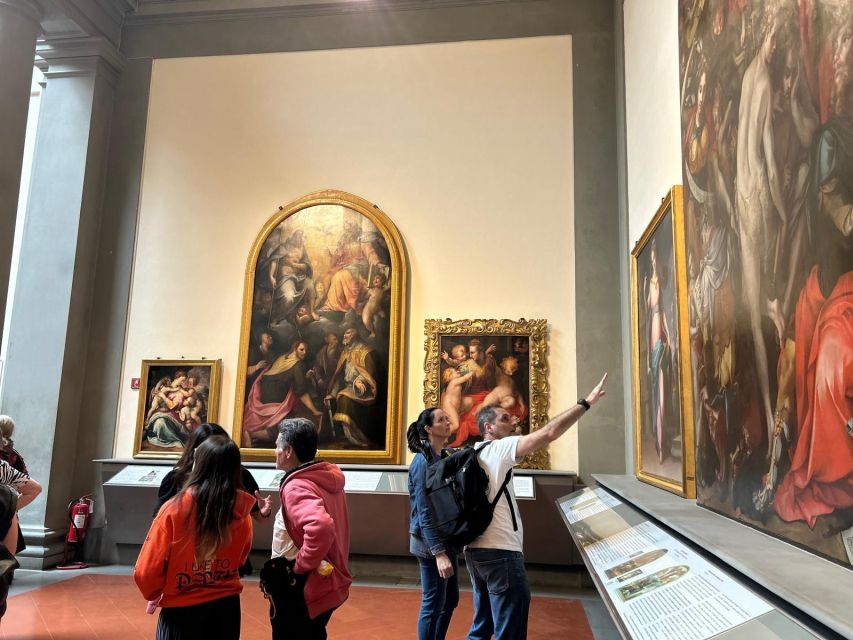
After the sculpture galleries, continue to the painting rooms. The museum includes works by medieval and Renaissance artists, with impressive medieval altarpieces on the top floor.
These paintings may not receive the same attention as David, but they help place Michelangelo’s work in a wider artistic setting. Medieval altarpieces often use formal arrangements, strong religious imagery, and carefully organized figures. Renaissance painters gradually brought new attention to space, bodies, and natural detail.
The upper floor is a useful final stop because it changes the mood of the visit. You move from the physical force of marble to painted panels and devotional scenes. The contrast makes the museum feel more varied than its famous centerpiece suggests.
Look up the route before you leave. It is easy to spend most of your time in the main hall and then miss the upper rooms. The audio app can help you decide which paintings deserve a closer look if you are working with a limited visit.
How the POP GUIDE Audio App Works
You need to download the POP GUIDE app from the App Store or Google Play before reaching the meeting point. Staff provide your login credentials at the meeting point, so make sure the app is already installed and ready to open.
Bring your own headphones. This is important because the audio guide is not a live person walking beside you, and the experience depends on hearing the commentary clearly. A charged phone is also sensible, although the supplied instructions specifically require the app and your own headset.
The app gives you a self-guided format. You can move at your own speed, pause when a room is crowded, or skip sections that do not interest you. That suits independent visitors who dislike being held to a group schedule.
The tradeoff is that you do not get personal questions answered on the spot. If you want a live guide who can explain details, change the route, or react to your interests, this is not that kind of visit. You get a ticket, a host for the entry process, and an audio tool for the museum.
Is $38 a Fair Price?
The listed price is $38 per person. That is not a low-cost museum ticket, so the value depends on how much you care about timed access and simple planning.
You are paying for more than admission alone. The package includes the priority entry ticket, a separate entrance intended to bypass the ticket office queue, and access to the audio app. For a short Florence stay, saving time can be worth a premium. Missing a long queue may leave room for the Duomo, the Uffizi, or a relaxed meal.
Still, the word priority needs a sensible interpretation. Security checks and limits on the number of people inside can cause a 15 or 20 minute delay. The gallery also warns of longer waits tied to organizational problems. This is not a magic pass through every line.
I consider the price reasonable for a first visit when your schedule is tight and you want the booking handled in advance. It is less attractive if you are comfortable waiting, already know the museum well, or prefer to arrange a basic admission ticket without an audio app.
The average rating is 4.6 from 17 bookings, with especially positive reactions to the gallery, the service, the easy meeting point, and the chance to move at an individual pace. That matches the practical strengths of the experience: the plan is simple, and the museum can be explored without a group leader.
Timing, Bags, and Accessibility
The activity is listed with a one-day duration, but this refers to the booking window rather than a full-day guided program. You select an available starting time, enter the gallery, and decide how long to spend inside.
Plan your schedule around possible delays. Even with a timed ticket, entry may be postponed when the museum is busy. I would avoid placing a strict restaurant reservation or train departure immediately after the visit.
Large bags and luggage are not allowed. Pets are also not allowed. Bring a passport or photo ID for children aged 6 to 17 if you are using a discounted ticket. Without valid proof of age, the child may need to pay the full adult price.
The experience is wheelchair accessible. Since the available information does not give detailed route or restroom information, you should confirm any specific access needs before booking if your visit requires more than general wheelchair access.
Who Will Get the Most From This Visit?
This works best for a first-time Florence visitor who wants to see David without spending part of the day at a ticket office. It also suits solo visitors, couples, and families who prefer to move independently.
The self-guided format is helpful if people in your group have different interests. One person can spend extra time with the unfinished sculptures while another looks at the instruments or paintings. You are not forced to stay together every minute.
Families should prepare children for the ticket rules and bring ID for anyone using the youth discount. The audio app may help older children stay engaged, while younger children may focus mainly on the enormous David statue and the unusual unfinished figures.
Art specialists may find the audio content less personal than a private guide. Visitors who need a very detailed scholarly explanation should set their expectations accordingly. This is a practical museum visit with audio support, not an intensive art seminar.
What to Bring and How to Prepare
A few small preparations can make the visit much smoother:
- Download POP GUIDE before you arrive.
- Bring your own headphones.
- Carry the required photo ID for children using discounted tickets.
- Do not bring luggage or large bags.
- Arrive early enough to find Via Ricasoli 115 and the host with the white ENJOY ROME flag.
- Leave room in your schedule for a possible 15 or 20 minute entry delay.
I would also keep your phone charged. The audio app is part of the experience, and relying on it with a nearly empty battery is an avoidable problem.
If you want the audio commentary, do not wait until you reach the museum Wi-Fi. Download the app before the meeting point, then collect the login details from the staff member.
Should You Book the Accademia Ticket?
Book this experience if David is high on your Florence list and you value a timed entry, an easy meeting point, and the freedom to explore alone. The unfinished Michelangelo works, Medici instruments, plaster models, and upper-floor paintings give you plenty to see after the famous statue.
I would skip it if you want a live guide, dislike app-based commentary, or are looking only for the cheapest possible admission. I would also avoid a tightly packed schedule because priority entry can still involve a security delay.
For most first-time visitors, the $38 cost is mainly a payment for convenience. Prepare the app and headphones, arrive at the correct meeting point, and keep your schedule flexible. Do that, and you get a focused look at David plus a useful sample of the Accademia’s less famous collections.
FAQ
Where is the meeting point?
Meet in front of the Carrefour Express supermarket at Via Ricasoli 115, identified by a red street number. Look for a staff member holding a white flag marked ENJOY ROME.
What happens at the meeting point?
You exchange your GetYourGuide voucher for a physical Accademia Gallery ticket. The host or greeter speaks English.
Is the ticket timed?
Yes. The experience uses timed entry, and you should check availability for the starting times offered.
Does the ticket skip the entire line?
It lets you bypass the ticket office queue through a separate entrance. Security and museum capacity controls can still cause a 15 or 20 minute delay, and longer waits may occur because of gallery organization.
Is a live guide included?
No. A live guide is not included. The visit includes access to the POP GUIDE audio app.
How do I use the audio guide?
Download the POP GUIDE app from the App Store or Google Play before arriving at the meeting point. Staff provide your login credentials there.
Do I need to bring headphones?
Yes. You should bring your own headset for the audio guide.
Can children use a discounted ticket?
Visitors aged 6 to 17 need valid photo ID showing their birth date to receive the discounted ticket. Without it, they must purchase the full adult ticket.
Is the experience wheelchair accessible?
Yes, the activity is listed as wheelchair accessible. Pets, luggage, large bags, and bags are not allowed.
Recently added around Florence
- Accademia and Uffizi Small-group Guided Tour★ 4.5 · 8 reviews
- The David from Michelangelo.★ 5.0 · 3 reviews
- Combo: Accademia + walking + Uffizi Galleries Guided Tour★ 3.5 · 6 reviews
- The Complete Wine Tour Brunello, Nobile, Chianti wine experience★ 4.0 · 7 reviews
- The Best of Tuscany in 3 Days★ 4.5 · 13 reviews
- The Cooking Lab – Authentic Food Experience★ 5.0 · 113 reviews
- Florence Central Market Food Tour – Private Tour★ 4.0 · 7 reviews
- MaMa Florence: The Art of Corzetti – Hands-On Pasta Class★ 5.0 · 15 reviews
Accademia Gallery and David Tours, compared.
Timed Entrance Ticket to Michelangelo’s David
Read our review →
Michelangelo’s David Skip-the-Line Entry Ticket
Read our review →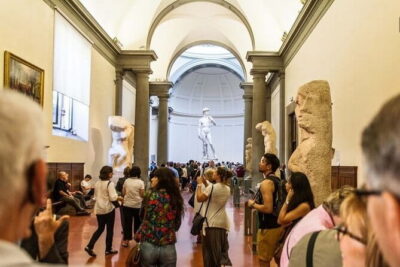
Florence Accademia Gallery Tour with Entrance Ticket Included
Read our review →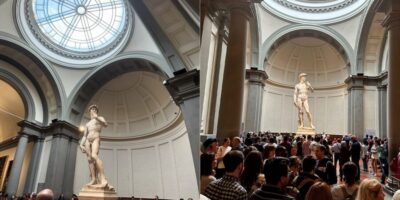
Timed Entry Ticket to Michelangelo’s David & eBook
Read our review →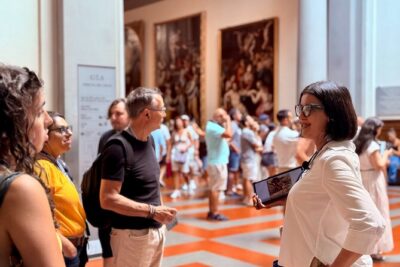
Skip the line: Uffizi and Accademia Small Group Walking Tour
Read our review →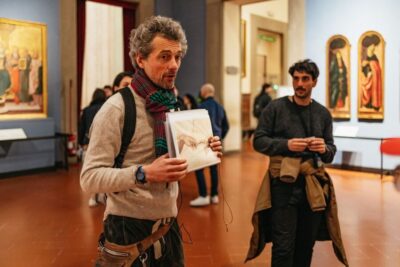
Accademia Gallery Guided Tour with Entry Ticket
Read our review →Browse the lists this tour appears in