
Reviewed · UFFIZI GALLERY TOURS
Florence in one day with a localGuide: David-City walk-Uffizi
Michelangelo’s David is the star, but the real strength of this three-hour tour is the way it links Florence’s art to the streets where the city’s political and religious life unfolded. You see David at the Accademia, walk past the Duomo, Piazza della Signoria, and Ponte Vecchio, then finish with Botticelli, Leonardo, Michelangelo, and Caravaggio at the Uffizi.
I like the priority museum entry, which matters greatly at the Accademia, and I like the guide-led approach to the Uffizi, where a good route helps you avoid getting lost among hundreds of paintings. The main drawback is the pace: three hours is efficient, but it leaves little room for lingering, and the tour does not include entry to the Duomo complex.
Key points at a glance
- See David up close: Spend about an hour at the Accademia with priority entrance and a certified guide.
- Walk through Florence’s core: Pass Piazza del Duomo, Piazza della Repubblica, Piazza della Signoria, and Ponte Vecchio.
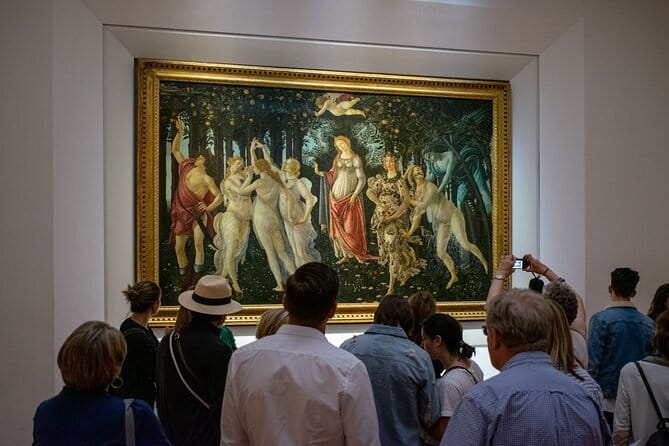
- Focus on Uffizi highlights: See Botticelli’s Birth of Venus and Primavera, Leonardo’s Annunciation, Michelangelo’s Doni Tondo, and Caravaggio’s Medusa.
- Keep exploring afterward: Once the guided Uffizi visit ends, you may continue through the gallery until closing time.
- Small group format: The group is limited to 14 people, with an audio system to help you hear the guide.
- Best for a first Florence visit: This is a fast, art-heavy introduction for anyone with only one day or limited museum time.
Why this three-hour plan works
Florence is compact, but its major museums can swallow an entire day. This experience gives you a useful first look at the city’s biggest artistic sights without asking you to plan museum reservations, study floor plans, or guess which rooms matter most.
The order is sensible. You begin at the Accademia, where the main attraction is easy to identify, then move outdoors through the city before ending at the Uffizi. The final museum visit takes about 90 minutes, and you may stay longer afterward. That last detail adds value because the formal tour gives you a route, but you still have the option to revisit a favorite room at your own speed.
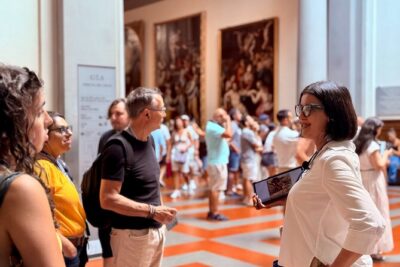
The group can include up to 14 people. That is not the same as a private tour, but it is small enough to be more manageable than a large coach group. An audio system is included, which helps in crowded galleries where a guide’s normal speaking voice can disappear quickly.
The tour is offered in English and costs $150.03 per person. That price is not simply an entrance ticket. It covers the Accademia admission, Uffizi admission, reserved or priority access, a certified art historian guide, the walking route, and help making sense of the art. If you were already comfortable arranging timed museum tickets and choosing a short list of works yourself, you could spend less independently. For a first visit, the time saved and explanation provided make the price easier to justify.
More ways to see the David at the Accademia:
- Florence: Timed Entrance Ticket to Michelangelo’s David
★ 4.6 · 16,983 reviews - Florence: Michelangelo’s David Skip-the-Line Entry Ticket
★ 4.5 · 12,764 reviews - Florence Accademia Gallery Tour with Entrance Ticket Included
★ 4.5 · 6,148 reviews
Starting with David at the Accademia
The tour begins at Via degli Alfani, 113 R, near the Accademia Gallery. The first museum visit lasts about one hour and includes priority entrance.
That matters at the Accademia. The gallery is not enormous, but Michelangelo’s David draws a steady stream of visitors. The line outside can be a poor use of your morning, particularly when your day also includes the Uffizi. Priority access does not make the room private or quiet, but it removes one major delay.
David deserves more than a quick photograph. Your guide explains why the statue’s hands and head appear unusually large. Michelangelo designed the figure to be viewed from below, so the proportions made more sense when David was intended for a high outdoor position. That small piece of context changes the way you look at the sculpture.
The guide also introduces Michelangelo’s unfinished Prisoners. Their rough, emerging forms provide a useful contrast with David’s finished surface. You can see the sense of figures pushing out from the marble, along with the marks of the sculptor’s process.
The Accademia portion is especially useful if Renaissance art is new to you. Guides such as Helena, Camilla, Renata, Edy, and Alisa have been praised for explaining technical and historical points in plain English, but your assigned guide may be someone else. The important feature is the art historian-led format, not a promise of a particular person.
One practical point: an hour passes quickly. You will see the museum’s main highlights, but this is not a slow, room-by-room study of every collection. If David is your main reason for visiting, the time is well judged. If you want to inspect every painting or spend long periods with the Prisoners, you may wish for a separate visit.
A short walk through Florence’s historic center
After the Accademia, the route moves outdoors through several central squares. The listed stops add up to roughly 30 minutes, so think of this as a guided orientation walk rather than a full city tour.
Piazza del Duomo
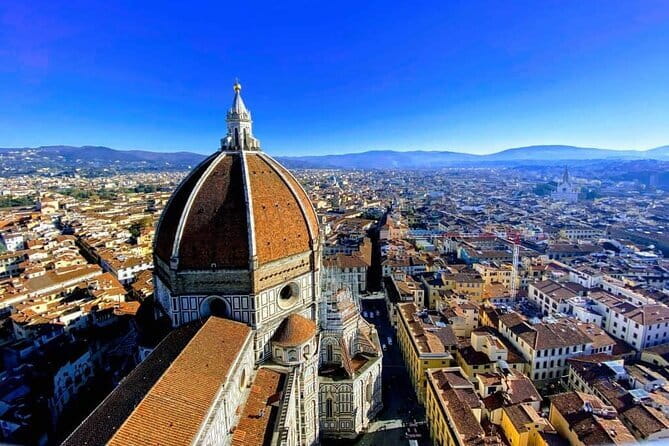
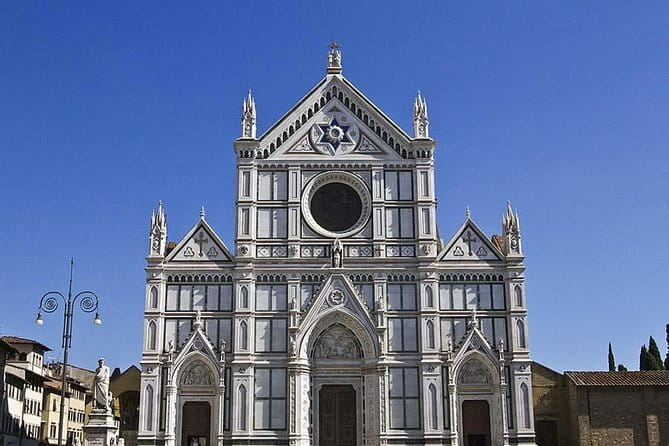
The first outdoor stop is Piazza del Duomo, the city’s great cathedral square. You see Santa Maria del Fiore, Brunelleschi’s red-brick dome, Giotto’s Bell Tower, and the Baptistery of San Giovanni.
The guide can help you read the square as a collection of connected projects rather than one oversized church. The cathedral, dome, bell tower, and baptistery belong to different moments and designers, yet they form Florence’s most recognizable group of buildings.
The stop lasts about 10 minutes and admission is free. You should not expect to climb the dome, enter the cathedral, or visit the baptistery as part of this tour. The value here is the outside explanation and the chance to get your bearings between the two museums.
Because the square is a major public space, it can feel crowded and noisy. Keep your attention on the guide and use the audio system when needed. A short stop also means you will have time later to return on your own if you want photographs or an interior visit.
More ways into the Uffizi:
- Florence: Skip-The-Line Uffizi Gallery Timed Entry Ticket
★ 4.5 · 27,832 reviews - Florence: Uffizi Priority Ticket & Masterpieces Audio App
★ 4.2 · 6,402 reviews - Florence: Skip-the-Line Uffizi Small Group Tour
★ 4.6 · 5,926 reviews - Uffizi Gallery Small Group Tour with Guide
★ 4.5 · 4,923 reviews
Piazza della Repubblica
The route continues to Piazza della Repubblica for about five minutes. This elegant square has an imposing archway, historic cafés, and a lively central location.
It is a brief pause rather than a major sightseeing visit. I see its value as a link between Florence’s older streets and its more polished nineteenth-century city center. The guide can give you a quick sense of how the square functions today without taking time away from the museums.
Do not expect a long café break here. The schedule is built around the Accademia and Uffizi, so you will keep moving.
Piazza della Signoria
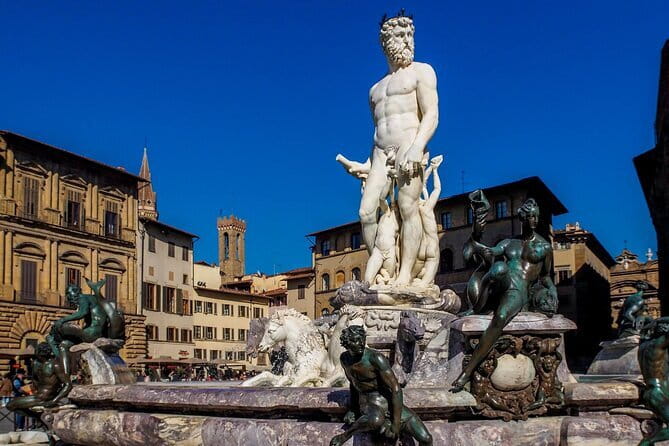
Piazza della Signoria receives about 10 minutes. This is one of Florence’s best outdoor art spaces, centered on Palazzo Vecchio and filled with sculpture.
You see the Fountain of Neptune, the replica of Michelangelo’s David, and the sculptures under the Loggia dei Lanzi. The replica is especially useful after seeing the original at the Accademia. Your guide can point out the difference between encountering David as a finished marble masterpiece and seeing its later public image in the square.
The square also helps explain Florence as a place of power. Palazzo Vecchio was the city’s political center, and the public sculptures were not placed here by accident. The short stop cannot cover every political episode or statue, but it gives the Uffizi visit a clearer civic setting.
Piazza della Signoria is open and easy to explore on your own later. If you want quiet time with the Loggia’s sculptures, return after the tour. During the scheduled stop, the guide will need to keep the group on time.
Ponte Vecchio from the Uffizi area
The walking portion ends with a view of Ponte Vecchio from Piazzale degli Uffizi. You see the bridge crossing the Arno, lined with its famous jewelry shops.
The viewpoint is outside and admission is free. The stop lasts about five minutes, so it is meant for a quick look and photograph rather than a full bridge visit. You do not walk across Ponte Vecchio as part of the described route.
That limitation is worth knowing. If you want to browse the shops, cross the bridge, or see the river from another angle, plan to do it after the tour. The viewpoint still works well because it connects the Uffizi area with one of Florence’s most familiar scenes.
Entering the Uffizi with a plan
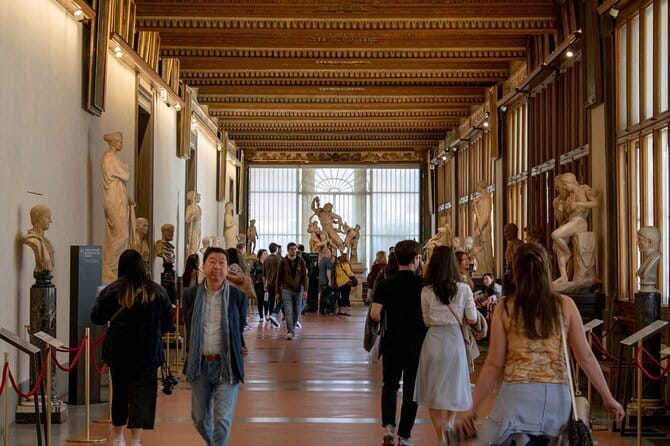
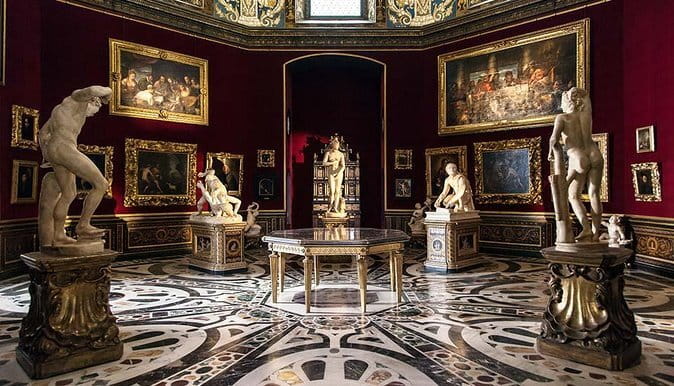
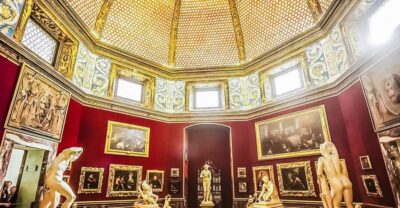
The Uffizi portion lasts about 90 minutes and includes reserved entry. This is the heart of the experience for many art lovers, but it can also be the most tiring part. The gallery contains far more than anyone can absorb in a single visit.
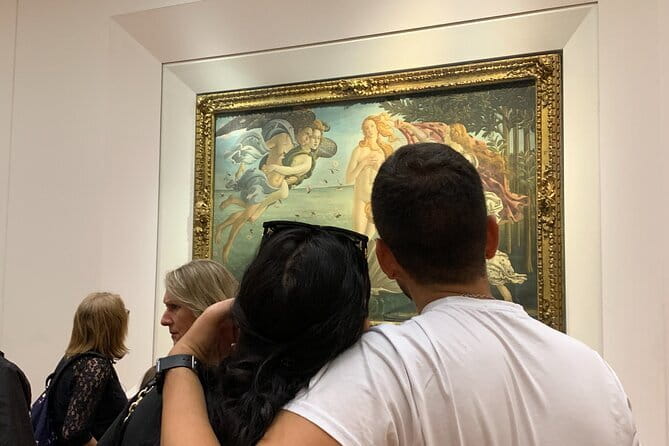
A guide gives you a sensible route through the major rooms. The focus includes Botticelli’s The Birth of Venus and Primavera, Leonardo da Vinci’s Annunciation, Michelangelo’s Doni Tondo, and Caravaggio’s Medusa. You also encounter major works associated with Giotto, Raphael, Titian, and other Renaissance artists.
The benefit is selection. Instead of wandering through corridors and hoping you do not miss a famous painting, you receive a clear introduction to the works that shaped Florence’s reputation. A good guide explains not only what you are looking at, but how to look at it.
That was a recurring strength of the guides on this experience. Camilla has been praised for making the Medici, music, art, and city politics understandable without turning the tour into a lecture. Edy has been noted for choosing the main Uffizi highlights and avoiding an overload of information. Those details matter because the Uffizi can overwhelm anyone who has not visited before.
You also get help with Renaissance conventions. Religious paintings can seem formal or repetitive until someone explains the symbols, gestures, patronage, and changes in technique. The guide’s role is to connect those details to the people and institutions that paid for the work.
The audio system is a practical advantage. Uffizi rooms can be crowded, and you may need to stand a short distance from the guide to see a painting. Being able to hear the explanation means you do not have to press into the group.
At the end of the guided portion, you may continue exploring the Uffizi until closing time. This is one of the strongest features of the plan. Use the guide’s 90 minutes to see the essential works, then stay for a quieter look at anything that caught your attention.
The Uffizi is large, and 90 minutes will not cover it all. That is not a flaw so much as a design choice. This experience is for orientation and priority works, not a complete museum study.
Guides who make the difference
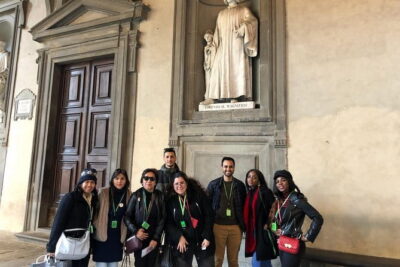
The experience depends heavily on the person leading it. The guide is described as a certified art historian, and the strongest comments focus on clear explanations, energy, and the ability to adjust the pace.
Helena is praised for keeping a brisk but engaging rhythm and making the material accessible to a teenager. Camilla appears several times in the feedback, with praise for her enthusiasm, clear explanations, and respect for the group’s pace. One participant especially appreciated that the guide spoke with the group rather than at them, and encouraged questions about individual interests.
That is the right standard for this kind of tour. You do not need a walking encyclopedia. You need someone who can explain why David looks as it does, identify the key Uffizi works, and tell you what matters without flooding you with dates and names.
The experience may also suit people who worry that art museums are too academic. The guide-led format presents the paintings in a way that makes sense even if you arrive with little background. At the same time, people who already know Renaissance art can ask questions and spend their remaining Uffizi time pursuing particular artists.
A few comments also point to useful flexibility when plans changed, including a flight cancellation and a last-minute adjustment. That is encouraging, but you should not treat it as a guarantee. The stated cancellation policy is strict: the experience is non-refundable and cannot be changed for any reason.
Timing, walking, and group size
The total duration is approximately three hours. The museum times are about one hour at the Accademia and 90 minutes at the Uffizi, with the rest devoted to walking and brief outdoor stops.
This is a walking experience through central Florence. The route is near public transportation, and most people can participate, but the schedule is active. One guide was praised for respecting an older couple’s slower pace, yet the tour still has fixed museum reservations and cannot stop for long breaks.
Wear comfortable shoes and arrive ready to move from one location to the next. There is no listed meal or gelato stop, though one guide was praised for pointing out a good gelato place. Treat that as a pleasant extra, not a promised part of the itinerary.
The meeting point is Via degli Alfani, 113 R. The tour ends at the Uffizi Galleries, Piazzale degli Uffizi, 6. Ending at the Uffizi is convenient if you want to continue inside, return to Piazza della Signoria, cross Ponte Vecchio, or make your own way to another central sight.
The maximum group size is 14. That keeps the experience more personal than a large city tour, though the busiest rooms may still require patience.
Who should book this Florence experience?
I would choose this tour for a first visit, a short stay, or a day when you want Florence’s main art sights organized into one efficient block. It suits you especially well if you want background and context rather than simply entering the museums and taking photographs.
It is also a good fit for families with older children or teenagers. The route changes often enough to keep the day moving, and David offers an immediate focal point before the more demanding Uffizi visit.
Art lovers should appreciate the named masterpieces and the chance to remain inside the Uffizi after the guided section. People with limited museum interest may find the schedule too art-heavy, since two of the three hours take place inside galleries.
I would not choose it if you want a slow architectural tour, a dome climb, long café stops, or a full day focused on one museum. The outdoor city walk is concise, and the Duomo is viewed from outside only.
The experience is rated 4.9 from 19 reviews, with 100 percent recommending it. That is a strong signal, though the sample is still modest. The most consistent strengths are the guides’ explanations, the carefully chosen museum highlights, and the time saved through reserved entry.
Is the $150.03 price worthwhile?
The price is fairly high for three hours, but the comparison should include what you would need to arrange yourself. You are paying for two museum tickets, priority or reserved access, a certified art historian, an audio system, and a planned route between the Accademia and Uffizi.
If you are comfortable booking timed tickets, learning the museums in advance, and choosing the key works yourself, an independent visit may cost less. You would also have more control over the pace.
If you are visiting Florence for only a day, the calculation changes. Losing an hour in an Accademia line or wandering through the Uffizi without a plan can reduce the rest of your sightseeing. The guide also gives you context that labels alone cannot provide.
I see the tour as a time-saving introduction rather than the final word on Florence’s art. Use it to understand the essentials, then return independently to the museum or squares that interest you most.
Should you book it?
Book it if you want David and the Uffizi in one focused morning, with an English-speaking art historian and museum entry already arranged. The combination of priority access, a small group, major masterpieces, and extra Uffizi time afterward gives you a strong first look at Florence.
Skip it if you prefer to set your own pace, want extensive time at the Duomo, or have already visited both museums. For everyone else, especially first-time visitors with limited time, this is a practical way to see Florence’s artistic core without wasting half the day in lines or confusing museum corridors.
FAQ
How long does the tour last?
The experience lasts approximately three hours. About one hour is spent at the Accademia, about 30 minutes on the outdoor city walk, and about 90 minutes at the Uffizi.
What museums are included?
Admission to the Accademia Gallery and the Uffizi Gallery is included. The tour includes priority entrance at the Accademia and reserved entry at the Uffizi.
Is the Duomo included?
No. Piazza del Duomo is an outdoor stop only, lasting about 10 minutes. Entry to the cathedral, dome, bell tower, or baptistery is not included in the stated itinerary.
Can I stay in the Uffizi after the guided tour?
Yes. After the guided portion ends, you may continue exploring the Uffizi at your own pace until closing time.
What works of art will I see?
The Uffizi highlights include Botticelli’s The Birth of Venus and Primavera, Leonardo da Vinci’s Annunciation, Michelangelo’s Doni Tondo, and Caravaggio’s Medusa. The Accademia visit includes Michelangelo’s David and the unfinished Prisoners.
Is the tour offered in English?
Yes. The experience is offered in English.
How large is the group?
The group has a maximum of 14 people.
Where does the tour begin and end?
It begins at Via degli Alfani, 113 R, in Florence. It ends at the Uffizi Galleries, Piazzale degli Uffizi, 6.
Can I cancel or change the booking?
No. The experience is non-refundable and cannot be changed for any reason.
More day trips from Florence
- Tuscany Day Trip from Florence: Siena, San Gimignano, Pisa and Lunch at a Winery
★ 5.0 · 21,634 reviews - Florence: Pisa, Siena and San Gimignano Day Trip with Lunch
★ 4.6 · 9,771 reviews - Cinque Terre Day Trip with Optional Hiking or Pisa
★ 5.0 · 8,486 reviews - Pisa, Siena and San Gimignano Day Trip with Lunch & Wine Pairing
★ 4.5 · 6,006 reviews
More walking tours in Florence
- Florence: Guided Walking Tour
★ 4.5 · 3,334 reviews - Skip the line: Uffizi and Accademia Small Group Walking Tour
★ 4.5 · 3,135 reviews - Florence: Guided Walking Tour
★ 4.6 · 1,602 reviews - Florence: Renaissance and Medici Tales Guided Walking Tour
★ 4.8 · 1,549 reviews
Recently added around Florence
- Accademia and Uffizi Small-group Guided Tour★ 4.5 · 8 reviews
- The David from Michelangelo.★ 5.0 · 3 reviews
- Combo: Accademia + walking + Uffizi Galleries Guided Tour★ 3.5 · 6 reviews
- The Complete Wine Tour Brunello, Nobile, Chianti wine experience★ 4.0 · 7 reviews
- The Best of Tuscany in 3 Days★ 4.5 · 13 reviews
- The Cooking Lab – Authentic Food Experience★ 5.0 · 113 reviews
- Florence Central Market Food Tour – Private Tour★ 4.0 · 7 reviews
- Family Friendly Florence Private City Tour★ 5.0 · 47 reviews
Uffizi Gallery Tours, compared.
Skip-The-Line Uffizi Gallery Timed Entry Ticket
Read our review →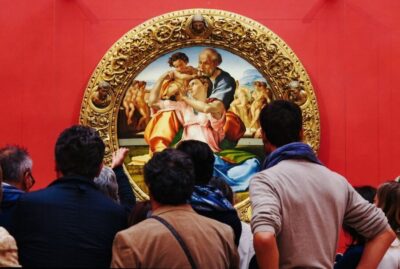
Uffizi Priority Ticket & Masterpieces Audio App
Read our review →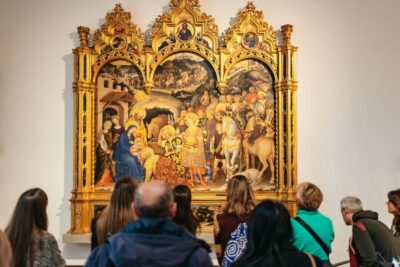
Skip the line: Uffizi and Accademia Small Group Walking Tour
Read our review →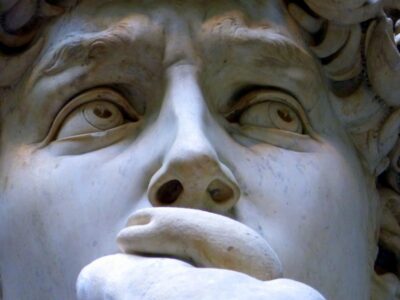
Uffizi Gallery and Accademia Gallery Guided Tour
Read our review →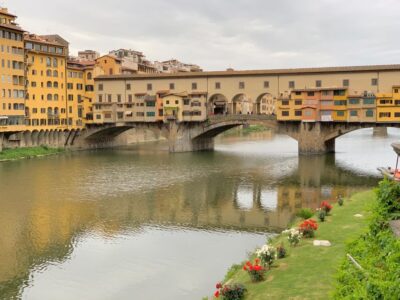
Uffizi Gallery Small-Group Guided Tour with Ticket
Read our review →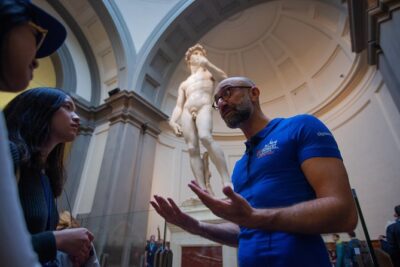
Michelangelo’s David, Accademia & Uffizi Small Group Tour
Read our review →Browse the lists this tour appears in