
Reviewed · ACCADEMIA GALLERY AND DAVID TOURS
Florence: Accademia Gallery Guided Tour with an Art Expert
Michelangelo’s David is the star here, and this tour gets you to him without wasting a large part of your morning in the public queue. You meet the Towns of Italy guide near the Accademia ticket office on Via Ricasoli, then enter with a group of no more than 15 people. I especially like the small group size and the chance to remain inside after the guided portion ends.
I also like that the guide does more than point at David and move on. You hear how a young Michelangelo shaped the statue from one block of Carrara marble, then examine his unfinished Prigioni and San Matteo. The main consideration is that skip-the-line does not mean skip security, and the gallery can still be busy once you enter.
Key points
- David takes center stage: Learn about the statue’s biblical subject, political meaning, and unusual creation.
- Small groups keep the visit focused: The tour accepts a maximum of 15 people.
- The guide adds art context: Guides such as Laura and Vanessa have been praised for clear explanations, warmth, and enthusiasm.
- You can stay after the tour: Continue viewing the Accademia independently for as long as you wish.
- The visit covers more than Michelangelo: See paintings and sculpture from the Middle Ages through the Renaissance, including works by Botticelli, Paolo Uccello, and Andrea del Sarto.
- Plan for security: Large bags, luggage, and umbrellas are not allowed, and the entrance check can still cause delays.
Why the Accademia is worth your time
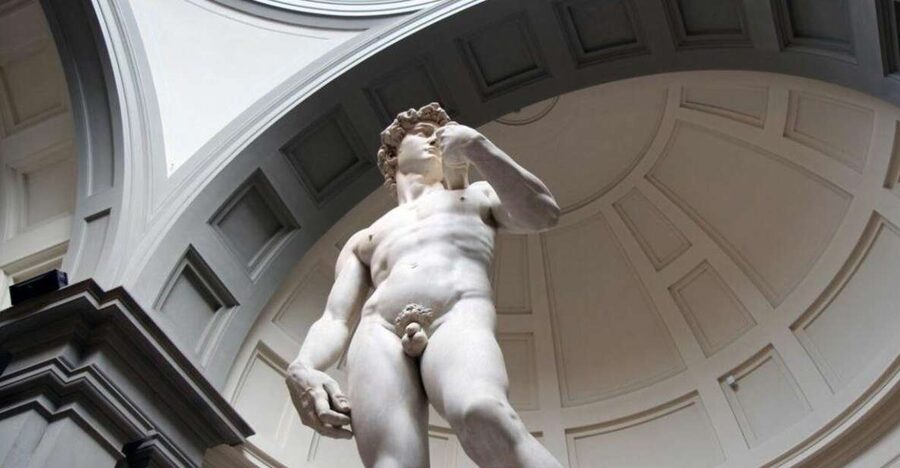
Florence has no shortage of famous art, but the Accademia Gallery earns its place on your schedule for one reason: David. The original statue is here, not a copy in a piazza, and seeing it in the museum gives you time to notice details that photographs flatten.
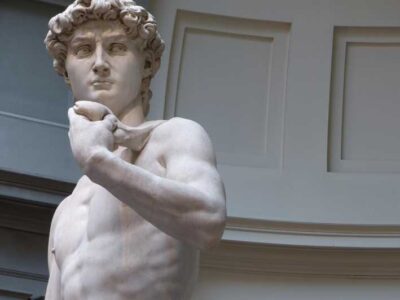
David was carved by Michelangelo when he was still in his twenties. He worked from a single block of local Carrara marble, a demanding choice that left no easy way to correct a serious mistake. The finished figure shows the biblical hero before his encounter with Goliath, alert and tense rather than triumphant.
When the statue was unveiled in 1504, Florence understood David as more than a religious figure. He became a symbol of the Florentine Republic and its defense of civic freedom. Your guide uses that background to explain why the statue mattered so much to the city, not just why it is technically impressive.
The scale also matters. David is far larger than a person, and the position of his hands, the turn of his head, and the tension in his body become easier to read when you are standing in the same room. A guide can direct your attention to these choices before you wander off to inspect them on your own.
More ways to see the David at the Accademia:
- Florence: Timed Entrance Ticket to Michelangelo’s David
★ 4.6 · 16,983 reviews - Florence: Michelangelo’s David Skip-the-Line Entry Ticket
★ 4.5 · 12,764 reviews - Florence Accademia Gallery Tour with Entrance Ticket Included
★ 4.5 · 6,148 reviews
Meeting the guide on Via Ricasoli
The meeting point is the Accademia ticket office at Via Ricasoli, 58/60. Look for the Towns of Italy guide in front of civic number 58. This is an important detail because the gallery is in a busy central part of Florence, and you do not want to spend your arrival time searching for the group.
The activity lasts about 1.5 hours, with starting times varying by day. Check the available time before booking. An early slot is the best choice if you want the calmest possible visit, though no time can guarantee an empty gallery.
The group limit of 15 is useful inside a relatively compact museum. You are not joining a huge crowd that stretches through several rooms, and it should be easier to hear the guide’s explanations. Still, the gallery can feel crowded after entry, especially around David, so keep your expectations realistic.
The guides speak English or Spanish. The named guides praised in the supplied feedback include Laura and Vanessa. Laura was singled out for her art training and detailed explanations, while Vanessa was appreciated for bringing Florence’s art and past to life with stories about myths and facts. Guide assignments can change, so book for the format and subject rather than expecting a particular person.
Entering the Accademia without the public queue
The practical value of this tour begins before you see a single painting. The Accademia is one of Florence’s most visited museums, and the regular line can last for hours at busy times. Skip-the-line admission gives you a much better use of your morning or afternoon.
There is an important limit to the promise. Everyone still passes through a compulsory security check, and that can create a delay even for a prearranged group. The tour reduces the ticket-line problem, but it does not give you a private entrance with no waiting at all.
Leave luggage and large bags behind. Umbrellas are also not allowed. Pack lightly and keep only what you need for the visit. Hotel pickup, drop-off, food, and drinks are not included, so you make your own way to the Accademia and handle refreshments separately.
The first 30 minutes: getting oriented inside
The guided museum portion begins with an introduction to the Accademia’s collection. The gallery is not enormous, which makes a short guided visit workable, but there is enough here to reward a closer look.
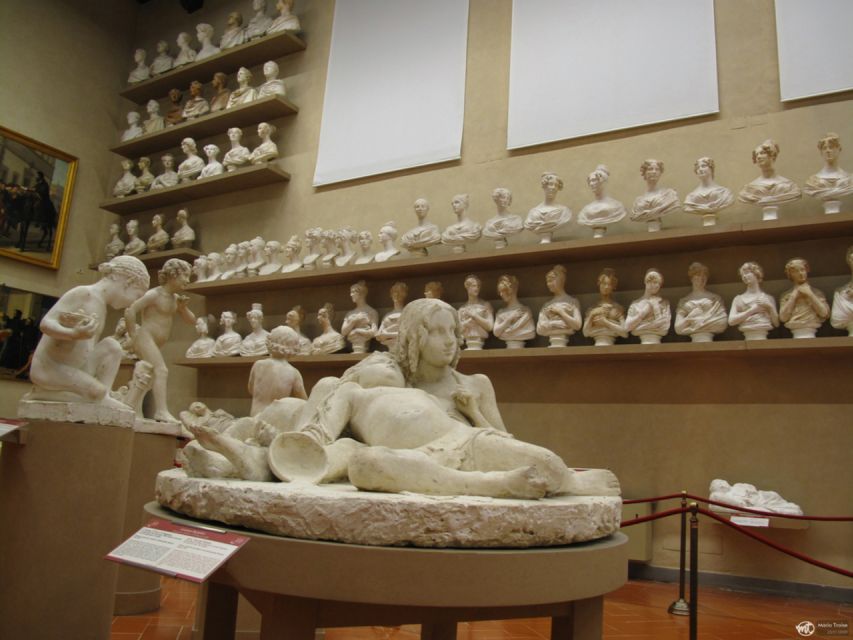
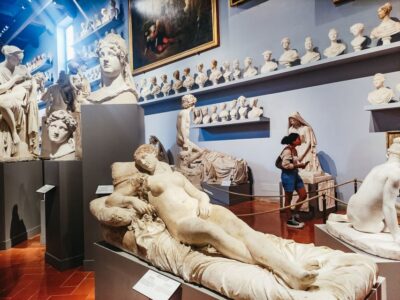
You encounter works spanning the Middle Ages through the Renaissance. The collection includes paintings and sculpture by artists such as Botticelli, Paolo Uccello, and Andrea del Sarto. The exact amount of time devoted to these works depends on the guide and the group, but they give you a useful setting for Michelangelo.
This wider context matters. David did not appear in isolation. Florence had a long tradition of religious art, civic commissions, and ambitious sculpture, and the museum lets you see how changing artistic ideas developed over time.
The guide may focus most heavily on Michelangelo, which is also the clear purpose of this booking. One piece of useful feedback points out that the guide covered Michelangelo’s work while leaving the rest of the museum for independent exploration. That is a fair description of the tour’s balance: expert attention for the main masterpieces, followed by freedom to browse.
More museums and galleries in Florence:
- Florence: Skip-The-Line Uffizi Gallery Timed Entry Ticket
★ 4.5 · 27,832 reviews - Florence: Leonardo Interactive Museum Entry Ticket
★ 4.5 · 11,763 reviews - Uffizi Gallery Small Group Tour with Guide
★ 4.5 · 4,923 reviews - Florence: Accademia Gallery Guided Tour
★ 4.6 · 4,156 reviews
The one-hour David masterclass
The largest part of the guided visit focuses on David. This is where the experience earns its price for anyone who wants more than a quick look before moving on.
You learn about the sculpture’s biblical story, its political role in Florence, and Michelangelo’s age when he made it. The guide can help you read the statue as both a work of art and a public symbol. David’s expression and pose suggest a moment of decision, not a simple victory scene.
A good guide also helps you look at the marble itself. The statue was made from one block of Carrara marble, and Michelangelo had to work around the limits of that material. The details of the body, hair, hands, and face become more striking when you understand the risk involved in shaping such a large figure from a single piece.
This is also the portion most likely to feel busy. The tour can help you reach the statue efficiently, but you should not expect a quiet private audience. One useful distinction is that you may avoid the long exterior queue while still finding other people inside. If David without crowds is your top goal, choose the earliest available entrance.
Michelangelo’s unfinished Prigioni and San Matteo
The unfinished sculptures known as the Prigioni and San Matteo add a different note to the visit. Instead of a polished figure with every surface resolved, these works show forms emerging from the marble.
That unfinished quality gives your guide plenty to explain. You can consider how Michelangelo’s figures appear to struggle toward freedom from the stone, though the precise interpretation belongs to the art discussion rather than a simple label. The contrast with David is useful: one work looks complete and controlled, while the other reveals the stages and uncertainty of sculpture.
San Matteo is especially valuable to see alongside the Prigioni because the group lets you think about Michelangelo’s process. You are not simply looking at finished objects. You are looking at marble, tools, human bodies, and decisions that remain visible.
If your interest is mainly David, you might be tempted to skip these pieces. I would not. They help you understand the artist’s methods and make the famous statue more impressive by comparison.
Staying inside after the guided tour
At the end of the guided portion, you can leave or remain in the Accademia and continue alone for as long as you wish. This is one of the tour’s best features because a 1.5-hour visit can feel short if you want to inspect every room.
Use the guided time to learn the essentials, then move at your own pace. You can return to David for another look, spend longer with the unfinished sculptures, or seek out paintings by Botticelli, Paolo Uccello, and Andrea del Sarto.
This arrangement also suits mixed-interest groups. One person can listen closely to the art historian, while another can take a quieter look at the collection afterward. You are not forced to leave as soon as the guide has finished.
The gallery remains a focused museum rather than an all-day institution. That makes it easy to combine with other Florence sights, but the option to stay gives you control over the pace.
What the guides add to the visit
The strongest part of the experience is the quality of the art explanation. The available feedback gives Laura and Vanessa particular credit, with Laura praised for having two art degrees and Vanessa for her warmth and passion for Florence.
Those details matter because David is easy to admire but harder to understand fully. A guide can connect the statue’s biblical story to Florentine politics, explain Michelangelo’s age and material, and point out why the unfinished sculptures deserve attention.
The guide’s communication style also affects a short museum visit. One assessment praised a professional guide who explained art in an interesting way and clearly enjoyed the work. Another found the guide pleasant and informed but wished for more commentary while walking to the museum. That is a minor point here because the meeting point is already at the Accademia, but it reminds you that the tour’s main teaching happens inside the gallery.
Is $44.41 a fair price?
At $44.41 per person, this is not the cheapest way to see David. The value comes from combining reserved admission with a live art lesson and a small group.
I would consider the price reasonable if you are visiting Florence for the first time, have limited time, or dislike standing in long lines. The ticket alone does not explain the cost, but avoiding a possible wait of hours can protect a large part of your day. The guide’s context also helps you get more from a museum that some people might otherwise rush through.
The value is weaker if you already know the Accademia well, prefer reading labels independently, or are happy to wait in the regular line. In that case, the tour’s main advantage is less important.
The ability to remain inside improves the calculation. You are not paying for a short guided route and then being sent away. You can add your own time with the collection, making the visit as brief or as thorough as your schedule allows.
Who should book this Accademia tour?
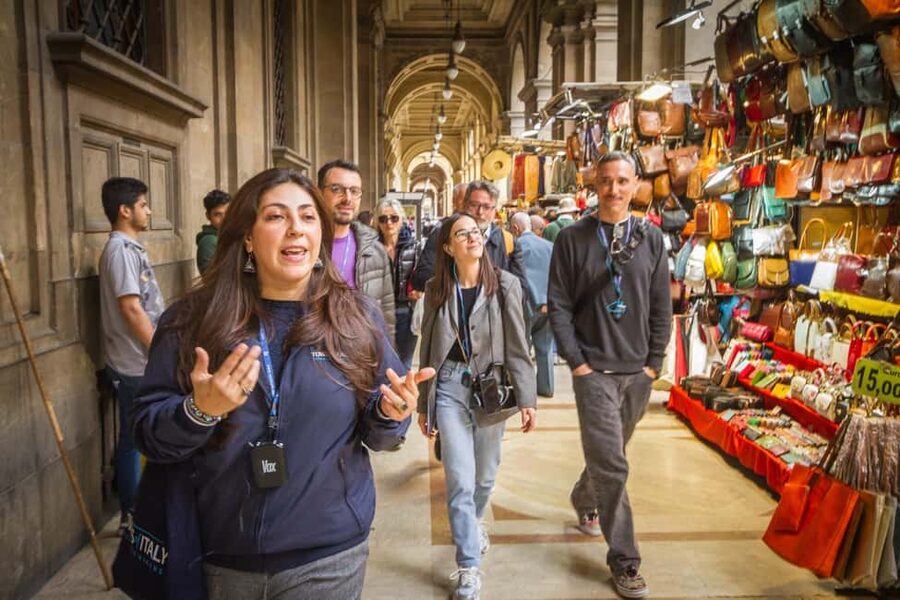
I would recommend it to first-time Florence visitors, art lovers, and anyone who wants David explained rather than simply photographed. It also fits people who have only a short window in the city and want a timed, organized entrance.
Families and mixed-interest groups may appreciate the format because the guide provides structure, while the independent time afterward lets each person choose what to see. The museum is wheelchair accessible, another practical advantage for visitors who need an accessible venue.
It may be less suitable if your priority is total silence, a private tour, or a slow scholarly study of every room. A maximum of 15 is small compared with a large group, but it is still a shared experience, and the gallery can be crowded.
Book an early starting time if possible. That is the clearest way to improve your chance of seeing David before the room fills. Remember that security can still slow entry, and free admission on the first Sunday of each month does not guarantee entry because tickets cannot be reserved in advance.
Should you book it?
Book this tour if you want a reliable way into the Accademia, a strong introduction to David, and the freedom to keep exploring afterward. The combination of skip-the-line admission, a small group, and an art-focused guide gives you more than a quick photo stop.
Skip it if you already have reserved admission, want to explore entirely alone, or do not care for guided commentary. For most first visits, though, $44.41 buys useful time and helps turn a famous statue into a more memorable work of art.
FAQ
How long does the Accademia guided tour last?
The experience lasts about 1.5 hours. Check availability for the starting times offered on your chosen date.
Where does the tour meet?
Meet at the Accademia ticket office on Via Ricasoli, 58/60, in Florence. Look for the Towns of Italy guide in front of civic number 58.
Does the tour include skip-the-line entry?
Yes. Skip-the-line Accademia Gallery admission is included. You must still pass through the museum’s compulsory security check, which can cause some delay.
Is Michelangelo’s David included?
Yes. The guided visit includes Michelangelo’s David, with explanations about the statue, its biblical subject, its role in Florentine civic life, and its creation from one block of Carrara marble.
Can I stay in the museum after the guided tour?
Yes. At the end of the guided portion, you may leave or remain inside and continue exploring the Accademia on your own for as long as you wish.
What languages are available?
The live guide is available in English or Spanish.
Is the Accademia tour wheelchair accessible?
Yes. The activity is listed as wheelchair accessible.
Can I bring luggage or an umbrella?
No. Luggage, large bags, and umbrellas are not allowed. Hotel pickup and drop-off, food, and drinks are also not included.
Recently added around Florence
- Accademia and Uffizi Small-group Guided Tour★ 4.5 · 8 reviews
- The David from Michelangelo.★ 5.0 · 3 reviews
- Combo: Accademia + walking + Uffizi Galleries Guided Tour★ 3.5 · 6 reviews
- The Complete Wine Tour Brunello, Nobile, Chianti wine experience★ 4.0 · 7 reviews
- The Best of Tuscany in 3 Days★ 4.5 · 13 reviews
- The Cooking Lab – Authentic Food Experience★ 5.0 · 113 reviews
- Florence Central Market Food Tour – Private Tour★ 4.0 · 7 reviews
- Family Friendly Florence Private City Tour★ 5.0 · 47 reviews
Accademia Gallery and David Tours, compared.
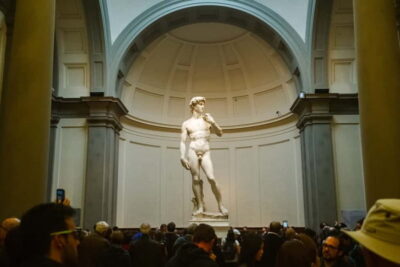
Timed Entrance Ticket to Michelangelo’s David
Read our review →
Michelangelo’s David Skip-the-Line Entry Ticket
Read our review →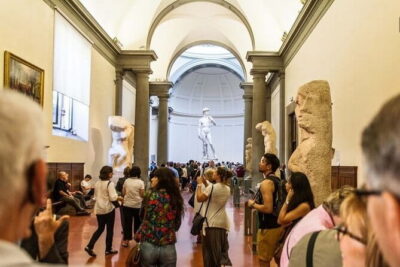
Florence Accademia Gallery Tour with Entrance Ticket Included
Read our review →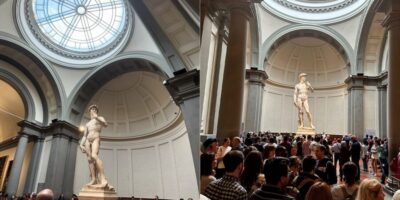
Timed Entry Ticket to Michelangelo’s David & eBook
Read our review →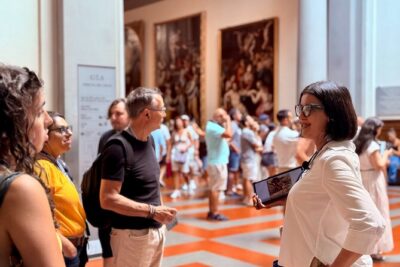
Skip the line: Uffizi and Accademia Small Group Walking Tour
Read our review →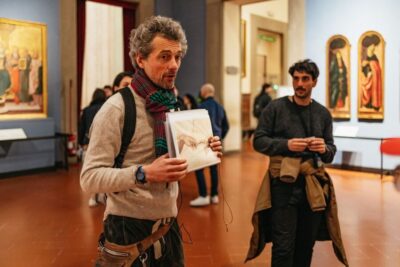
Accademia Gallery Guided Tour with Entry Ticket
Read our review →Browse the lists this tour appears in