
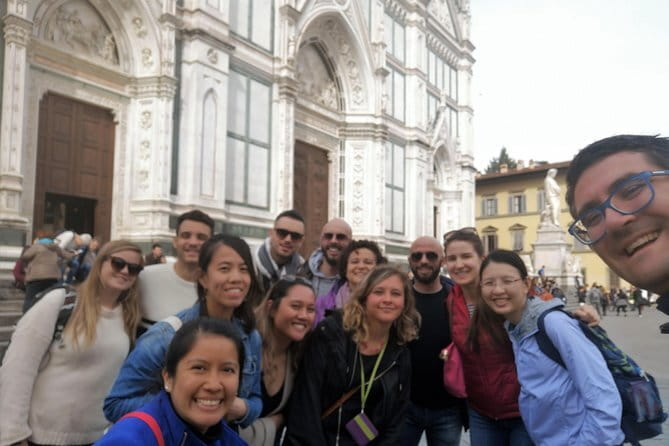
Reviewed · FLORENCE WALKING TOURS
Experience Florence’s Art and Architecture on a Walking Tour
Florence is compact, but its story is not. This 2-hour-15-minute walking tour gives you a fast, useful introduction, moving from Santa Maria Novella to Santa Croce through the city’s major streets, churches, squares, and Medici landmarks. Guides including Ludi, Ludovica, and Natalia bring strong local knowledge, with useful side notes on food, toilets, viewpoints, and Florence’s small wine windows.
I like two things right away. First, the route covers an impressive number of famous sights without charging museum admission. Second, the guides do more than point at buildings: they explain Florence’s art, politics, architecture, and people in a way that helps you read the city after the tour. The main consideration is sound. A few groups found it hard to hear, especially when numbers grew beyond the intended group size.
Key points to know before you book
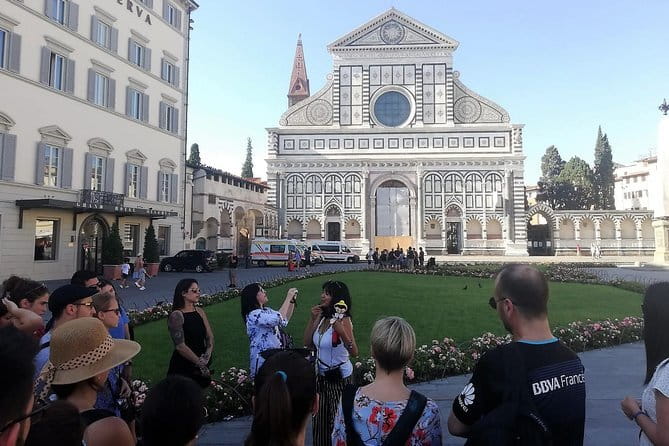
- A smart first morning in Florence: The route connects Santa Maria Novella, the cathedral, Orsanmichele, Piazza della Signoria, and Santa Croce.
- Excellent low-cost value: The listed price is $3.63 per person, with the guide’s work generally valued through a tip at the end.
- Strong guide lineup: Ludi, also referred to as Ludovica, and Natalia are praised for clear English, local insight, and engaging explanations.
- Small details make the walk special: Look for Florence’s wine windows and less-touristed lanes along the way.
- A compact but active route: You walk between seven stops, with about 10 to 15 minutes at many sights.
- Sound can affect the experience: The intended maximum is 20 people, but oversized groups have caused hearing problems.
Why this walking tour works as a Florence introduction
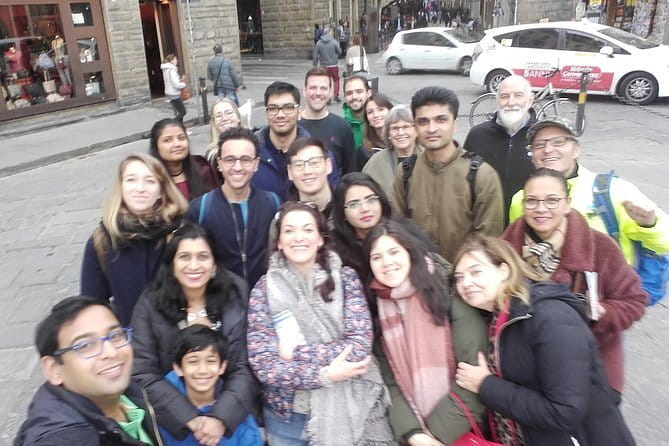
Florence rewards a little orientation. The historic center is easy to cross on foot, yet the streets can feel like a puzzle on your first day. A grand church may be around one corner, a Medici palace around the next, and a famous sculpture hidden in plain sight.
This route gives you that basic map. You begin at Santa Maria Novella, head through Via de’ Tornabuoni and Piazza della Repubblica, reach the cathedral, then continue toward Orsanmichele and Piazza della Signoria. The walk ends at Santa Croce, placing you on the eastern side of the old center.
I like this arrangement because it is not just a parade of isolated monuments. You see how Florence fits together. The churches, shopping streets, civic buildings, guild structures, and palaces all sit within a short walk of each other.
The timing is also useful. At roughly two hours and 15 minutes, this is long enough to provide context but short enough to leave your afternoon open for the Uffizi, the Accademia, the cathedral interior, or a slower lunch. You are not paying for entry to those museums, and that is part of the appeal: use the walk to decide what deserves your own time later.
More walking tours in Florence:
- Florence: Guided Walking Tour
★ 4.5 · 3,334 reviews - Skip the line: Uffizi and Accademia Small Group Walking Tour
★ 4.5 · 3,135 reviews - Florence: Guided Walking Tour
★ 4.6 · 1,602 reviews
Santa Maria Novella begins the story
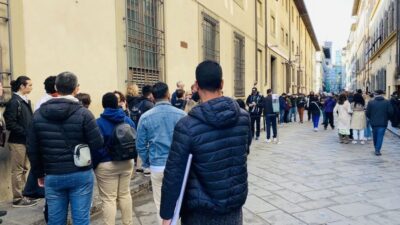
The meeting point is at Piazza di Santa Maria Novella, in front of the Basilica of Santa Maria Novella. The start time is 10:30 a.m., so you begin after the city has had time to wake up but before the hottest part of the day.
The basilica is an excellent opening stop. Its name is easy to remember, its location is central, and its façade gives the guide a chance to introduce Florence’s artistic traditions and the history of the church. You spend about 10 minutes here, with no admission ticket included or needed for the outdoor portion described on the walk.
This is also a practical meeting point if you arrive by train or use public transportation. The tour does not require you to navigate to an obscure corner of town. Look for the guide in front of the basilica and arrive with comfortable shoes and water.
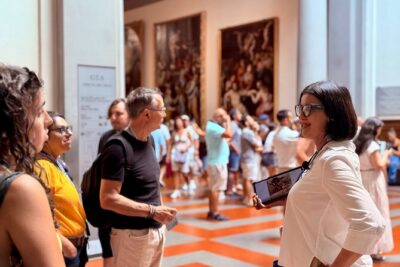
The walk is conducted in English. Ludi, also called Ludovica in some guide references, has been especially effective at linking art and daily life. Natalia is also noted for her clear explanations of Florence, the Medici family, and the city’s art. The exact guide depends on the date, but the experience is built around a live guide rather than an audio recording.
Via de’ Tornabuoni and Florence’s polished face
From Santa Maria Novella, the group continues toward Via de’ Tornabuoni. This is one of Florence’s best-known shopping streets, but the stop is not simply about window shopping.
You pass Piazza Antinori, Palazzo Strozzi, and Piazza Santa Trinita. These places help show how Florence’s wealthy families used streets, palaces, and public squares to express power. The guide can also connect the refined appearance of this part of town with the commercial and political forces that shaped Florence.
The stop lasts about 10 minutes. That sounds short, but it works well for an outdoor introduction. You have time to take photographs and hear the main points without turning the walk into a lecture.
I particularly like this part for first-time visitors because it shows a side of Florence that can be missed if you rush straight to the cathedral. The city is not only domes and paintings. It is also elegant streets, old family rivalries, high-end shops, and buildings that still frame everyday life.
Piazza della Repubblica and the Roman layer
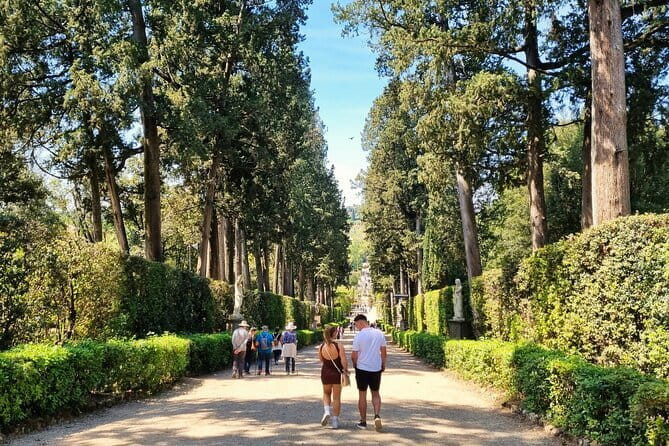
Piazza della Repubblica gets only about five minutes, but it has a clear purpose. The guide introduces Florence’s Roman origins, helping you understand that the city beneath today’s streets is older than the Renaissance image most people carry in their heads.
The square itself is broad and open, a sharp contrast to the narrower lanes nearby. That change in space gives you a useful sense of how Florence’s center has been altered over time.
Do not expect a long stop here. This is a quick piece of the larger story rather than a major sightseeing pause. Its value is in the connection: Florence was not created in a single artistic period, and the Roman foundation is one part of that longer story.
A completely different way to spend an afternoon in Florence:
- Florence: Skip-The-Line Uffizi Gallery Timed Entry Ticket
★ 4.5 · 27,832 reviews - Tuscany Day Trip from Florence: Siena, San Gimignano, Pisa and Lunch at a Winery
★ 5.0 · 21,634 reviews - Florence: Timed Entrance Ticket to Michelangelo’s David
★ 4.6 · 16,983 reviews - Florence: Michelangelo’s David Skip-the-Line Entry Ticket
★ 4.5 · 12,764 reviews
The cathedral complex in one powerful stop
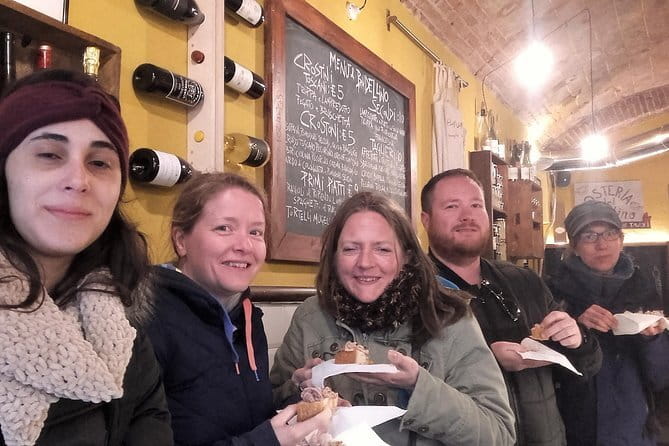
The cathedral is the visual centerpiece of the morning. The tour pauses for about 10 minutes at the Cathedral of Santa Maria del Fiore, with attention to the Baptistery, Giotto’s Campanile, and Brunelleschi’s dome.
This is an outdoor visit, and admission is not included. That distinction matters. You are getting an explanation and an exterior view, not entry into the cathedral, dome, baptistery, or bell tower. If you want to climb Brunelleschi’s dome or enter the monuments, arrange that separately.
Even from the square, the cluster of buildings can feel overwhelming. The guide helps separate the parts and explain what you are looking at. The Baptistery, bell tower, cathedral, and dome each have their own role, and a good explanation keeps the view from becoming a wall of marble and decoration.
This is one place where group size and sound matter most. The square is active, and voices can disappear quickly. One group found a mini-speaker insufficient, while another account described a group of roughly 15 people that stayed together well. The stated maximum is 20, but the company has acknowledged that unreserved arrivals have occasionally created much larger groups, particularly in August.
If hearing every detail is important to you, stay close to the guide and mention any problem at once. Do not wait until the next stop. The tour is much more useful when you can follow the explanation rather than simply walk behind the group.
Orsanmichele reveals Florence’s working city
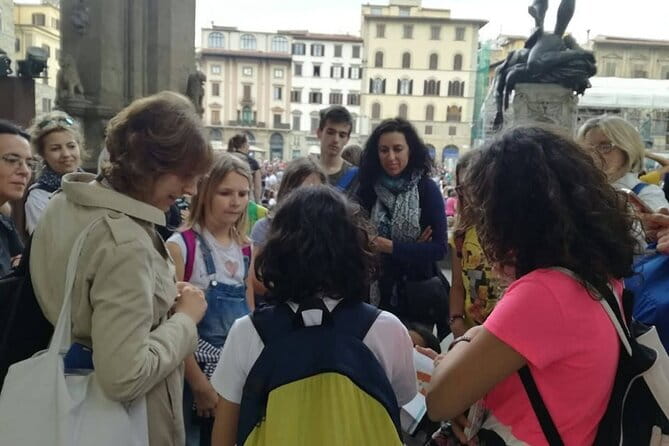
The Church and Museum of Orsanmichele is a welcome change from the cathedral’s grand scale. The stop lasts about 10 minutes and includes a look at sculptures associated with major artists such as Donatello, Ghiberti, Giambologna, Brunelleschi, Verrocchio, Sangallo, and Orcagna.
The building also helps explain Florence as a city of guilds and commerce. It is not just a religious site. Its art and architecture connect faith, trade, civic identity, and professional groups.
The tour description lists admission as free for this stop, but the walking format means you should not assume that every interior area will be open for a full museum visit. Think of this as an introduction to the church and its sculptural program, with the option to return if you want more time.
I like Orsanmichele because it rewards attention. The cathedral gets your eyes immediately, while this stop asks you to look more carefully at sculpture, façades, and the relationship between art and public life.
Piazza della Signoria puts power on display
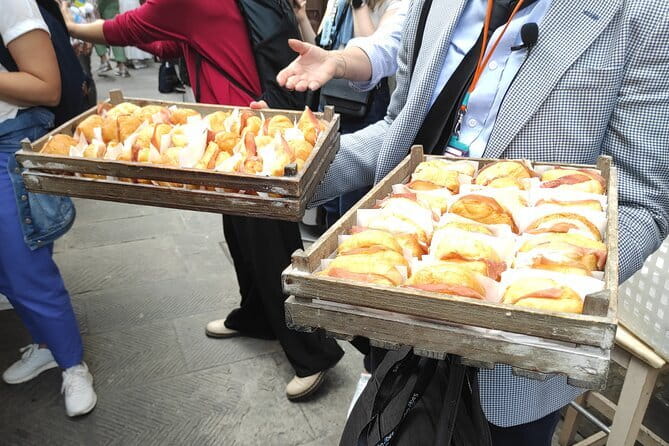
Piazza della Signoria is the longest listed stop, at about 15 minutes, and rightly so. Here the route brings together Palazzo Vecchio, the Uffizi, the Loggia dei Lanzi, and the direction of the Ponte Vecchio.
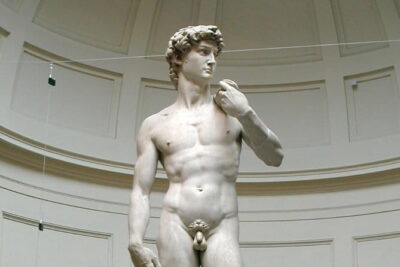
This square is Florence’s political stage. The guide uses its buildings and sculptures to explain the Medici family, civic authority, and the way public art can send a message. The names attached to the square include Arnolfo, Michelangelo’s David, the Marzocco, Cosimo de’ Medici, Perseus, and Cellini.
You will not have time to study every sculpture in detail. That is not the point. Instead, the guide gives you a framework for returning later. After this stop, you can make better decisions about spending several hours in the Uffizi, visiting Palazzo Vecchio, or crossing toward the Ponte Vecchio.
This is also where the tour’s express format becomes clear. You see major sights from outside, hear why they matter, and keep moving. If you prefer a slow art lesson at each sculpture, this will feel brisk. If you want a strong city overview before choosing your museums, the pace is sensible.
Santa Croce provides a fitting finish
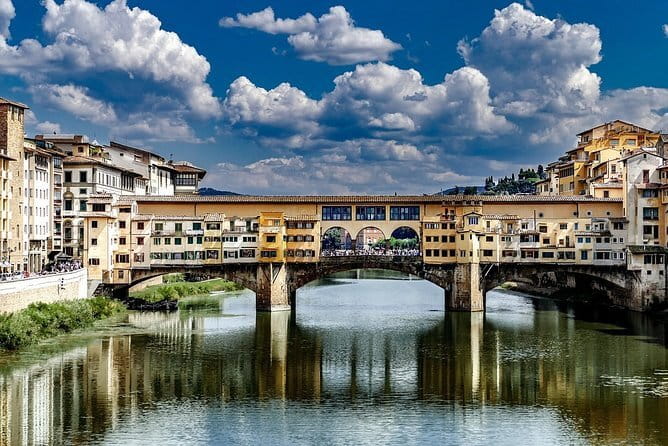
The route ends at the Basilica of Santa Croce, at Piazza di Santa Croce 18R, in front of the basilica. The final stop lasts about 10 minutes and covers the church’s story and the monument to Dante.
Ending here gives the walk a satisfying eastward sweep through Florence. You start near Santa Maria Novella and finish in a different part of the historic center, rather than returning to your starting point.
Santa Croce is also a useful place to continue your day. You can stay in the square, arrange a separate visit inside the basilica, or walk back toward other central sights. The tour itself does not include admission, so check separately if you want to enter.
The guide can also use this final stop to connect the city’s artists, writers, political figures, and religious institutions. That broader view is one reason the walk is more useful than simply following a map from one famous building to the next.
The guides make the difference
The strongest part of this experience is the human explanation. Ludi, or Ludovica, is described as especially warm, passionate, and generous with practical advice. Natalia is praised for her pleasant manner and clear teaching about art, Florence, and the Medici family.
You may also encounter another guide, and the quality can vary from person to person. One account describes an older male guide called Ryan, or possibly Ryan, who kept a group of about 15 moving together at a comfortable pace, even during a city marathon. That kind of calm group management matters on narrow streets.
Useful advice can be part of the experience too. Guides have pointed out food options, toilets, good viewpoints, less-touristed streets, and the small wine windows built into old Florentine walls. The wine windows are exactly the sort of detail you might walk past without noticing, and they give the tour a more local feel.
The practical tips are not guaranteed at every date, but the pattern is clear: this is not meant to be a dry list of dates and names. You are encouraged to look at Florence as a lived-in city.
Price, tipping, and what the bargain really means
At $3.63 per person, the price is unusually low for a guided city walk. The tour operates on a free-tour model, meaning the initial fee is small and you are expected to decide what the guide’s work is worth through a tip.
That arrangement can be excellent value if you want a short orientation without committing to a higher-priced private or small-group tour. It also means you should budget for a tip rather than treating the $3.63 as the full cost of the experience.
The tradeoff is that the final price is less fixed. If you receive a clear, engaging two-hour explanation from a strong guide, a suitable tip may bring the total closer to what a conventional paid tour costs. You still save money, but the model depends on your judgment.
The tour does not include museum or monument admission. That keeps the base price low, but you will pay separately if you return to the cathedral complex, Uffizi, Palazzo Vecchio, Santa Croce, or another site.
Who should book this Florence walk?
I would choose this tour for a first morning in Florence, especially if you want a quick map of the historic center before selecting museums. It also works well near the end of a stay if you want to connect places you have already seen and pick up a few details you missed.
It suits you best if you:
- Like history explained while walking rather than in a classroom
- Want major sights without paying for several separate admissions
- Appreciate local tips on food, viewpoints, toilets, and overlooked details
- Can manage a brisk city walk lasting more than two hours
- Are comfortable with a tip-based tour model
- Want an English-language introduction before visiting museums alone
It may not suit you if you need guaranteed quiet, a very small private group, or long interior visits. The route is outdoors, the pace is steady, and the guide may need to compete with city noise.
The walk is near public transportation, service animals are allowed, and most people can take part. Good weather is required, and the activity may be canceled if the minimum number is not reached. Free cancellation is available up to 24 hours before the start time, but changes or cancellations inside that window are not refunded.
Should you book it?
Yes, if you want an inexpensive, well-planned introduction to Florence and understand that this is an outdoor overview rather than a museum tour. The route covers the city’s essential landmarks, while details such as the wine windows and practical food tips keep it from feeling like a bare checklist.
Book with two cautions in mind: keep close enough to hear, and treat the advertised 20-person maximum as important. If the group is larger than expected, tell the guide quickly if sound is a problem.
For $3.63 plus a fair tip, this is a strong way to get your bearings, learn what you are looking at, and decide where to spend the rest of your Florence time.
FAQ
Where does the Florence walking tour start?
It starts at Piazza di Santa Maria Novella, 4n, in front of the Basilica of Santa Maria Novella.
Where does the tour end?
It ends at Piazza di Santa Croce, 18R, in front of the Basilica of Santa Croce.
What time does the tour begin?
The scheduled start time is 10:30 a.m.
How long does the experience last?
The walking tour lasts approximately 2 hours and 15 minutes.
Is the tour offered in English?
Yes. The tour is offered in English.
Are admission tickets included?
The walking tour includes outdoor stops and does not include admission to the Cathedral of Santa Maria del Fiore. The listed stops at Santa Maria Novella, Via de’ Tornabuoni, Piazza della Repubblica, Orsanmichele, Piazza della Signoria, and Santa Croce are shown as free stops.
What is the group size?
The stated maximum is 20 travelers. The company has noted that unusually large groups have occasionally formed when people arrived without reservations.
Can I cancel the booking?
Yes. You can cancel up to 24 hours before the experience for a full refund. Cancellations or changes made less than 24 hours before the start time are not refunded or accepted.
Recently added around Florence
- Accademia and Uffizi Small-group Guided Tour★ 4.5 · 8 reviews
- The David from Michelangelo.★ 5.0 · 3 reviews
- Combo: Accademia + walking + Uffizi Galleries Guided Tour★ 3.5 · 6 reviews
- The Complete Wine Tour Brunello, Nobile, Chianti wine experience★ 4.0 · 7 reviews
- The Best of Tuscany in 3 Days★ 4.5 · 13 reviews
- The Cooking Lab – Authentic Food Experience★ 5.0 · 113 reviews
- Florence Central Market Food Tour – Private Tour★ 4.0 · 7 reviews
- MaMa Florence: The Art of Corzetti – Hands-On Pasta Class★ 5.0 · 15 reviews
Florence Walking Tours, compared.
Skip the line: Uffizi and Accademia Small Group Walking Tour
Read our review →
Renaissance and Medici Tales Guided Walking Tour
Read our review →
Skip-the-Line Florence Highlights and David Walking Tour
Read our review →
Dark Mysteries and Legends Guided Walking Tour
Read our review →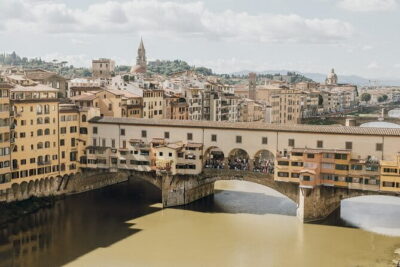
Florence in a Day: Michelangelo’s David, Uffizi and Guided City Walking Tour
Read our review →Browse the lists this tour appears in