
Reviewed · FLORENCE WALKING TOURS
Walking Guided Tour of Florence landmarks
Florence is compact, but its story is not. This 90-minute walk connects the city’s Medici heart to the Arno, passing the Duomo, grand squares, the Uffizi area, and Ponte Vecchio. It is a useful first look at Florence, especially if you want the city’s main landmarks explained in one sweep rather than discovered one by one.
I like the supplied audio headset, which helps in noisy streets, and the included luggage storage, a practical touch if you arrive before check-in. Morning, afternoon, and evening departures make it easy to fit around museum plans.
The main caution is pace. Some guides cover a great deal of history while standing in one place, and a few tours have run short of the final stop or gone well beyond the advertised 90 minutes. Your experience depends heavily on the guide’s speaking style and ability to keep the route moving.
Key points to know before booking
- The route runs from Palazzo Medici Riccardi to Ponte Vecchio, giving you a useful north-to-south orientation of central Florence.
- The tour is about 90 minutes, with six stops and no included admission to the palace, San Lorenzo, or the cathedral.
- Audio headsets are supplied, a real help when the group is near traffic, crowds, or busy squares.
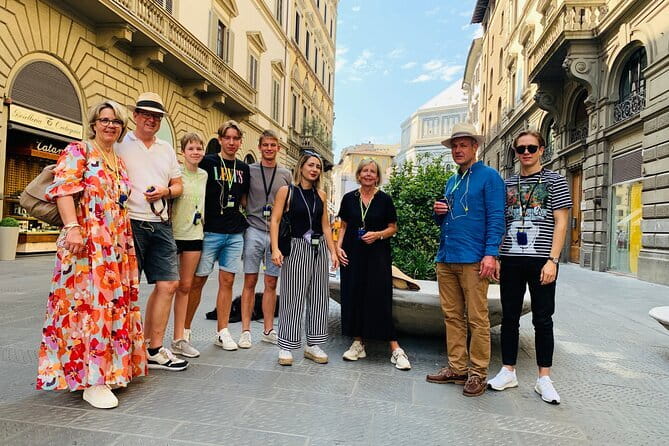
- Groups can reach 20 people, though some departures may be much smaller, even semi-private.
- Guides vary in style, with names such as Julia, Eduardo, Chiara, Sylvia, Luigi, and Kevin praised for clear, lively presentations.
- The $47.06 price is for orientation and explanation, not entry to Florence’s major museums or church interiors.
A smart first walk through Florence
This is best thought of as a city orientation, not a museum tour. You move through the historic center while the guide explains how the Medici family, Florence’s republic, its churches, and its trade shaped the streets around you.
The route is short on the map, but every block carries a large story. You begin near the Medici palace and finish at the city’s best-known bridge. Along the way, you pass several places you may want to revisit on your own, including the Duomo complex, Piazza della Signoria, and the Uffizi area.
I would book it early in your Florence stay. A good guide can help you decide which landmarks deserve your limited museum time and point out places worth returning to for food, coffee, or a closer look. Guides such as Chiara and Sylvia were especially good at answering questions and offering practical suggestions, while Julia, Eduardo, Luigi, and Kevin were praised for clear delivery and enthusiasm for Florence.
Do not expect a slow architectural study. The advertised itinerary allows about 20 minutes each at Palazzo Medici Riccardi, Basilica di San Lorenzo, and the Duomo, then 10 minutes apiece at Piazza della Repubblica, Piazza della Signoria, and Ponte Vecchio. Those times include moving between sights, so the guide must keep things tight.
More walking tours in Florence:
- Florence: Guided Walking Tour
★ 4.5 · 3,334 reviews - Skip the line: Uffizi and Accademia Small Group Walking Tour
★ 4.5 · 3,135 reviews - Florence: Guided Walking Tour
★ 4.6 · 1,602 reviews
Palazzo Medici Riccardi: where the route begins
The meeting point is at Via de’ Martelli 33R, close to the Medici district and within easy reach of the city center. The first stop, Palazzo Medici Riccardi, introduces the family that helped turn Florence into a center of banking, politics, and art.
The palace began as the home of the Medici family and was later acquired and expanded by the Riccardi family. Today it houses the Metropolitan City of Florence as well as a museum. That combination helps explain why the building matters beyond its elegant facade: this was a private residence, a political setting, and a symbol of status.
You should see this stop mainly as an exterior and historical introduction unless you separately arrange admission. Entry is not included in the tour price. If the palace interests you, note the details that the guide points out and return later when you can explore inside without holding up the group.
The first 20 minutes are also a test of your guide’s style. Some guides use the Medici family to explain Florence in a lively way, while others can get bogged down in dates, names, and family connections. If you prefer a broad picture, listen for the main ideas rather than trying to memorize every ruler and marriage.
Basilica di San Lorenzo and the Medici connection
From the palace, the tour continues to Basilica di San Lorenzo, one of Florence’s major churches and a key stop for understanding the Medici family. The basilica sits in the central market district, so this part of the walk places grand religious architecture alongside everyday city life.
San Lorenzo is also the burial place of the principal Medici family members, from Cosimo il Vecchio to Cosimo III. That makes the church more than another beautiful facade. It links the family’s political power to its religious patronage and public image.
Admission is not included. The guide can explain the church’s role from outside, but you will need a separate ticket if you want to see the interior. The tour’s 20-minute allocation is enough for context and orientation, not a detailed visit.
This is one place where a strong guide adds real value. You might hear the Medici story woven into the architecture rather than presented as a list of names. Guides who focus on the family, art, and city planning can make the next stops easier to understand.
The Duomo: Florence’s unmistakable center
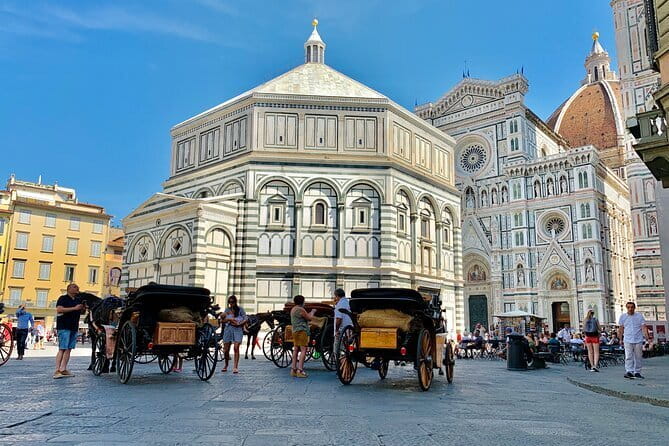
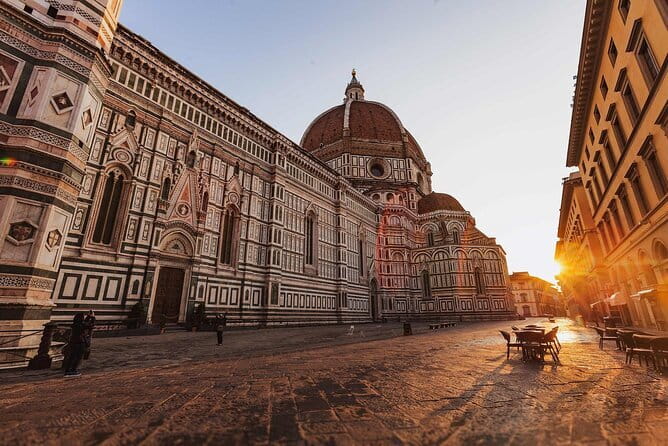
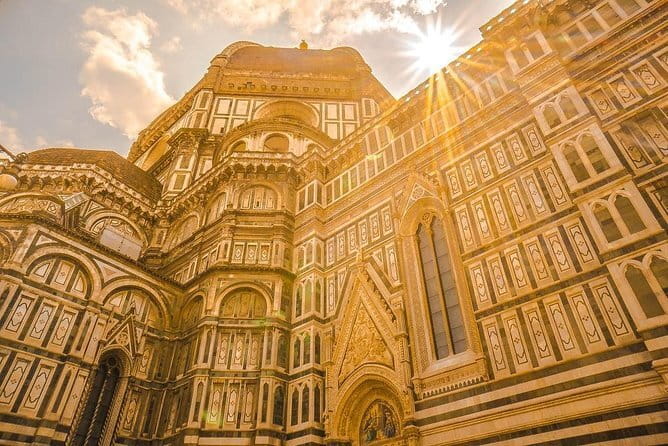
The Duomo, formally Cattedrale di Santa Maria del Fiore, is the visual anchor of the walk. Even if you have already seen photographs, the scale and detail of the cathedral are easier to appreciate when a guide explains how it fits into Florence’s religious and civic life.
The tour allows about 20 minutes here. That sounds generous until you account for crowds, street crossings, and the need to keep the group together. You will have time to look, take photographs, and hear the main points, but this is not a climb, cathedral interior visit, or full examination of the surrounding monuments.
No admission is included for the cathedral stop. That matters when you compare the price with a guided Duomo package. This experience gives you an outside explanation and city context. It does not replace a reserved entry for the cathedral complex.
I like having the Duomo in the middle of the route rather than at the very end. You see it as part of Florence’s wider plan, then continue into the civic heart of the city. That makes the city feel connected instead of like a string of isolated photo stops.
A completely different way to spend an afternoon in Florence:
- Florence: Skip-The-Line Uffizi Gallery Timed Entry Ticket
★ 4.5 · 27,832 reviews - Tuscany Day Trip from Florence: Siena, San Gimignano, Pisa and Lunch at a Winery
★ 5.0 · 21,634 reviews - Florence: Timed Entrance Ticket to Michelangelo’s David
★ 4.6 · 16,983 reviews - Florence: Michelangelo’s David Skip-the-Line Entry Ticket
★ 4.5 · 12,764 reviews
Piazza della Repubblica and the changing city
Piazza della Repubblica is a brief 10-minute stop, but it adds a different chapter. The square occupies the site of Florence’s ancient forum and later the old ghetto. During the period when Florence served as the capital of a reunited Italy, redevelopment cleared the area and created new avenues and boulevards.
The broad square can feel less medieval than the streets around it. That contrast is the point. Your guide can show how Florence changed over time, rather than presenting the center as a perfectly preserved Renaissance stage.
Because only 10 minutes are planned here, expect a concise explanation and perhaps a quick look around. It is not a leisurely café break. Keep your attention on the city’s later redevelopment, then save time for the route’s final landmarks.
This stop is useful for anyone trying to understand why Florence contains both tight medieval lanes and more open nineteenth-century spaces. It also gives your feet a short change of rhythm after the Duomo area.
Piazza della Signoria and the civic heart
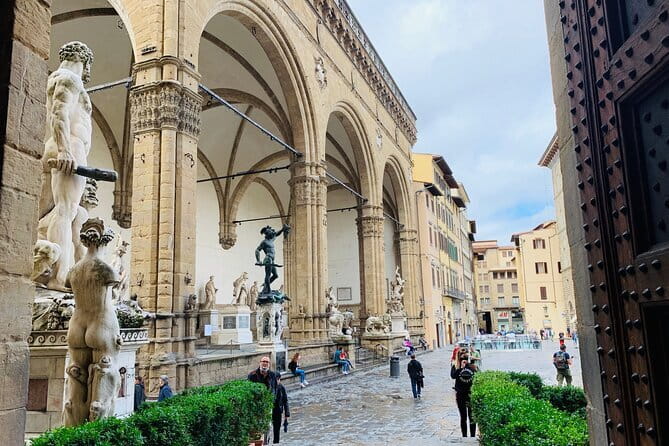
The walk then reaches Piazza della Signoria, the L-shaped square in front of Palazzo Vecchio. This was the political focus of the Florentine Republic and remains one of the city’s most important public spaces.
The square sits near the Duomo and the Uffizi Gallery, making it a useful landmark for future exploring. You are not simply looking at another plaza. You are standing where Florence’s political life played out, with Palazzo Vecchio serving as the visual and civic center.
The guide’s 10-minute presentation should help you place the surrounding buildings and understand why this area mattered. The square can be crowded, so the headset is especially useful here. Stay close to the guide and do not expect everyone in the group to hear if you drift several steps away.
This is also a good point to ask practical questions. Several guides have been praised for answering questions about restaurants, cafés, and what to see next. A focused question about returning to Palazzo Vecchio, visiting the Uffizi, or finding a less expensive meal may get more useful advice than a long list of historical dates.
Ponte Vecchio: the finish by the Arno
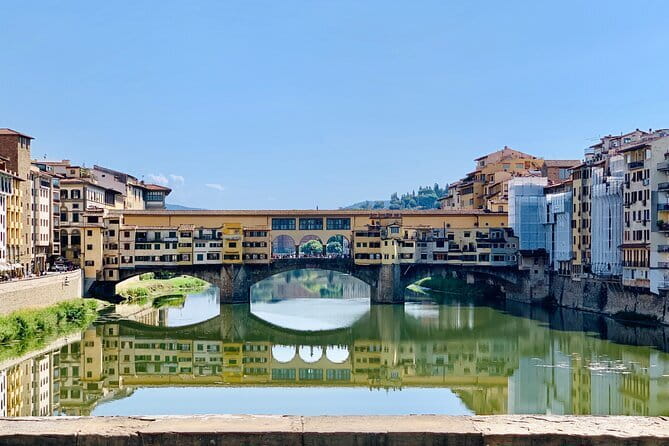
The final stop is Ponte Vecchio, Florence’s medieval stone bridge over the Arno. Shops still line the bridge, continuing a tradition that once included butchers and now includes jewelers, art dealers, and souvenir sellers.
The bridge is a natural finish because it gives the route a clear endpoint and a memorable view of Florence. You can look along the Arno toward the neighboring Ponte Santa Trinita and Ponte alle Grazie, then continue exploring on your own from the south side of the river.
The itinerary allows about 10 minutes here. That is enough for an explanation and a first look, but not much time to browse shops or linger by the river. One important practical warning: at least one departure ended before reaching Ponte Vecchio, so if the bridge is a must-see for you, ask the guide early about timing.
The end point is listed as Ponte Vecchio, 50125 Florence. That is helpful because you are not returned to the starting point. You can continue toward Oltrarno, walk back through the center, or make your own way to another appointment.
What the $47.06 price really buys
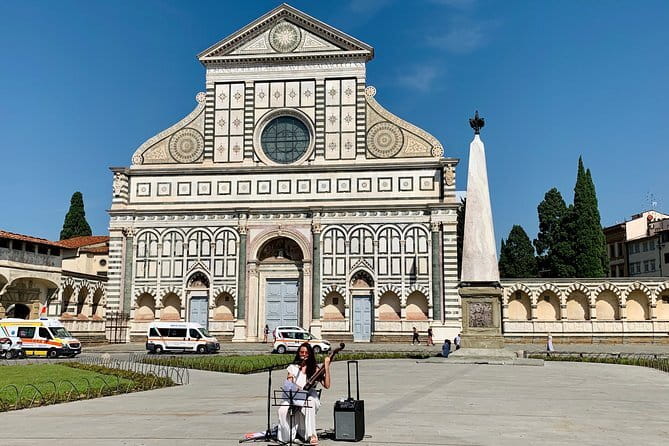
At $47.06 per person, this is not the cheapest way to walk around Florence. The main landmarks are close together, and you can see their exteriors without paying for a tour.
The value comes from the explanation, route planning, audio equipment, and chance to ask questions. If you are visiting Florence for the first time, a good guide can save you from treating the city as a collection of unrelated buildings. You also get a ready-made route from the Medici quarter to the Arno without having to plan it yourself.
The price does not include admission to Palazzo Medici Riccardi, San Lorenzo, or the Duomo. If you want to go inside any of them, budget separately. This is important because the tour works best as a starting point for later visits, not as a substitute for them.
I would find the cost easier to justify with a small group and a strong guide. Some departures have been intimate enough to feel semi-private, including one reported experience with only two participants and a guide. At the maximum of 20 people, the value depends more on the headset and guide’s control of the group.
The guide makes or breaks the experience
The strongest part of this tour is the human element. Guides such as Eduardo, Julia, Chiara, Sylvia, Luigi, Kevin, and Rachel have been singled out for clear English, warmth, good public speaking, humor, or practical local advice. A guide who keeps moving while explaining the city can make 90 minutes feel well spent.
The weaker version is a lecture in the street. Some guides have spoken for more than 10 minutes at a time without moving, covered too many dates and family names, or offered information that felt disconnected from the buildings around the group. A heavy accent, soft voice, or faulty receiver can make that problem worse.
The headset helps, but it cannot solve every issue. Equipment has occasionally stopped working during a tour, and some people have found a guide’s accent difficult to follow. If you are sensitive to spoken English, stay close, use the receiver, and ask for clarification early rather than waiting until the group has moved on.
There is also a timing issue. The tour is scheduled for about an hour and a half, but one experience ran 40 to 45 minutes over, while another finished without covering Ponte Vecchio. That variation suggests you should avoid booking a tight museum reservation immediately afterward.
Group size, timing, and practical details
The maximum group size is 20. That is large enough to create some street-corner crowding, but the audio headsets should make it easier to hear. Smaller departures can feel far more personal and may allow the guide to adjust the route to your interests.
You can choose a morning, afternoon, or evening start. Morning is a sensible choice if you want the rest of the day for museums. An afternoon departure can work after a relaxed lunch, while an evening walk may give you a cooler, more atmospheric introduction to the center. The exact mood will depend on the departure time and crowd levels.
Luggage storage is included, which is useful if you are carrying bags between accommodation and transport. Service animals are allowed, the meeting area is near public transportation, and most people can participate. You should still expect to stand and walk through central streets for the full tour.
Confirmation arrives at booking. Free cancellation is available up to 24 hours before the start time for a full refund. Changes or cancellations inside that 24-hour window are not accepted, and the local Florence time controls the deadline.
Who should book this Florence walk?
I would choose this tour for a first day in Florence, especially if you want a broad city introduction before committing to museum visits. It suits you if you enjoy history, want the Medici story explained, and appreciate having someone point out what deserves a second look.
It also works well for people with limited time. In 90 minutes, you reach six central landmarks and finish at Ponte Vecchio. The route gives you a practical mental map, which can make the rest of your stay easier.
I would be cautious if you want extensive interior visits, quiet photography time, or a tightly controlled schedule. You may prefer self-guided sightseeing if you already know Florence well or dislike listening to long historical explanations. And if the Duomo interior, Medici palace, or San Lorenzo is your main goal, book the necessary admission separately.
Should you book it?
Book this walking tour if you want a guided first look at Florence, supplied headsets, luggage storage, and a route that links the Medici quarter with Ponte Vecchio. The best guides turn the walk into a clear story about power, religion, art, and public life.
Skip it if you need guaranteed entry to the major sights, a precise 90-minute finish, or a tour built around detailed interior visits. If you do book, choose it early in your stay, avoid scheduling an immediate appointment afterward, and ask the guide to keep enough time for Ponte Vecchio. That small bit of planning will help you get the most from the experience.
FAQ
How long is the walking tour?
The tour lasts approximately 1 hour and 30 minutes.
What landmarks are included?
The route includes Palazzo Medici Riccardi, Basilica di San Lorenzo, the Duomo, Piazza della Repubblica, Piazza della Signoria, and Ponte Vecchio.
Where does the tour start?
It starts at Via de’ Martelli 33R, 50129 Florence, Italy.
Where does the tour end?
The tour ends at Ponte Vecchio, 50125 Florence, Italy.
Are entrance tickets included?
No. Admission is not included for Palazzo Medici Riccardi, Basilica di San Lorenzo, or the Duomo. Piazza della Repubblica, Piazza della Signoria, and Ponte Vecchio are free stops.
Is the tour offered in English?
Yes. The experience is offered in English.
Are audio headsets provided?
Yes. Audio headsets are supplied so you can hear the guide more clearly.
What is the cancellation policy?
You can cancel at least 24 hours before the start time for a full refund. Cancellations or changes made less than 24 hours before the start time are not accepted.
Recently added around Florence
- Accademia and Uffizi Small-group Guided Tour★ 4.5 · 8 reviews
- The David from Michelangelo.★ 5.0 · 3 reviews
- Combo: Accademia + walking + Uffizi Galleries Guided Tour★ 3.5 · 6 reviews
- The Complete Wine Tour Brunello, Nobile, Chianti wine experience★ 4.0 · 7 reviews
- The Best of Tuscany in 3 Days★ 4.5 · 13 reviews
- The Cooking Lab – Authentic Food Experience★ 5.0 · 113 reviews
- Florence Central Market Food Tour – Private Tour★ 4.0 · 7 reviews
- Family Friendly Florence Private City Tour★ 5.0 · 47 reviews
Florence Walking Tours, compared.
Skip the line: Uffizi and Accademia Small Group Walking Tour
Read our review →
Renaissance and Medici Tales Guided Walking Tour
Read our review →
Skip-the-Line Florence Highlights and David Walking Tour
Read our review →
Dark Mysteries and Legends Guided Walking Tour
Read our review →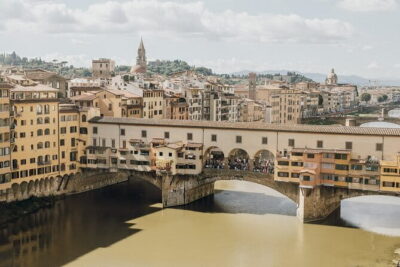
Florence in a Day: Michelangelo’s David, Uffizi and Guided City Walking Tour
Read our review →Browse the lists this tour appears in