
Reviewed · FLORENCE WALKING TOURS
Fascinating Florence: Guided Walking Tour
Florence makes more sense once you know who paid for its churches, why its artists competed so fiercely, and how the Medici family shaped nearly every grand square. This three-hour walk brings those stories to life as you move from Piazza della Repubblica to the Duomo, with stops at Ponte Vecchio, Santa Trinita, Palazzo Strozzi, and the city’s great cathedral complex.
I like the small maximum group of 15, which gives the guide room to answer questions, and I like the supplied headsets, especially in noisy piazzas. Guides such as Mario, Angelo, Ismael, Hilde, and Riccardo are repeatedly singled out for clear storytelling and strong local knowledge. The main drawback is the price: at $511.66 per person, this is a costly walking tour, and the current arrangements do not include climbing Brunelleschi’s Dome or regular entry inside the Duomo.
Key points to know before you book
- A history-first introduction: The tour explains Florence through Medici power, church influence, rival artists, and the rise of the Renaissance.
- A useful first-morning activity: The route helps you get oriented before visiting museums and churches on your own.
- Headsets make a real difference: You can hear the guide while standing in busy squares or walking along narrow streets.
- The Duomo interior is not currently included: You see the cathedral complex and learn about Brunelleschi’s Dome, but dome climbing is excluded and cathedral entry has been omitted under the stated regulations.
- Expect cobblestones and steady walking: Wear shoes suited to old city streets, even though some participants felt the pace involved more stopping than walking.
- Dress carefully for churches: Knees and shoulders must be covered for entry to sacred sites.
Why this walk works best at the start of your stay
Florence is compact, but its layers can be confusing. A Medici palace, a guild church, a bridge lined with shops, and a cathedral built by rival craftsmen may all appear within a short walk. Without context, you see pretty buildings. With a good guide, you begin to understand why they are there.
This tour is designed to give you that framework. It begins near Via Roma and ends at Piazza del Duomo, so you finish beside the city’s most famous landmark. That makes the walk especially useful on your first full day. You can mark restaurants, bars, shops, and gelato stops as the guide points them out, then return to the places that suit you later.
The best guides make the city personal. Riccardo is described as Florence-born and able to explain his hometown with local feeling. Ismael is praised for clear English and unusual details that do not always appear in guidebooks. Angelo is noted for humor and energy, while Mario is remembered for turning Medici politics and Florentine secrets into a lively story.
The guide can change the character of the experience. That is normal with a walking tour, but it is worth keeping in mind when you pay a premium price.
More walking tours in Florence:
- Florence: Guided Walking Tour
★ 4.5 · 3,334 reviews - Skip the line: Uffizi and Accademia Small Group Walking Tour
★ 4.5 · 3,135 reviews - Florence: Guided Walking Tour
★ 4.6 · 1,602 reviews
Starting at Piazza della Repubblica
The walk begins in central Florence, with a short introduction to the city and its medieval past. Piazza della Repubblica is a practical starting point because it is easy to connect with Florence’s central streets from here, and it quickly puts you among the city’s main sights.
You spend about 15 minutes at this first stop. Do not expect an extended visit to a museum or a formal presentation. Instead, this is where the guide sets the scene: Florence as a powerful medieval commune, a center of trade, and later the birthplace of a cultural movement that changed Europe.
The opening stories help explain why money mattered so much here. Wealthy families, merchant guilds, church leaders, and artists were all competing to shape public space. That competition is one of the useful themes running through the entire walk.
The meeting instructions deserve care. The listed starting point is Via Roma, 1r, in central Florence, but some people have found the office entrance confusing, including a locked door before the guide arrived. I would confirm the exact meeting directions on your mobile ticket and arrive with enough time to locate the entrance without rushing.
Churches, guilds, and the Orsanmichele stop
The route continues toward the Church and Museum of Orsanmichele, with attention also given to Santa Trinita and Santa Maria del Fiore. This is where Florence’s art becomes more than decoration.
Orsanmichele began with a practical purpose and later became closely tied to the city’s trade guilds. Its sculptures reflect the wealth and pride of those powerful associations. A guide can help you see the political message in the building, not just the carved stone.
The stop is listed at about 15 minutes, so you should expect an explanation rather than a long, quiet visit inside every site. The wording allows for visits to churches, but church schedules can change. Mass, special services, and closures may prevent the group from entering.
Santa Trinita is specifically listed with entry included. It gives the walk a welcome change of scale after the open streets and larger monuments. You can see how Florentine religious buildings often combine worship, family status, artistic patronage, and civic pride in a relatively small space.
Dress is important here. Men and women need covered knees and shoulders, and sleeveless or backless tops are not accepted for sacred sites. The safest plan is to wear long trousers or a longer skirt and a top that covers your shoulders, particularly in hot weather when casual summer clothing can cause trouble.
Palazzo Strozzi and the power of a wealthy family

At Palazzo Strozzi, the guide explains the history of the palace from outside. This is a short stop, but it helps you understand the rivalry among Florence’s leading families.
The Strozzi palace is a good reminder that Florence’s grand buildings were not funded by an abstract artistic spirit. They were also statements of wealth, ambition, and social position. The city’s ruling families used architecture to announce their importance, even when political power shifted from one house to another.
Since the visit is exterior only, do not expect access to palace rooms. The value here is the story and the building’s place in the city’s political network. If you want more time with exhibitions or interior decoration, you will need to arrange that separately.
This is also a useful point to ask your guide for practical advice. The tour promises tips on shopping, dining, bars, and gelato, and the informal questions can be as useful as the prepared history. Ask where to return after the tour rather than trying to make every decision during the walk.
A completely different way to spend an afternoon in Florence:
- Florence: Skip-The-Line Uffizi Gallery Timed Entry Ticket
★ 4.5 · 27,832 reviews - Tuscany Day Trip from Florence: Siena, San Gimignano, Pisa and Lunch at a Winery
★ 5.0 · 21,634 reviews - Florence: Timed Entrance Ticket to Michelangelo’s David
★ 4.6 · 16,983 reviews - Florence: Michelangelo’s David Skip-the-Line Entry Ticket
★ 4.5 · 12,764 reviews
Santa Trinita and Florence’s quieter side
Piazza Santa Trinita gives the route a pleasant pause away from the broad Duomo square. The church entry is included, subject to religious services and other closures.
I like this part of the walk because it moves beyond Florence’s greatest postcard views. Santa Trinita helps show how the city’s artistic story continues in smaller churches and neighborhood squares. The guide can point out the connection between religious art, wealthy donors, and the families who wanted their names remembered.
The listed timing is again about 15 minutes. That is enough for a focused introduction, but not enough for a slow study of every painting, chapel, or architectural detail. If you enjoy church art, make a note of the building and return later with more time.
The walk is generally manageable for most people, but Florence’s old paving can be hard on your feet. Several people specifically advise good walking shoes. You should also be ready for a tour that alternates between moving and standing while the guide talks.
Ponte Vecchio, with history instead of a photo stop
Ponte Vecchio is one of Florence’s best-known sights, yet it can be easy to cross, take a picture, and move on without understanding its role in the city. The guide explains the bridge’s history and helps place it within Florence’s commercial and political story.
The bridge stop is listed as free and lasts about 15 minutes. It is seen from the public route rather than treated as a separate attraction with a long interior visit. You should expect a quick orientation, not a private viewing platform or extended shopping time.
The setting can be crowded, and this is where the headsets are especially useful. You can stay close to the group without needing to stand directly beside the guide. The audio equipment also helps when the guide is speaking while the group is spread along a narrow street or bridge.
Ponte Vecchio is a natural point to ask for shopping suggestions, though the guide’s advice will be general rather than a dedicated shopping tour. The main benefit is learning which central areas deserve a return visit after you have your bearings.
Piazza della Signoria and Florence’s hard-edged politics

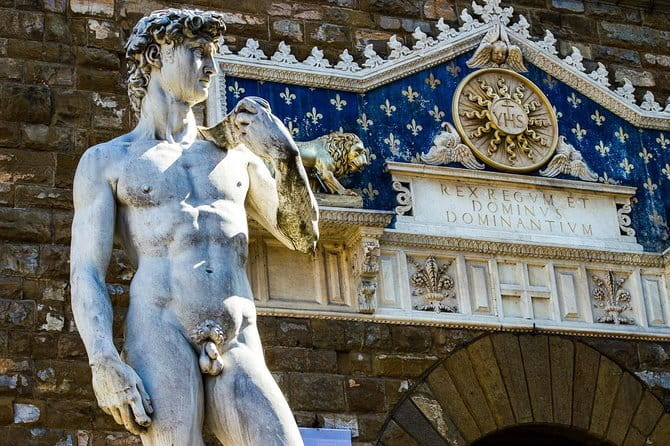
Piazza della Signoria is one of the strongest stops for storytelling. Here, the guide connects the square’s statues and buildings with political conflict, Medici rule, religious extremism, and the tense relationship among Florence’s leading artists.
The tour raises the sort of questions that make the past feel immediate. Who was punished near the Duomo? What did Leonardo do that offended Michelangelo? How did the Medici use artists to strengthen their position? These stories give the monuments a human edge, though some details may be presented in a brisk stream.
The square is free to visit, and the group spends about 15 minutes here. You will not receive a full museum tour of the Palazzo Vecchio or the nearby sculpture collection. Instead, you get a concise explanation of why this open space mattered so much to public life.
This is where a strong guide matters most. Corina is praised for answering simple questions with both humor and historical detail. Hilde is described as bringing unexpected discoveries to life, while several comments about Ismael point to his ability to explain Florence clearly without relying on a guidebook script.
If you like political history, art rivalry, and stories about power, this section may be the most memorable part of the morning.
Reaching the Baptistery and Brunelleschi’s Dome
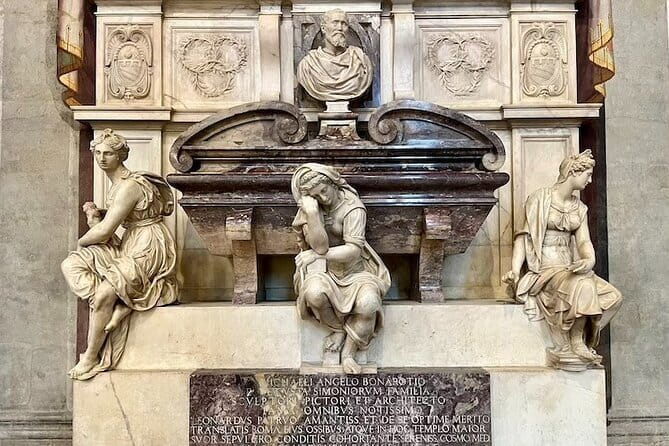
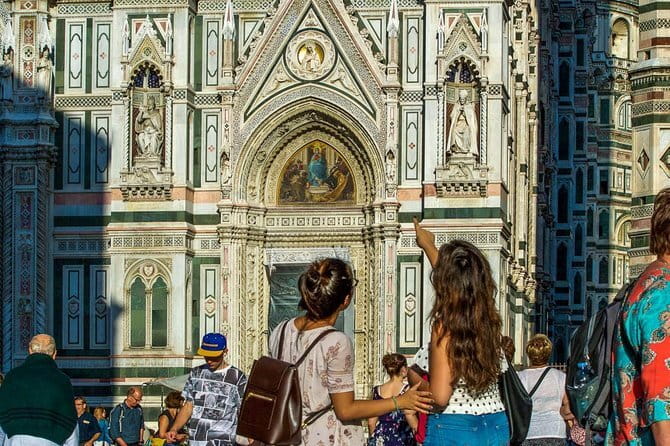
The walk ends at Piazza del Duomo, Florence’s grandest concentration of religious architecture. You see the Baptistery, Ghiberti’s Gates of Paradise, Giotto’s Bell Tower, and Santa Maria del Fiore, while the guide explains how Brunelleschi solved the problem of covering the cathedral with a huge dome.
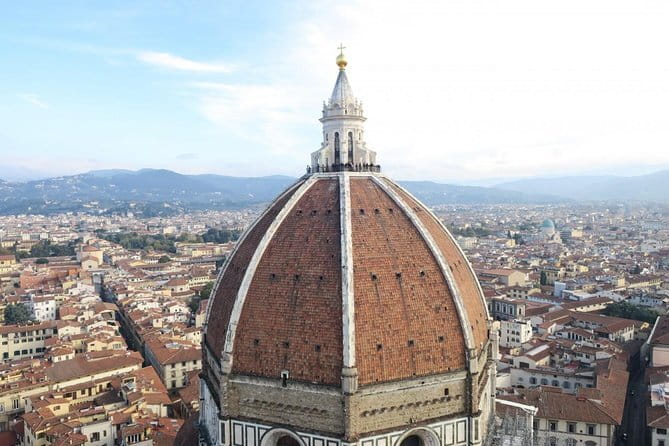
The engineering story is a major reason to take the tour. Brunelleschi was trained as a goldsmith rather than a traditional architect, yet he developed a structure that became one of the defining achievements of the Renaissance. Hearing the basic problem before seeing the dome helps you look up with more appreciation.
The tour does not include climbing the Dome. It also does not currently include regular entry inside the cathedral under the stated priority-entry rules, which require a mandatory 30-minute video at a nearby theater. The operator has chosen to omit cathedral entry while those rules remain in place.
That point is important because the general description refers to stepping inside Santa Maria del Fiore, while the additional operating information says cathedral entry has been left out. Treat the current terms as controlling and check the details before booking if interior access is essential to you.
You still finish in the best possible location for continuing your day. From the Duomo, you can arrange your own visits, return to a church, find lunch, or simply spend time looking at the marble façades and the dome from different angles.
What the three hours feel like
The tour lasts about three hours and uses a maximum group size of 15. That is small enough for a guide to keep the group together without the feel of a large bus excursion, though the actual number may be lower. One reported group had only seven people, which allowed for easy questions and a more relaxed exchange.
The walking is not nonstop. One person felt the tour included less walking than expected because much of the time was spent listening at churches, bridges, and squares. Another described it as a long walk and stressed the need for good shoes. Both impressions can be true: the route covers central Florence, but the experience is built around frequent stops.
The headsets are a real practical advantage. You do not need to crowd around the guide, and you can hear explanations in open squares. They also make it easier to keep moving without losing the thread of the story.
The tour runs in all weather. Bring suitable clothing, since Florence can be uncomfortable in heat, rain, or cold, and sacred-site clothing rules still apply regardless of the forecast.
Is $511.66 a fair price?
At $511.66 per person, this is expensive for a three-hour walking tour. Group discounts may improve the cost, but the standard price remains high compared with a simple self-guided walk or a lower-cost group tour.
The value comes from the guide rather than admission tickets. You are paying for a structured route, English-language interpretation, headsets, local recommendations, and a clear explanation of how Florence’s art and politics connect. If your guide is as effective as Mario, Angelo, Ismael, Hilde, or Riccardo, the history can change how you see the rest of the city.
The value is weaker if you mainly want access to the Duomo interior, a Dome climb, or extended time inside museums. Those are not part of this tour. You would need separate tickets and more time.
I would also compare the cost carefully if you are booking for several people. The group discount may matter greatly, and the tour’s value is easier to justify for visitors who want a private-feeling introduction without arranging their own guide.
Who should book this Florence walk?
I would choose this tour if you are new to Florence and want the city explained before you tackle its museums. It suits people who enjoy history, architecture, family rivalries, and stories about artists more than people who want a fast checklist of photo stops.
It also works well for you if you like asking questions and making decisions as you go. The guide can suggest places to eat, shop, or find gelato, giving you a useful starting point for the rest of your visit.
You may want another option if your main goal is extensive interior access. The Duomo entry situation is restrictive, the Dome climb is not included, and several stops are viewed from outside or covered in short explanations.
Allow extra time to find the starting office, especially if the meeting instructions are not clear. The tour itself ends at the Duomo, not back at Via Roma, so plan your next activity from that point.
Final verdict: book it for the stories, not the admissions
I recommend this tour for a first full day in Florence if you want a strong historical framework and a personable English-speaking guide. The best guides turn the Medici, Brunelleschi, Leonardo, Michelangelo, and Florence’s church politics into a connected story rather than a pile of dates.
The high price requires careful thought. Book it if clear interpretation, local advice, and a small group matter more to you than included tickets. Skip it if you mainly want to enter the Duomo, climb the Dome, or explore at your own pace. Either way, wear sensible shoes, cover your knees and shoulders, and confirm the current cathedral arrangements before paying.
FAQ
How long does the Fascinating Florence walking tour last?
The tour lasts approximately three hours.
Where does the tour begin and end?
It begins at Via Roma, 1r, 50123 Firenze, Italy, and ends at Piazza del Duomo. The tour finishes at the Duomo.
Is entry to the Duomo included?
The current additional information says cathedral entry is omitted because of priority-entry rules requiring a 30-minute video at a nearby theater. The Dome climb is not included.
Which places are visited during the walk?
The route includes Piazza della Repubblica, Orsanmichele, Santa Trinita, Palazzo Strozzi from outside, Ponte Vecchio, Piazza della Signoria, the Baptistery, Giotto’s Bell Tower, and Piazza del Duomo.
What should I wear for the tour?
For entry to sacred sites, your knees and shoulders must be covered. Shorts and sleeveless or backless tops may lead to refused entry. Dress suitably for the weather because the tour operates in all conditions.
How large is the group?
The group has a maximum of 15 people. Headsets are provided so you can hear the English-speaking guide clearly.
Recently added around Florence
- Accademia and Uffizi Small-group Guided Tour★ 4.5 · 8 reviews
- The David from Michelangelo.★ 5.0 · 3 reviews
- Combo: Accademia + walking + Uffizi Galleries Guided Tour★ 3.5 · 6 reviews
- The Complete Wine Tour Brunello, Nobile, Chianti wine experience★ 4.0 · 7 reviews
- The Best of Tuscany in 3 Days★ 4.5 · 13 reviews
- The Cooking Lab – Authentic Food Experience★ 5.0 · 113 reviews
- Florence Central Market Food Tour – Private Tour★ 4.0 · 7 reviews
- Family Friendly Florence Private City Tour★ 5.0 · 47 reviews
Florence Walking Tours, compared.
Skip the line: Uffizi and Accademia Small Group Walking Tour
Read our review →
Renaissance and Medici Tales Guided Walking Tour
Read our review →
Skip-the-Line Florence Highlights and David Walking Tour
Read our review →
Dark Mysteries and Legends Guided Walking Tour
Read our review →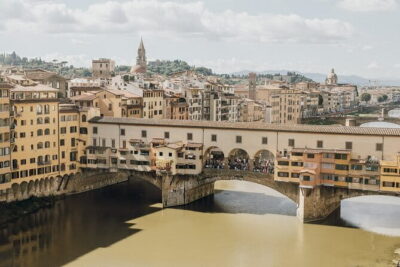
Florence in a Day: Michelangelo’s David, Uffizi and Guided City Walking Tour
Read our review →Browse the lists this tour appears in