Reviewed · GUIDED
Best of Florence Top-rated Attractions with Private Guide
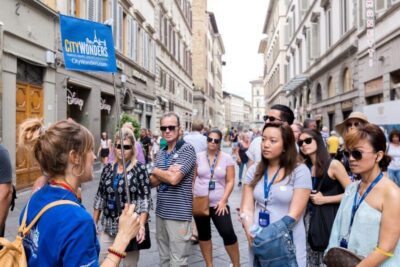
Florence packs an astonishing amount into a small historic center, and this two-hour private walk gives you a quick, useful map of the city. I like the route’s smart sequence, from Santa Croce through the old political heart to the Duomo, and I like that guides such as Daniel, Glenda, and Leonardo have tailored the walk to different interests. You also get tips on what to see, do, and eat after the tour.
The main consideration is pace. You cover several major sights in about two hours, and most stops are outside. Guide quality may vary, too. Some visitors had excellent experiences with clear, lively English, while one found the guide’s English hard to follow.
Key points to know before booking
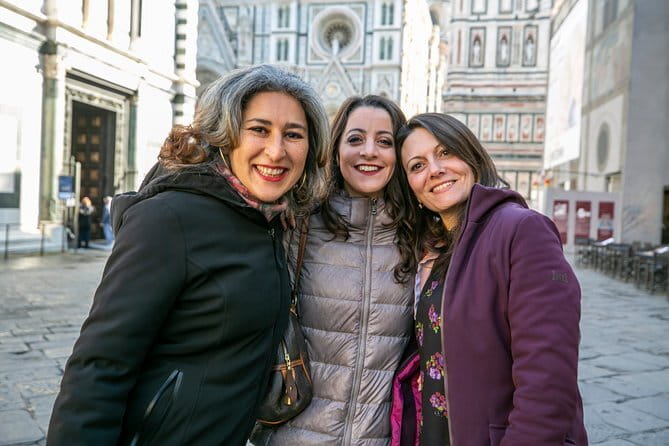
- A fast first look at Florence: Cover Santa Croce, Ponte Vecchio, Piazza della Signoria, the Duomo, and San Lorenzo in one walk.
- A private format: Only your group participates, though group size can differ. Past departures included both two-person and six-person groups.
- Strong guide personalities: Daniel, Glenda, and Leonardo are specifically praised for energy, flexibility, art knowledge, and practical advice.
- Mostly an outdoor introduction: The route focuses on squares, streets, bridge views, and exterior architecture rather than extended museum visits.
- Useful for a short stay: The walk is a sensible way to get oriented if you have only one day in Florence.
- A premium price: At $227.10 per person, the value depends heavily on your group size and how much you want personal attention.
Why this short Florence walk works
Florence is easy to explore on foot, but its sights can blur together on a first visit. A guide helps you connect the buildings, families, artists, churches, and political struggles that shaped the city.
I like that this route does not spend the whole two hours inside one museum. Instead, it links several public spaces where Florence’s story unfolded. You move from the Franciscan church of Santa Croce to the old bridge, then to the seat of government and finally to the cathedral complex.
That sequence gives you a useful mental map. Afterward, you can return to the places that caught your attention, book a museum visit, or follow the guide’s suggestions for food and other sights.
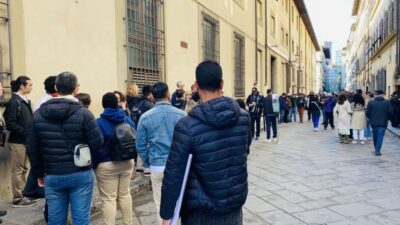
The tour is sold as a private activity, so only your group takes part. That matters in Florence, where narrow streets and crowded squares can make a large group awkward. A small party also gives you a better chance to ask questions and adjust the route.
The price is the part I would examine closely. At $227.10 per person, this is not a budget orientation walk. It may make sense for a couple, family, or group that values a private guide and has limited time. If you are traveling alone, the price is harder to justify unless personal attention is your top priority.
More private tours in Florence:
- Cinque Terre and Pisa Tower Tour from Florence Semi Private
★ 5.0 · 1,406 reviews - From Florence: Private Chianti Hills Tour with Tasting
★ 4.3 · 809 reviews - Private Self-Guided E-Bike Ride in Tuscany with Vineyard Visit
★ 5.0 · 775 reviews
Starting at Santa Croce
The meeting point is Piazza di Santa Croce, a broad square in the eastern part of central Florence. You begin outside the Basilica of Santa Croce, the principal Franciscan church in the city.
The church is known for its frescoes and for its connection to major Florentine figures. Since the listed stop is outside the church and admission is not included as a separate tour feature, you should think of this part as an introduction to the building and its place in Florence, not as a long interior visit.
This is a good opening stop because it gives the guide room to explain Florence during the Renaissance. You can expect discussion of the city’s art, religion, politics, and powerful families, though the exact emphasis will depend on your guide and questions.
The square also gives you a clear first sense of Florence’s scale. You are in the historic center, surrounded by old stone buildings and a major church, yet the route has not become complicated. It is a calm place to begin before moving into tighter streets.
If you want plenty of time inside Santa Croce, this tour may not be enough on its own. You can explore the church at another time, but the walk itself is designed to keep moving.
From the Bargello to the Ponte Vecchio
From Santa Croce, the route continues toward Piazza dei Peruzzi and the Bargello Palace. The Bargello is one of Florence’s major historic buildings, and seeing it along the way helps place the city’s public life in a wider setting.
You then pass the Porcellino market before reaching the Ponte Vecchio. This part of the walk is less about checking off a single monument and more about watching the city’s streets connect. Your guide can explain how Florence’s commercial and civic areas fit together.
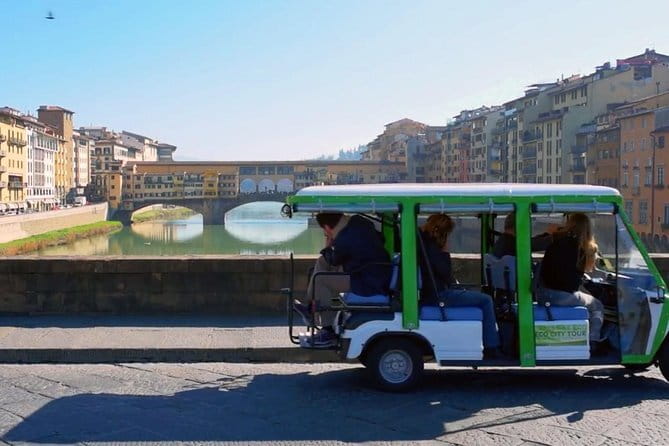
The Ponte Vecchio is Florence’s oldest bridge, dating from the fourteenth century. It crosses the Arno and is one of the city’s most recognizable views. Your guide explains the bridge’s role and the changes it has seen, giving the landmark more meaning than a quick photograph from the riverbank.
The route does not promise a long stop inside shops or a special bridge entry. You are here for the setting, the story, and the view. That is perfectly suitable for a first orientation, but you should plan separate time if you want to linger by the Arno or explore the bridge at your own pace.
The walk between these sights is also where flexibility can help. Glenda is specifically praised for changing the route when something did not interest the group or had already been seen. A private format gives you a better chance of that kind of adjustment than a fixed large-group schedule.
Florence’s political center at Piazza della Signoria
Piazza della Signoria is the tour’s strongest stop for understanding Florence as a city of power. This has long been a central public square, and the buildings around it tell you how government and art worked together here.
On one side is the Uffizi Gallery, once connected with the grand dukes of Florence. Opposite it is Palazzo Vecchio, the former seat of the Florentine government. Your guide uses the square to explain the political center of the city and the people who shaped it.
You should expect an exterior visit rather than an Uffizi or Palazzo Vecchio museum tour. The route gives you context for both, which can be especially useful if you plan to visit one later. A guide can point out why the buildings face the square and how the public space functioned.
This is also the stop where the tour’s art focus can become most rewarding. Daniel was praised for bringing art and architecture to life, while Leonardo was described as especially strong on art history and political and cultural detail. Those qualities matter here because the square can otherwise feel like a collection of statues and grand facades.
One particularly useful detail from the experience is the guide’s ability to help with vantage points in crowded areas. Daniel was praised for finding good places to see the major landmarks despite the crowds. That does not make Florence quiet, but it can make your limited time more productive.
More guided tours in Florence:
- The Best tour in Florence: Renaissance & Medici Tales – guided by a STORYTELLER
★ 5.0 · 12,316 reviews - Florence: Duomo Cathedral Guided Tour
★ 3.9 · 5,970 reviews - Uffizi Gallery Small Group Tour with Guide
★ 4.5 · 4,923 reviews - Florence: Accademia Gallery Guided Tour
★ 4.6 · 4,156 reviews
The Duomo and the final stop at San Lorenzo
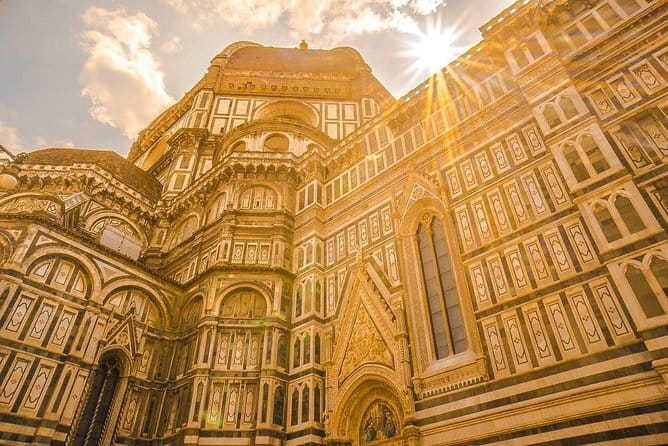
The final major landmark is Piazza del Duomo, home to Florence’s famous cathedral. The exterior is known for its green and white marble, which gives the building a look unlike the darker stone used elsewhere in the city.
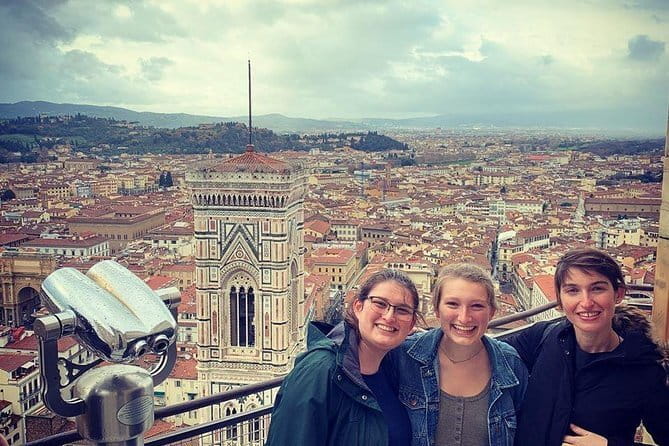
The Duomo square is usually the moment when Florence feels most monumental. The cathedral, bell tower, and baptistery area create a dense cluster of major buildings, and a guide can help you sort out what you are seeing.
Again, this is not a cathedral climb or an extended interior visit. The supplied details describe a visit to the square and the cathedral exterior. If you want to enter the cathedral or see other parts of the complex, you will need separate time and should check the current entry rules yourself.
The guide then takes you to the Basilica of San Lorenzo, where the formal walk ends. You are free to explore the church at your own pace after saying goodbye.
Ending at San Lorenzo is practical. It leaves you near another important Florentine church and within reach of central sights, shops, and places to eat. It also gives you a natural point from which to continue your day rather than returning to the starting square.
For visitors with only one day, this ending can be especially useful. You get the main orientation first, then decide which places deserve a longer visit. The guide’s advice for the rest of your stay is part of the value here.
What the guides add to the experience
The strongest part of this tour is not simply the route. It is the person leading it.
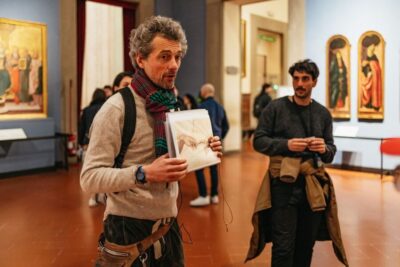
Daniel is described as energetic, passionate about Florentine history, easy to understand in English, and good at answering questions. He also worked well with a mixed-age group that included a ten-year-old child and older teenagers. That suggests he can tell stories in a way that holds attention beyond a specialist audience.
Glenda is associated with friendly, flexible walks. Her approach appears well suited to a couple or small party that wants to shape the experience around personal interests. If you have already seen one of the main squares, you may be able to spend more time on something else.
Leonardo is praised for detailed art history and for linking art with political and cultural facts. If you want more than dates and names, that sort of guide can make the statues, churches, and government buildings easier to understand.
There is one clear note of caution. One person found the guide friendly and informed but difficult to understand because of limited English vocabulary. Since the tour is offered in English, communication matters. If you have strong preferences about language clarity or subject depth, it is sensible to ask the provider about the assigned guide when booking.
How much walking and time you should expect
The route lasts about two hours and covers four main areas. You walk through city streets and piazzas rather than riding between stops, so comfortable shoes are important.
The stated physical requirement is moderate fitness. You should be comfortable walking for the full tour and standing while the guide explains the sights. The route includes city crowds and ordinary pavement, though no demanding hike is involved.
Each major stop is allocated about thirty minutes:
- Santa Croce and its church exterior
- The Bargello area, Porcellino market, and Ponte Vecchio
- Piazza della Signoria, the Uffizi exterior, and Palazzo Vecchio
- Piazza del Duomo, followed by San Lorenzo
Those time blocks are a useful guide, not a promise that every group will spend exactly the same amount of time in each place. Questions, crowds, and your interests can affect the pace.
I would book this early in your Florence stay, preferably when you still have time afterward to return to a favorite sight. The route works best as a starting point, not as your only time in the city.
Who gets the best value at $227.10
The tour is aimed at people who want a private introduction, not those looking for the cheapest way to see Florence.
It suits you best if:
- You have only one day or a short stay.
- You want a guide to explain the city rather than simply follow a map.
- You are traveling with family or friends and prefer a private group.
- You want advice on what to see, do, and eat after the walk.
- You prefer outdoor orientation to spending two hours inside one museum.
- You enjoy asking questions and changing the focus as you go.
The price becomes easier to defend when split among several people, especially if you value a private guide. Group discounts are available, though the exact reduction is not provided.
If you are content to walk between the same public sights with a guidebook or audio tour, the cost may feel high. Admission tickets are not the central feature here, and the tour does not include a long interior visit to Santa Croce, the Uffizi, Palazzo Vecchio, or the Duomo.
Gratuities are not included, and they are recommended. Local taxes and the professional local guide are included.
Practical details before you go
The meeting point is Piazza di Santa Croce, 50122 Firenze. The walk ends at Basilica di San Lorenzo, Piazza di San Lorenzo 9, 50123 Firenze.
You receive confirmation when booking, and a mobile ticket is available. Service animals are allowed, and the route is near public transportation.
The activity has free cancellation if you cancel at least 24 hours before the start time. Cancellations or changes made less than 24 hours before the start are not refunded or accepted. The experience also requires a minimum number of participants, so an operator cancellation for that reason results in a different option or a full refund.
You should allow a little extra time before the start to find Piazza Santa Croce. Florence’s central streets can be busy, and arriving rushed is a poor way to begin a walking tour.
Should you book this Florence tour?
I would book it if you want a fast, personal introduction to Florence and care about having a guide who can explain the connections between churches, art, politics, and public squares. The route is well chosen, and the private format gives you room to ask questions or adjust the focus.
I would skip it if your main goal is extended time inside museums or cathedral sites, or if $227.10 per person feels too steep for an outdoor orientation. In that case, use the route as your own walking plan and spend the money on a specific museum or church visit.
For a first morning or afternoon in Florence, this is a useful way to get your bearings fast. The best match is a small group that wants clear stories, a sensible route, and practical ideas for the rest of the stay.
FAQ
How long does the Florence walking tour last?
The tour lasts approximately two hours.
Where does the tour begin?
It begins at Piazza di Santa Croce, 50122 Firenze FI, Italy.
Where does the tour end?
The tour ends at Basilica di San Lorenzo, Piazza di San Lorenzo 9, 50123 Firenze FI, Italy.
What sights are included on the route?
The route includes Santa Croce, Piazza dei Peruzzi, the Bargello Palace area, the Porcellino market, Ponte Vecchio, Piazza della Signoria, the Uffizi exterior, Palazzo Vecchio, Piazza del Duomo, and San Lorenzo.
Is this a private tour?
Yes. It is listed as a private activity, so only your group participates. Past group sizes included both two people and six people.
Is the tour offered in English?
Yes. English is the offered language.
Are admission tickets included?
The listed stops show free admission, and the experience focuses mainly on outdoor sights and church exteriors. Separate entry into attractions is not listed as included.
Can I cancel for a full refund?
Yes, if you cancel at least 24 hours before the experience start time. Cancellations made less than 24 hours before the start are not refunded.
Recently added around Florence
- Accademia and Uffizi Small-group Guided Tour★ 4.5 · 8 reviews
- The David from Michelangelo.★ 5.0 · 3 reviews
- Combo: Accademia + walking + Uffizi Galleries Guided Tour★ 3.5 · 6 reviews
- The Complete Wine Tour Brunello, Nobile, Chianti wine experience★ 4.0 · 7 reviews
- The Best of Tuscany in 3 Days★ 4.5 · 13 reviews
- The Cooking Lab – Authentic Food Experience★ 5.0 · 113 reviews
- Florence Central Market Food Tour – Private Tour★ 4.0 · 7 reviews
- Family Friendly Florence Private City Tour★ 5.0 · 47 reviews
Guided, compared.
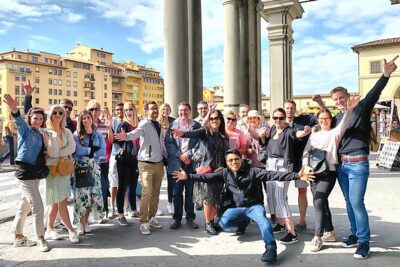
The Best tour in Florence: Renaissance & Medici Tales – guided by a STORYTELLER
Read our review →
Duomo Guided Tour with Optional Dome Climb Upgrade
Read our review →