
Reviewed · FLORENCE WALKING TOURS
Walking Tour in Florence: 2-Hour Private walking tour
Florence reveals itself best on foot, and this private two-hour walk links the city’s biggest sights with smaller stories you could easily miss. You start at the Roman heart of Florentia and finish at Ponte Vecchio, passing the Baptistery, the Duomo, Dante’s neighborhood, and the Medici seat of power along the way. I like the one-on-one format and the way Irina uses visual guides to make Florence’s complicated past easier to follow. The relaxed pace also leaves room for questions and local suggestions.
The main drawback is the price: $150.37 per person is a serious outlay for two hours, especially if you are traveling alone. You are paying for a private guide and personal attention, not entry to museums or churches. The tour focuses on exteriors, so you will need separate tickets if you want to go inside the Duomo complex or Palazzo Vecchio.
Key points at a glance
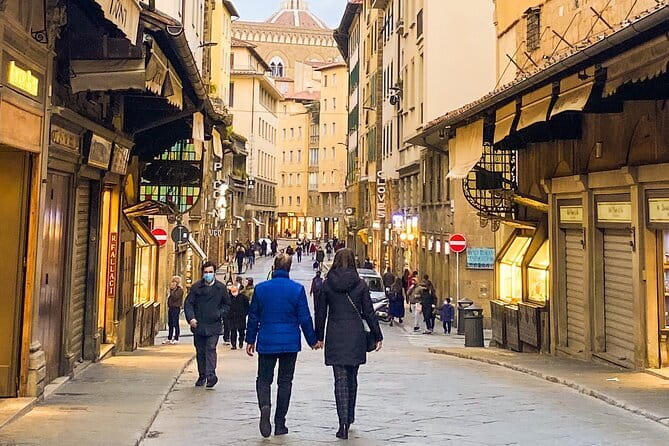
- Roman Florence at Piazza della Repubblica: Begin where the ancient city of Florentia took shape.
- Irina’s personal guiding: Expect a friendly, flexible approach, visual aids, and plenty of time for questions.
- Major sights without museum entry: See the Baptistery, Duomo, Palazzo Vecchio, and Ponte Vecchio from outside.
- Dante and medieval Florence: Follow stories about Dante, the old church linked to his life, and the Torre della Castagna.
- A private, relaxed walk: Only your group participates, with several departure times available.
- A costly but focused introduction: The price makes more sense for a couple, family, or small group that values private attention.
Starting at Piazza della Repubblica and Roman Florence
The meeting point is Piazza della Repubblica, in the center of Florence. This broad square marks the site of the ancient Roman settlement of Florentia, making it a useful place to begin if you want to understand how the modern city grew from its earliest plan.
The tour treats the square as Florence’s belly button, a playful way to think about its central position. You are not simply being led from one postcard view to another. The opening story gives you a sense of why this part of town matters and helps you place the streets around you.
This is also a practical starting point. The square is near public transportation, and the location is central for reaching other sights after the walk. The tour ends at Ponte Vecchio, so you finish close to another major landmark rather than returning to the beginning.
Because Piazza della Repubblica is open and busy, meeting your guide can take a little attention. Irina has contacted people shortly before the start in order to make finding her easier in the crowd. That small bit of communication is useful at a central Florence meeting point.
More walking tours in Florence:
- Florence: Guided Walking Tour
★ 4.5 · 3,334 reviews - Skip the line: Uffizi and Accademia Small Group Walking Tour
★ 4.5 · 3,135 reviews - Florence: Guided Walking Tour
★ 4.6 · 1,602 reviews
The Baptistery and the doors that made Florence famous
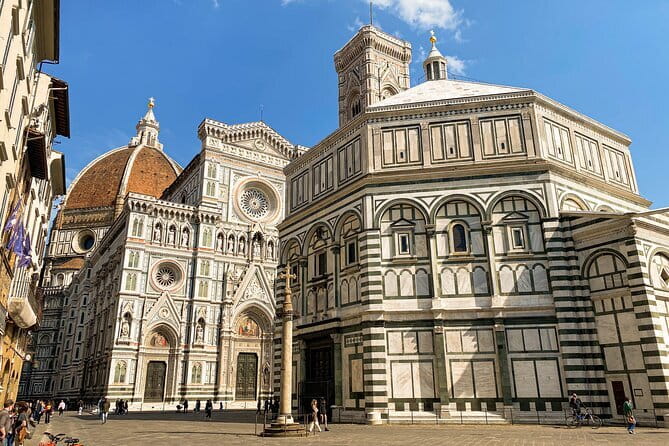
From the square, you look toward the Baptistery of San Giovanni. It is presented from the outside, with attention to its place as the oldest building in the city and to the famous Gates of Paradise.
The doors are a fine example of how Florence turns a walk through town into an art lesson. You can look closely at the decoration while learning why the Baptistery mattered to the city’s religious and civic life. Since this portion is exterior viewing, do not expect a reserved entrance or time inside.
That limitation is worth knowing before you book. If your main goal is to study the Baptistery interior, this walk will not replace a dedicated visit. If you want a clear introduction before deciding which buildings deserve more of your time, it works well.
I like this early stop because it gives you something specific to notice. Instead of hearing only that the Baptistery is old, you get a story tied to its doors, its age, and its role in Florence.
Santa Maria del Fiore and Brunelleschi’s dome
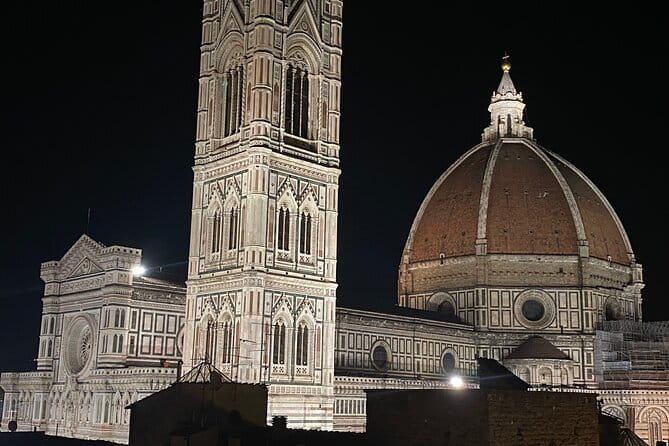
The next major sight is Florence Cathedral, Santa Maria del Fiore. Its flower-shaped plan and enormous masonry dome make it one of the defining views in the city.
The tour connects the cathedral to Filippo Brunelleschi, the architect behind the dome. You also hear the famous judgment that the structure would be difficult to equal and impossible to surpass, a fitting way to frame the ambition of the building.
From street level, the scale can be hard to absorb. A guide helps you read the cathedral as more than a pretty facade. You can consider the unusual plan, the dome’s engineering challenge, and the way the building dominates the center of Florence.
Again, the experience is an outside visit. No cathedral, dome, or other admission is included in the information provided for this walk. If you want to climb the dome or enter the cathedral complex, plan that separately and allow extra time beyond the two-hour tour.
This is one of the strongest reasons to take the walk early in your stay. Irina’s explanation can give you a framework for later visits, so you know what you are looking at instead of treating the Duomo as one large photograph stop.
Dante’s district and a thousand-year-old church
The route then moves into Dante’s district, where the emphasis shifts from grand public monuments to personal stories. You look at a church said to be about 1,000 years old, connected with Dante’s meeting with the love and muse of his life.
This part adds a human scale to Florence. Dante is often presented as the father of the Italian language, but the walk also links him to a particular place and a personal relationship. That combination makes the story easier to remember than a string of dates.
The wording of the route suggests an exterior look rather than an extended church visit. You should expect to pause, hear the story, and continue through the surrounding streets. It is a good moment to ask Irina questions, especially if you want to understand how medieval Florence differed from the city around the cathedral.
I appreciate this change of pace. The Duomo and Piazza della Signoria are grand and public. Dante’s district offers a quieter thread, showing how writers, faith, and daily life fit into the same compact center.
A completely different way to spend an afternoon in Florence:
- Florence: Skip-The-Line Uffizi Gallery Timed Entry Ticket
★ 4.5 · 27,832 reviews - Tuscany Day Trip from Florence: Siena, San Gimignano, Pisa and Lunch at a Winery
★ 5.0 · 21,634 reviews - Florence: Timed Entrance Ticket to Michelangelo’s David
★ 4.6 · 16,983 reviews - Florence: Michelangelo’s David Skip-the-Line Entry Ticket
★ 4.5 · 12,764 reviews
The Torre della Castagna and the roots of voting
The medieval Torre della Castagna provides another quick but unusual stop. This government tower house is tied to the origins of the word ballot, giving you a small piece of political history in an architectural setting.
Florence is full of towers and palaces, so it helps when a guide explains what a building did rather than simply pointing out its age. Here, the tower becomes a clue to how government worked in medieval Florence.
The stop is brief, but that is part of the appeal. You get a memorable detail without losing too much time from the city’s main sights. If you enjoy the less obvious stories of a destination, this may be one of the most satisfying moments of the route.
Piazza della Signoria, Florence’s open-air museum
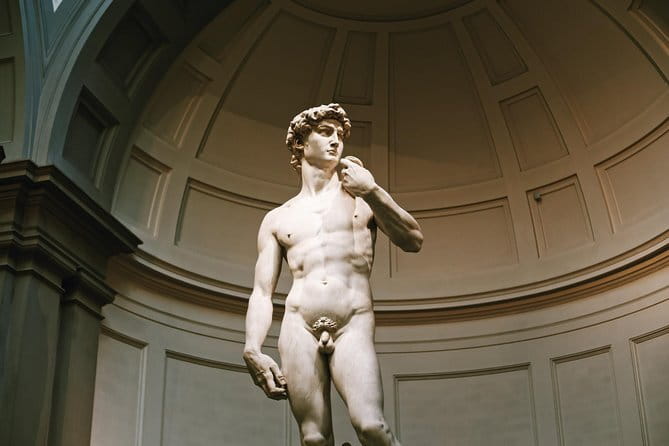
Piazza della Signoria receives about 20 minutes of attention. This was the political center of Florence, and its sculptures turn the square into an open-air museum.
The important point is that many of the works you see here are original sculptures created by Renaissance artists. You do not need a museum ticket to begin understanding the square. The public setting lets you connect art with government, power, and civic pride.
A private guide is especially useful here because the square can feel crowded with visual information. There are statues, the Palazzo Vecchio, and the surrounding streets all competing for your eye. Irina can help you focus on the pieces and stories that matter most to your interests.
The schedule allows enough time for explanation, but not for a full art lecture on every sculpture. That is a fair trade for a two-hour overview. You get orientation and context, then you can return later if one work catches your attention.
Palazzo Vecchio and the Medici power base
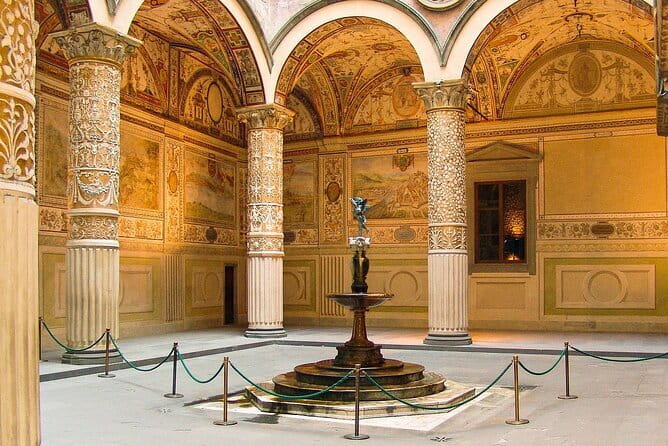
At the edge of the square, you look at Palazzo Vecchio. The building began as a medieval fortress, served as a prison for dangerous criminals, and later became the old residence of the Medici family.
That sequence tells you a great deal about Florence. The palace was not just a decorative government building. It was designed for authority and defense, and its later connection with the Medici places it at the center of the city’s political story.
The exterior gives you a useful first look at the building’s severe character. Still, this is another place where you should keep your expectations clear. The walk does not include an interior tour, prison visit, or museum admission.
For me, this stop works best when paired with Piazza della Signoria. The square shows power in public, through ceremonies and sculpture. Palazzo Vecchio shows where that power was organized and protected.
Ponte Vecchio, the final view over the Arno
The walk ends at Ponte Vecchio, Florence’s oldest bridge and one of the city’s clearest symbols. Its jewelry shops hang over the Arno, giving the bridge a look unlike any ordinary crossing.
Ending here is convenient and scenic. You have moved from the Roman center through medieval streets and Renaissance political spaces, then finished beside the river. From Ponte Vecchio, you can continue exploring on your own without retracing the route back to Piazza della Repubblica.
The bridge is famous for its shops, so it can feel crowded. A private walk cannot remove that pressure, but it does give you a guide who can keep the stop focused and help you understand why this particular bridge matters.
Since the tour ends here, ask any final questions before parting. Irina’s style, based on the details available, is flexible and conversational, and the end of the walk is a good time to request recommendations for the rest of your day.
What Irina adds to the experience
Irina is the named guide for this experience, and the strongest praise centers on her personal approach. She is described as engaging, personable, flexible, and willing to answer many questions rather than rushing through a fixed speech.
She also uses visual guides during the walk. That can help when you are trying to picture Florence at different points in its past, especially around the cathedral, medieval towers, and government buildings.
The pace is another strength. The walk is described as relaxed, with enough time to listen and ask questions. That matters in Florence, where a fast route through the center can leave you with a list of names but little understanding of how the pieces fit together.
Irina has also offered local suggestions after the walk. I would treat that as a useful bonus rather than a guaranteed custom itinerary, but it can help you choose what to see next.
Price, private attention, and who gets the best value
At $150.37 per person, this is not a budget walking tour. The price is easier to justify if you are traveling as a couple, family, or small group and want the guide’s attention to stay with you.
A solo visitor pays the full per-person price and may find the cost harder to defend. One solo participant did consider the experience worth the money because of the amount learned and the personal local guidance, but your decision should depend on how much you value private instruction.
Group discounts are available, which may improve the arithmetic for a larger party. The tour is offered in English, and several departure times make it easier to fit around museum reservations, meals, or a train schedule.
You are paying for a focused introduction, not admission tickets. The price includes the value of having a private guide explain the streets, answer questions, and adjust the conversation to your interests. It does not give you entry to the main buildings named along the route.
Timing, comfort, and practical fit
The walk lasts about two hours. That is long enough to cover the central sights without taking an entire day, but short enough to pair with a museum or a longer afternoon of independent exploring.
Most people can participate, and service animals are allowed. The route is near public transportation, which helps with arrival and departure, though the information does not specify a particular station or step-free route.
You should wear comfortable shoes for city walking. This is practical advice rather than a special tour rule: the experience moves through central streets and piazzas, and the value comes from seeing Florence at street level.
The tour is private, so only your group takes part. That makes it a better fit for anyone who dislikes large groups or wants to pause for questions. It also means the experience depends more heavily on the match between your group and the guide.
Free cancellation is available if you cancel at least 24 hours before the start time. Changes or cancellations inside that window are not accepted for a refund, and the cut-off follows local Florence time.
Should you book this Florence walk?
Book it if you want a personal introduction to Florence, prefer a relaxed pace, and care about the stories behind the streets as much as the famous facades. Irina’s visual aids, flexibility, and local suggestions add value for first-time visitors who want help getting oriented.
Think twice if you mainly want interior access to the Duomo, Baptistery, or Palazzo Vecchio. This is an exterior-focused walk, and the $150.37 price is high if you are judging it only by the number of sights covered.
For a couple or small family, the private format can make the cost reasonable, particularly with a group discount. For a solo visitor, it is a splurge, but a useful one if you want Florence to make sense quickly and prefer conversation over a large group lecture.
FAQ
How long does the walking tour last?
The tour lasts approximately two hours.
Where does the tour begin?
It begins at Piazza della Repubblica in Florence.
Where does the tour end?
The tour ends at Ponte Vecchio, near the Arno River.
Is this a private tour?
Yes. Only your group participates in the activity.
What language is the tour offered in?
The tour is offered in English.
Can I cancel for a full refund?
Yes. You can cancel for a full refund up to 24 hours before the experience start time. Cancellations or changes made less than 24 hours before the start time are not accepted for a refund.
More two-hour experiences in Florence
- Florence: 2-Hour Guided Sightseeing Bike Tour
★ 4.5 · 1,004 reviews - Florence: 2-Hour Guided Bike Tour
★ 4.7 · 646 reviews - Florence: Dan Brown’s Inferno 2-Hour Walking Tour
★ 4.5 · 187 reviews - Florence Duomo 2-Hour Monumental Tour
★ 4.2 · 167 reviews
Recently added around Florence
- Accademia and Uffizi Small-group Guided Tour★ 4.5 · 8 reviews
- The David from Michelangelo.★ 5.0 · 3 reviews
- Combo: Accademia + walking + Uffizi Galleries Guided Tour★ 3.5 · 6 reviews
- The Complete Wine Tour Brunello, Nobile, Chianti wine experience★ 4.0 · 7 reviews
- The Best of Tuscany in 3 Days★ 4.5 · 13 reviews
- The Cooking Lab – Authentic Food Experience★ 5.0 · 113 reviews
- Florence Central Market Food Tour – Private Tour★ 4.0 · 7 reviews
- Family Friendly Florence Private City Tour★ 5.0 · 47 reviews
Florence Walking Tours, compared.
Skip the line: Uffizi and Accademia Small Group Walking Tour
Read our review →
Renaissance and Medici Tales Guided Walking Tour
Read our review →
Skip-the-Line Florence Highlights and David Walking Tour
Read our review →
Dark Mysteries and Legends Guided Walking Tour
Read our review →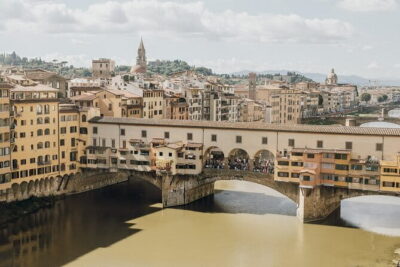
Florence in a Day: Michelangelo’s David, Uffizi and Guided City Walking Tour
Read our review →Browse the lists this tour appears in