
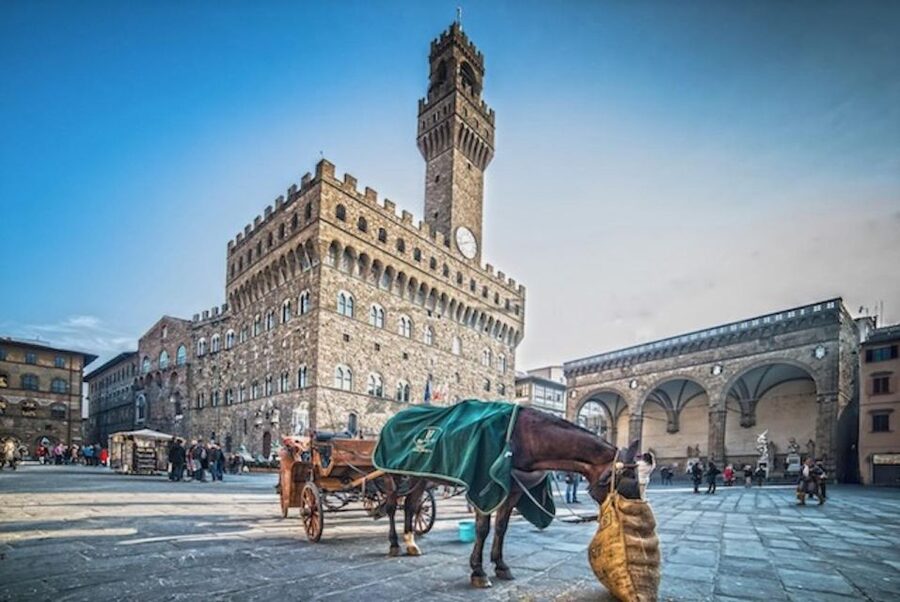
Reviewed · FLORENCE WALKING TOURS
Essential Florence Walking Tour to discover its history
Florence comes alive when someone explains what you are looking at. This three-hour walk connects Roman foundations, medieval power, Medici ambition, Renaissance art, and modern shopping streets into one readable story. The best moments come from details you could easily miss, such as the old tower homes, artists’ workshops, and the buildings tied to the creation of David.
I like the wide sweep of the route, from Piazza della Repubblica to Oltrarno, and I like the way the tour links art with politics, religion, money, and family rivalry. Guides including Becky, Lisa, and Andrea have earned praise for clear storytelling and friendly answers.
The main consideration is physical. Florence’s streets are uneven, and the route may include steps. This is not a good fit for wheelchair users, people with mobility limits, recent surgery, or serious back problems. Children under eight cannot join.
Key points at a glance
- Roman beginnings to Medici power: Start in Piazza della Repubblica and follow Florence’s rise from ancient settlement to wealthy city-state.
- A useful art-and-architecture lesson: Compare medieval tower homes, Renaissance palaces, churches, and grand civic spaces as you walk.
- Major outdoor sights: See the Duomo complex, Baptistery, Campanile, Ponte Vecchio, Pitti Palace, and the Vasari Corridor from outside.
- One worthwhile interior visit: Enter Santa Trinita to view frescoes by Ghirlandaio.
- A sweet finish: Italian gelato is included, giving the walk a simple local-food break.
- English only: The live guide and included audio support are in English.
Why this three-hour walk works as a Florence introduction

Florence is compact, but its story is not simple. Roman foundations sit under medieval lanes. Merchant families turned banking money into palaces. Religious buildings doubled as public stages. Artists worked in shops and studios, while powerful families used architecture to show who controlled the city.
This tour gives you that framework before you tackle Florence on your own. Instead of seeing a church, palace, or bridge as an isolated photo stop, you learn how each part fits into the city’s growth.
The route is also broad enough to help you get your bearings. It takes in the central streets, the religious core, the luxury shopping district, the Arno crossings, and the artisan quarter of Oltrarno. You will not spend three hours inside a single museum. That is a limitation for art specialists, but a benefit if you want a first look at Florence’s streets and major landmarks.
The tour costs $41 per person. For three hours with a local guide, headsets, and gelato, that is a reasonable price if you value interpretation. You are paying less for entry tickets and more for the connections between the sights. Since the listed attractions are mainly viewed from outside, you should budget separately for museums and palace interiors you want to visit later.
More walking tours in Florence:
- Florence: Guided Walking Tour
★ 4.5 · 3,334 reviews - Skip the line: Uffizi and Accademia Small Group Walking Tour
★ 4.5 · 3,135 reviews - Florence: Guided Walking Tour
★ 4.6 · 1,602 reviews
Starting at Piazza della Repubblica and the Roman city
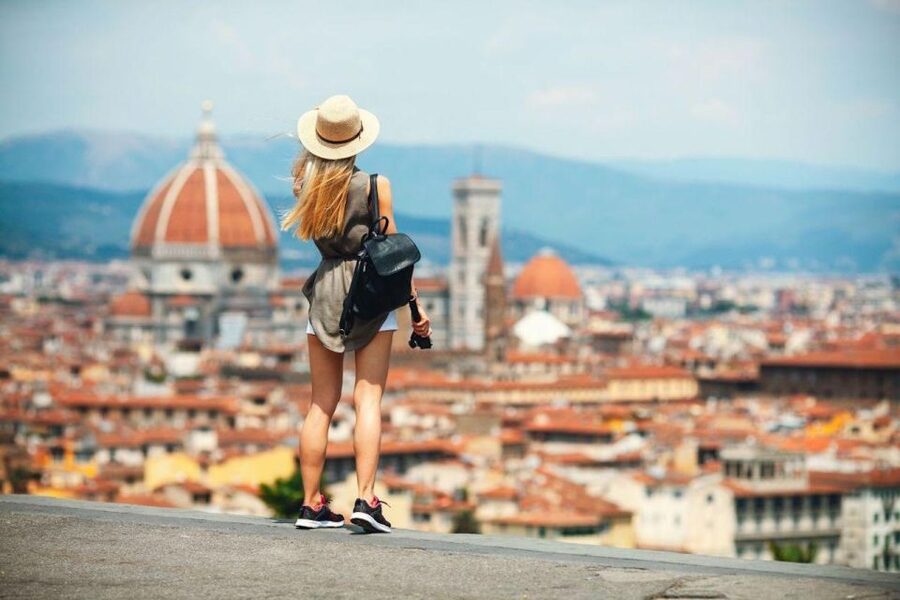
The walk begins at Piazza della Repubblica, a useful place to start because it introduces Florence before the Renaissance. Here, the guide explains the Roman founding of the city and sets out the forces that shaped its later growth.
This opening matters. Florence can sometimes feel like one giant Renaissance postcard, but the city’s story begins much earlier. A good explanation here helps you understand why the central streets follow certain patterns and why Florence became an important place for trade and political power.
From the square, the route moves into medieval Florence. You learn about the city’s rise in wealth and influence, along with the conditions that allowed leading families to gain power. The Medici family receives special attention, as do the conflicts, betrayals, and dramatic episodes that make the period easier to remember.
The storytelling style is a major part of the value. Becky has been praised for making the city feel personal and for pointing out details that can disappear when you walk alone. Other guides, including Lisa and Andrea, have also been described as lively and clear. Guide assignments can vary, so you should not assume you will receive a particular person, but the named guides give you a useful sense of the experience’s tone.
Medieval towers, Renaissance palaces, and the making of David
One of the strongest parts of the route is the visual lesson in architectural change. You will see examples ranging from tall medieval tower homes to Renaissance palaces, with the guide explaining why their shapes and decoration differ.
That comparison is more useful than memorizing dates. Medieval Florence was shaped by defense, family rivalry, and crowded urban life. Renaissance palaces projected order, wealth, and education. As you walk, the buildings become evidence of changing ideas about status and power.
The tour also discusses the creation of David, one of the world’s best-known statues, and the workshops where artists worked. The route does not replace seeing the original sculpture in a museum, and no indoor viewing of David is included. Still, the background can make a later museum visit more rewarding because you have learned something about the artistic world around the statue.
Orsanmichele is another important stop. From outside, you can admire the church-like building and hear about its famous exterior statues by artists such as Donatello and Ghiberti. This is a good example of why a guide helps. You might walk past the building focused on the Duomo, yet its sculptures reveal how public art, guild power, and religious devotion worked together.
Dante, the religious center, and Florence’s sacred heart
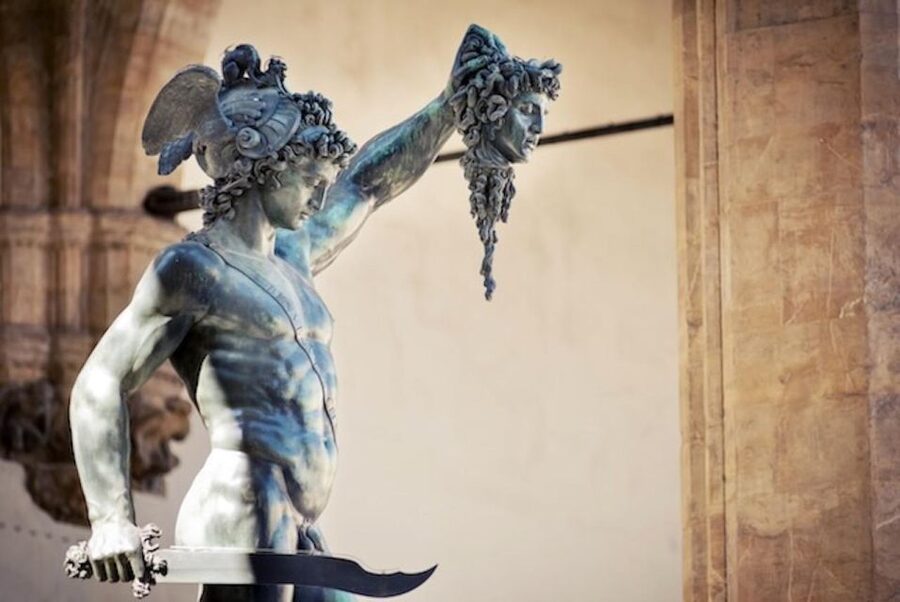
The route passes Dante’s house, an important stop for anyone interested in Florence’s literary identity. The emphasis is on the connection between the poet and the city, rather than on a full museum visit.
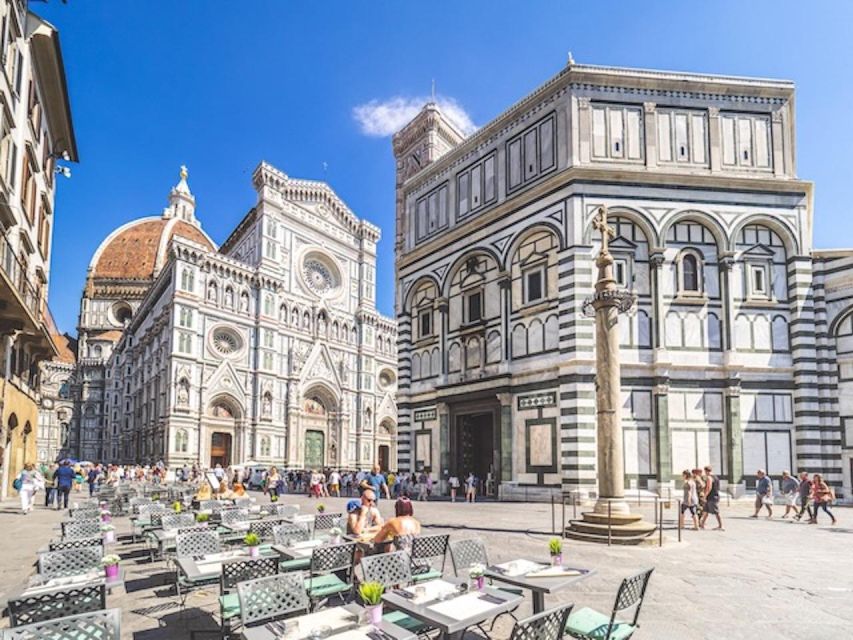
You also visit the religious center from outside, taking in the Duomo, Baptistery, and Campanile. This is one of Florence’s most crowded areas, so headsets matter. They let you keep your eyes on the buildings while still hearing the guide instead of clustering tightly around the speaker.
The tour explains how religion shaped daily life and public identity. The Baptistery, cathedral, and bell tower are not simply attractive monuments. Together, they show the city’s religious priorities and its ability to spend enormous resources on public buildings.
Expect a busy setting, especially around the cathedral complex. The route is designed for explanation and orientation, not for an extended pause at every architectural detail. If you want to study the Duomo’s marble patterns or enter the cathedral, make separate time for that.
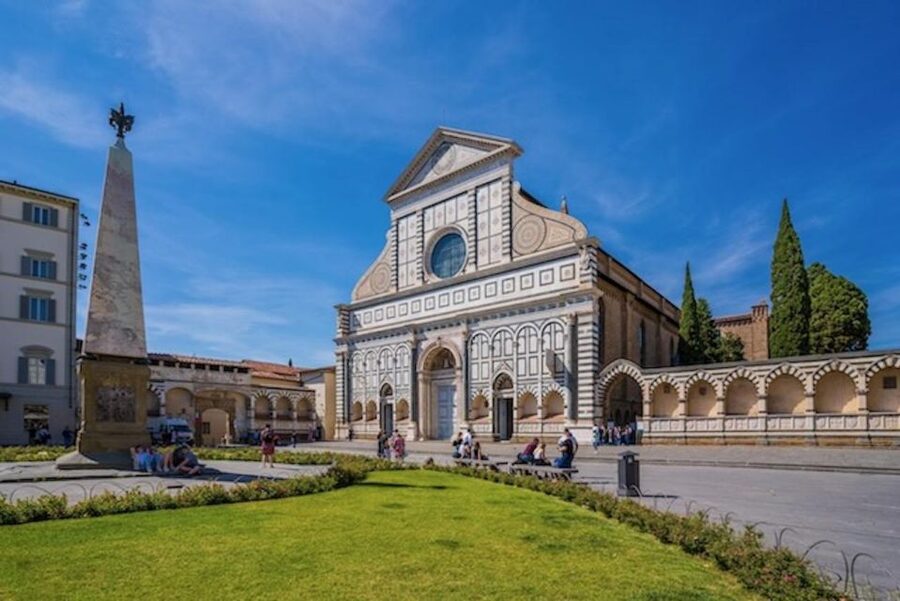
Santa Maria Novella is also viewed from outside. Its location makes it an important part of the central Florence story, and the exterior gives you another chance to compare architectural periods and religious buildings. The tour does not include an interior visit there, so check opening arrangements separately if you want to go in.
More Renaissance and history tours in Florence:
- Tipsy Tour: Guided Bar Crawl In Florence with Dark History
★ 5.0 · 271 reviews - Florence Cooking Course with Historic Local Market Visit
★ 4.5 · 151 reviews - Florence: Medici Family History Tour
★ 4.3 · 93 reviews - Historical Guided Tour of Florence’s Iconic Cathedral
★ 3.5 · 88 reviews
Via Tornabuoni and Florence’s polished public face
The walk then reaches Via Tornabuoni, Florence’s best-known designer shopping street. At first, this may seem like a change of subject from medieval churches and Renaissance art. In fact, it continues the story of money and status.
The street lets you see how Florence presents wealth today, while the surrounding palaces show how wealthy families presented it centuries ago. I like this contrast because it keeps the tour from treating Florence as a frozen museum.
Ruccellai Palace and Strozzi Palace provide especially strong architecture lessons. Both are viewed from outside, but their façades help explain the balance, proportion, and restraint associated with Renaissance design.
Via Maggio adds another layer. It is known for antique shopping, and walking along it gives you a feel for Florence’s long connection with decorative arts and old objects. The tour does not promise shopping time, so treat this section as a guided look rather than a dedicated retail stop.
Bridges, Medici power, and the turn toward Oltrarno
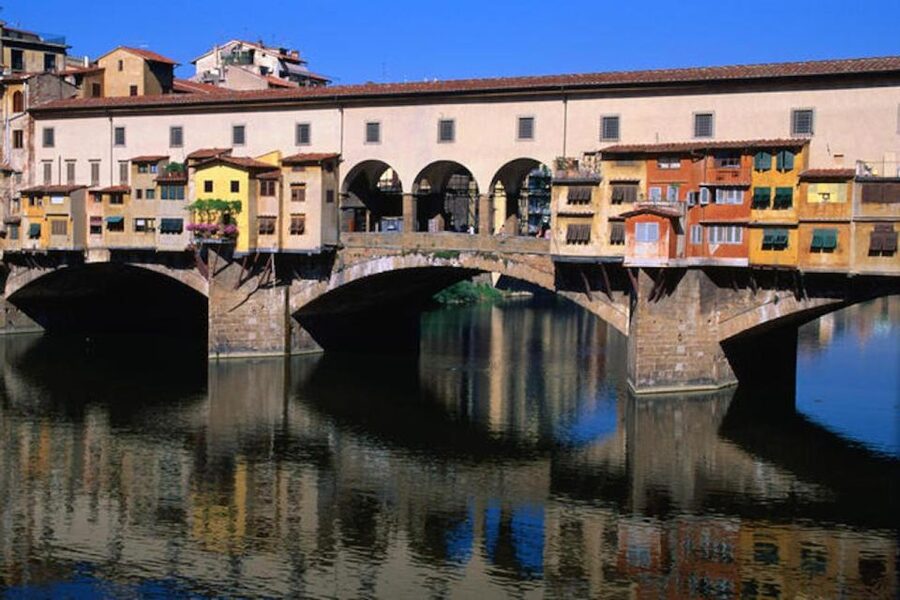
The route crosses Santa Trinita and Ponte Vecchio, two bridges with very different personalities. Santa Trinita offers a graceful crossing and a useful view toward the river and surrounding buildings. Ponte Vecchio is Florence’s famous old bridge, lined with shops and tied closely to the city’s public image.
The guide also explains the Vasari Corridor, the raised passage associated with the Medici family. You see it from outside rather than touring inside. That distinction matters. The corridor is a visual clue to how rulers could move between important residences while remaining apart from ordinary street life, but this tour does not provide access to its interior.
Pitti Palace appears from outside as the former Medici residence. The palace helps complete the political story, showing the scale of power the family eventually claimed. Again, this is a street-level introduction, not a palace admission.
The route continues into Oltrarno, the area on the opposite side of the Arno. Here the mood shifts toward cobblestone lanes, artisan workshops, churches, and old residences. The change gives you a better sense of Florence beyond the most photographed central squares.
Santa Felicita is included as one of the oldest churches in Florence. The church connects the quieter Oltrarno streets with the city’s long religious past. You should expect an outside-focused visit unless the guide confirms otherwise, while Santa Trinita is the place specifically described with an interior stop.
Santa Trinita and Ghirlandaio’s frescoes
Santa Trinita provides the tour’s most notable indoor art visit. Inside, you can admire magnificent frescoes by Ghirlandaio, giving you a chance to see how Renaissance painting functioned within a real church setting.
This stop adds depth to the outdoor route. You are not only hearing about artists and religious life; you are seeing painting in the place where it was meant to work. The church setting helps you understand how art, worship, family pride, and public memory overlapped.
The timing of this visit may depend on the church’s access and the flow of the tour. Keep your expectations focused on the frescoes and the guide’s explanation rather than a long, quiet art-study session.
Gelato, headsets, and the practical side of the walk
Italian gelato is included, which is a small but welcome part of the experience. It breaks up three hours of walking and gives the group a shared taste of Florence without requiring a separate food tour.
Headsets are also included. This is important in central Florence, where traffic, crowds, and hard stone surfaces can make a walking explanation difficult to hear. You can stay a little more spread out and still follow the guide.
Wear comfortable shoes and comfortable clothes. Do not wear sandals or flip-flops. The route uses cobblestones and may include steps, so supportive footwear is not optional advice here.
The tour is not suitable for children under eight, people with back problems, people with mobility impairments, wheelchair users, or people recovering from recent surgery. If walking for three hours is difficult, this is the wrong format, even if the subject interests you.
The tour is offered in English only. The live guide speaks English, and English audio support is included. That makes it a clear choice for English-speaking visitors, but not for anyone seeking an Italian, Spanish, French, or multilingual departure.
Who will get the most from the $41 price
I would choose this tour for a first or second day in Florence. It gives you a map in your head, explains the main power players, and shows you which buildings deserve a return visit.
It is especially useful if you enjoy art but do not want a lecture packed with technical terms. The route connects painters, churches, architecture, politics, and family stories in plain language. It also suits anyone who prefers city walks to long museum sessions.
The price is strongest when you use the tour as a foundation. Afterward, you can decide if you want to pay for the Uffizi, the Accademia, the Duomo interior, or Pitti Palace. The guide helps you choose instead of wandering through every major sight without context.
You should think twice if your priority is extensive interior access. Most attractions are seen from the street, and only Santa Trinita is specifically included as an interior visit. You should also skip it if you need frequent rests or a fully step-free route.
Free cancellation is available up to 24 hours before the start, and you can reserve now while paying later. Those terms make the booking less rigid, but the main decision remains simple: can you comfortably walk for three hours in Florence?
Should you book this Florence walking tour?
Book it if you want a strong city overview with real historical connections, especially at the start of your stay. The route covers more ground than a single neighborhood walk, and the guides are praised for making Florence understandable, lively, and personal.
Choose it for the stories of the Medici, the contrast between medieval and Renaissance buildings, the outdoor look at major landmarks, and the stop at Santa Trinita. The gelato and headsets are useful extras, not the main reason to book.
Skip it if you want a museum-heavy day, a slow photography walk, or a route suitable for limited mobility. For most fit visitors who want Florence’s big picture in three hours, $41 is a fair price for a well-guided introduction.
FAQ
How long does the Essential Florence Walking Tour last?
The tour lasts three hours.
How much does the tour cost?
The price is $41 per person.
What language is the tour offered in?
The live tour guide speaks English, and the included audio support is also in English.
Where does the tour begin?
The tour begins in Piazza della Repubblica.
Is gelato included?
Yes. An Italian gelato tasting is included in the tour.
Are headsets provided?
Yes. Headsets are included so you can hear the guide clearly.
Does the tour enter the Duomo?
The Duomo, Baptistery, and Campanile are viewed from outside. The tour does not list interior access to the Duomo.
Does the tour include any indoor visit?
Yes. Santa Trinita includes an interior visit to admire frescoes by Ghirlandaio. Other listed attractions are viewed from outside.
Is the tour suitable for wheelchair users or people with mobility problems?
No. The tour may include steps and is not suitable for wheelchair users or people with mobility impairments. It is also not recommended for people with back problems or recent surgery.
Recently added around Florence
- Accademia and Uffizi Small-group Guided Tour★ 4.5 · 8 reviews
- The David from Michelangelo.★ 5.0 · 3 reviews
- Combo: Accademia + walking + Uffizi Galleries Guided Tour★ 3.5 · 6 reviews
- The Complete Wine Tour Brunello, Nobile, Chianti wine experience★ 4.0 · 7 reviews
- The Best of Tuscany in 3 Days★ 4.5 · 13 reviews
- The Cooking Lab – Authentic Food Experience★ 5.0 · 113 reviews
- Florence Central Market Food Tour – Private Tour★ 4.0 · 7 reviews
- Family Friendly Florence Private City Tour★ 5.0 · 47 reviews
Florence Walking Tours, compared.
Skip the line: Uffizi and Accademia Small Group Walking Tour
Read our review →
Renaissance and Medici Tales Guided Walking Tour
Read our review →
Skip-the-Line Florence Highlights and David Walking Tour
Read our review →
Dark Mysteries and Legends Guided Walking Tour
Read our review →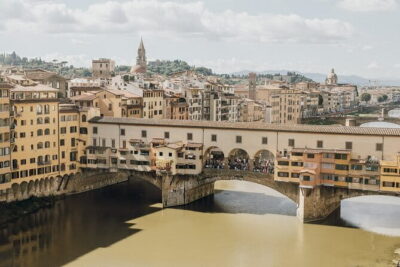
Florence in a Day: Michelangelo’s David, Uffizi and Guided City Walking Tour
Read our review →Browse the lists this tour appears in