
Reviewed · ACCADEMIA GALLERY AND DAVID TOURS
Skip the Line: Guided Tour of Michelangelo’s David at Accademia
Michelangelo’s David is the star here, but the best part of this one-hour Accademia tour is that you do not simply walk in, take a picture, and leave. Your guide puts David alongside the Prisoners, musical instruments, plaster casts, and paintings that explain how Florence’s artistic world developed.
I like the priority entry and the sensible route through the museum. I also like the price: at $32.44 per person, you get more than an admission ticket and a short explanation beside David. The tradeoff is important, though: priority entry does not always mean walking straight inside. At busy times, you may still wait, and finding your group at Via Ricasoli can be confusing.
Key points before you book
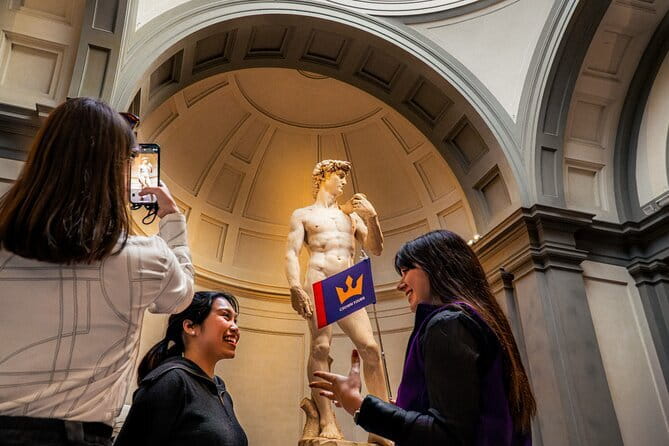
- David gets about 12 minutes of focused explanation, enough time to notice his expression, hands, muscles, and unusual proportions.
- The Prisoners add real artistic context, showing figures that appear to be emerging from unfinished marble.
- The Museum of Musical Instruments is included, with Medici-era violins, antique pianos, and Stradivari pieces.
- The group can contain up to 19 people, though some departures have been much smaller, with four or five people.
- The full visit takes about one hour, making it easy to fit into a busy Florence sightseeing day.
- You may still wait at the entrance, especially during holidays and crowded periods.
Meeting the group at Via Ricasoli 39
Your visit begins outside the Accademia at Via Ricasoli 39. Look for the Crown Tours flag and staff wearing purple. This is a simple meeting point, but the pavement outside the museum can become crowded, especially during holiday weekends.
Arrive early. That gives you time to find the flag, check in, and confirm that you are with the correct group. One of the less pleasant parts of the experience can be the scramble outside the entrance. A few minutes spent getting your bearings is worth it.
The tour is offered in English. The maximum group size is 19, although the actual number can be smaller. Small groups of four or five have joined some departures, which makes it easier to hear the guide and ask a question. A group of 19 is still manageable, but you will want to stay close as the route moves from room to room.
The tour is also booked about 30 days ahead on average. That gives you a useful planning clue: do not assume you can wait until the morning of your visit, particularly if David is a major reason for your Florence trip.
More ways to see the David at the Accademia:
- Florence: Timed Entrance Ticket to Michelangelo’s David
★ 4.6 · 16,983 reviews - Florence: Michelangelo’s David Skip-the-Line Entry Ticket
★ 4.5 · 12,764 reviews - Florence Accademia Gallery Tour with Entrance Ticket Included
★ 4.5 · 6,148 reviews
Priority entry, with a realistic wait
The Accademia is not a huge museum, but it is one of Florence’s most sought-after stops. David draws a steady stream of visitors, and the entrance area can feel disorganized at busy times.
Priority access should shorten the wait compared with the regular line. It does not guarantee instant entry. One booking had a wait of about 30 minutes, while another person described long lines and confusion during a national holiday weekend. That is not a small detail. If you have a train to catch or a lunch reservation immediately afterward, leave extra time.
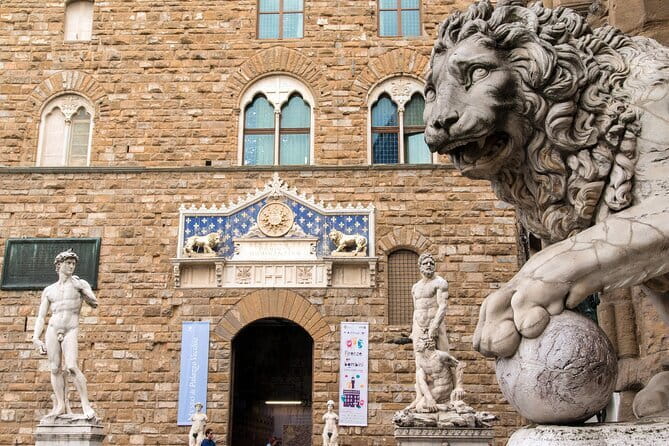
Once inside, the guide leads you toward the Colosso Hall. The hall takes its name from the large sculpture The Rape of the Sabines. Here, you begin with the artistic setting rather than rushing straight to David. That is a good choice. Florence’s sculpture tradition makes more sense when you see how artists used movement, anatomy, and dramatic poses to tell a story in stone.
Colosso Hall and Florence’s sculptural tradition
The Rape of the Sabines gives your guide a chance to explain the drama of large-scale sculpture. The work is not merely decoration. Its twisting bodies and changing viewpoints are designed to be seen from several angles.
This opening stop lasts only about seven minutes, so expect a compact explanation rather than a full lecture. The short format works well for a museum that can become tiring if every object receives a long speech.
You will also get an introduction to the artistic changes that shaped Florence. The point is not to memorize names and dates. It is to understand why the city became such a powerful center for artists, and why Michelangelo’s approach feels both connected to and more intense than the work around him.
The musical instruments many people miss

The Museum of Musical Instruments is one of the more unusual parts of the visit. It includes Medici-era violins, antique pianos, and instruments connected with Stradivari.
This seven-minute stop gives the museum a wider reach. You are not looking only at marble and paint. You are seeing how the Medici court supported music, craftsmanship, and display. The instruments also remind you that Renaissance culture was not limited to the famous painters and sculptors whose names fill guidebooks.
The stop is brief, so do not expect a full music demonstration or a long technical explanation. Its value is in showing you a corner of the Accademia that you might otherwise walk past. If you had planned to visit only David, this small collection adds welcome variety.
More skip-the-line tickets in Florence:
- Florence: Skip-The-Line Uffizi Gallery Timed Entry Ticket
★ 4.5 · 27,832 reviews - Florence: Skip-the-Line Uffizi Small Group Tour
★ 4.6 · 5,926 reviews - Skip the line: Uffizi and Accademia Small Group Walking Tour
★ 4.5 · 3,135 reviews - Florence: Skip-the-Line Accademia Guided Tour
★ 4.5 · 2,327 reviews
Michelangelo’s Prisoners and the power of unfinished work
The Prisoners are among the strongest stops on the route. These sculptures appear to be pushing or emerging from blocks of stone. Their unfinished condition is not a flaw to overlook. It is the main point.
Your guide explains Michelangelo’s creative process and why the figures were left incomplete. You can study the contrast between rough marble and more developed anatomy. The effect makes the act of carving feel visible. Instead of seeing only a finished body, you see the struggle between the artist’s idea and the material.
This part lasts about eight minutes. It is enough time to understand the basic story and look closely, though you may wish you had longer if unfinished sculpture interests you. Even so, the Prisoners prepare you well for David. They show the same concern with the human body, but in a different stage of artistic development.
Meeting David in the Tribune
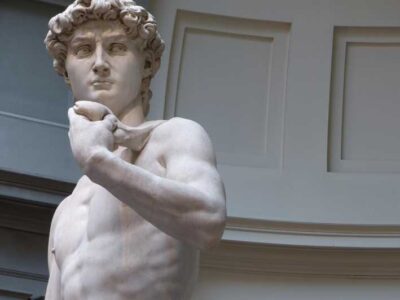
Then comes the main event: Michelangelo’s David. Your guide spends about 12 minutes with the statue, focusing on details that photographs often flatten.
Look at David’s eyes first. His alert expression suggests that the decisive moment has not yet arrived. Then notice the hands, feet, shoulders, and muscles. The proportions are not simply a study of anatomy. They help create a commanding figure that can be read from below and from several points around the room.
A guide adds useful value here because David is familiar even to people who have never visited Florence. You may already know the broad story, yet still miss why the statue feels so forceful in person. Scale, surface, and the relationship between the figure and the surrounding space do not come across well on a phone screen.
This is also where the tour can feel crowded. You may not have a quiet, private view. People gather around David, and the time at the sculpture is limited. The guide’s commentary gives the visit structure, but you should use any remaining moments to look for yourself rather than trying to record everything.
The statue is worth seeing even if you have encountered photographs, replicas, or another copy in a different city. The original has a presence that pictures cannot reproduce.
Plaster casts and the practical side of sculpture
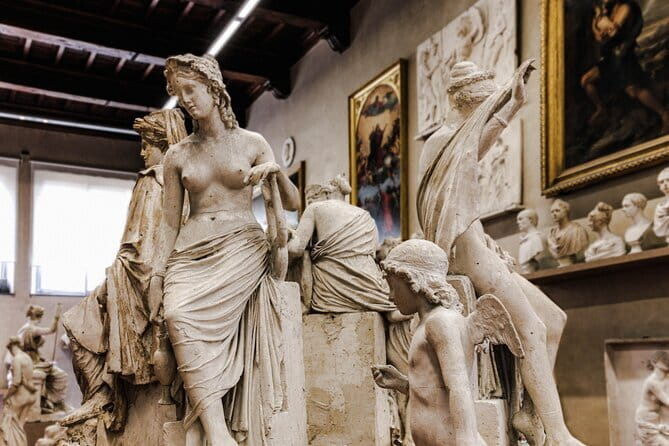
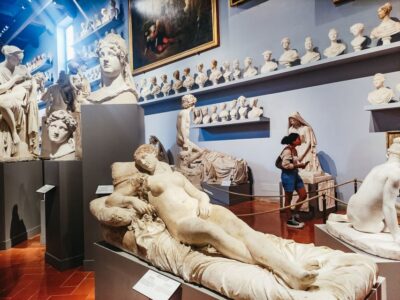
After David, the tour turns to plaster casts. These lifelike replicas were used by artists as working tools and study models before carving into marble.
This is a useful correction to the popular image of the sculptor as someone who simply attacks a block of stone with a hammer. Sculpture requires planning, measurement, models, and repeated adjustments. The casts show how artists could refine a figure before committing to the final material.
The stop lasts about seven minutes. It may not have the immediate fame of David, but it helps explain the craft behind the masterpiece. If you are traveling with someone who enjoys how things are made, this could be one of the most satisfying parts of the route.
Paintings from the Renaissance and Baroque periods
The next nine minutes cover paintings by Renaissance and Baroque artists. Your guide connects the works to the cultural changes taking place in Florence.
This section gives the tour balance. The Accademia is best known for sculpture, but its paintings help show how artists handled religious subjects, composition, color, and emotion across different periods. You will not receive a full survey of Italian painting in nine minutes. Think of it as a guided sample that helps you see the museum as more than a single-statue stop.
The guide’s role matters here. Without context, some paintings can blur together during a short museum visit. A clear explanation can help you notice why a work belongs to an earlier or later style and how Florence’s artistic priorities changed.
Lorenzo Monaco and the Late Gothic Hall
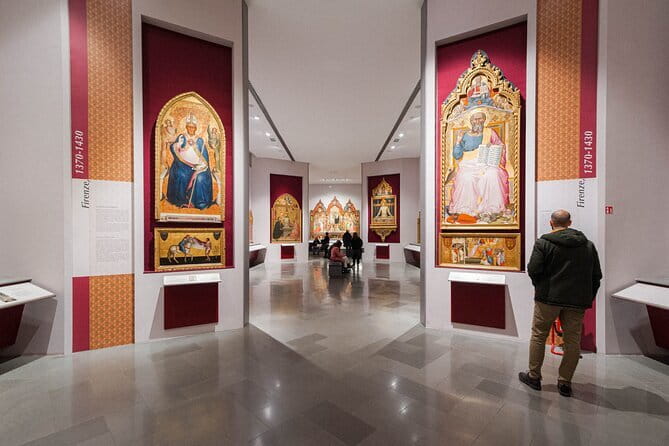
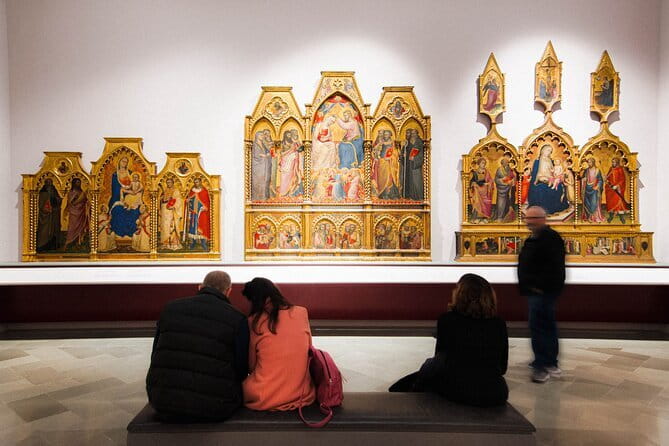
The tour ends in the Late Gothic Hall, with works by Lorenzo Monaco. The paintings use bright colors and detailed decoration associated with the period before Renaissance naturalism took hold.
This is a fitting final stop because it lets you see the change from medieval art to the Renaissance. After studying David’s convincing anatomy and controlled expression, you can look back at the more formal, decorative world of Late Gothic painting.
The stop lasts about five minutes. It is short, but it gives the visit a clear ending instead of leaving you with David alone as an isolated wonder. After the tour, the activity returns to the meeting point.
What $32.44 gets you
At $32.44 per person, this is a reasonable choice if you want both entry assistance and interpretation. A basic ticket may cost less, but it will not necessarily help you understand what you are seeing or move through the museum efficiently.
The value depends on your style. If you enjoy wandering alone and reading labels, you might prefer an independent visit. If you want someone to point out the Prisoners, explain the instruments, and show you how David’s details work, the added cost is modest.
The tour also saves you from having to plan your own route through the museum. In an hour, you see the main sculpture, several supporting collections, and examples of painting from different periods. That is a useful return for a compact visit.
The main limit is time. An hour is enough for orientation and the major highlights, but not for slow, quiet study. You are paying for a focused introduction, not an entire morning at the Accademia.
Who should book this visit
I would choose this tour if David is high on your Florence list and you want more than a quick look. It suits first-time visitors, couples, families, and anyone who prefers a guide to explain the art in plain language.
It is also a good fit for repeat visitors. One person who had seen David before found the statue more meaningful with a guide and discovered parts of the museum they had previously missed, including the musical instruments.
You should think twice if you dislike group tours, have a strict schedule, or want to stand alone in front of David for as long as you like. The maximum group is 19, and busy conditions can create delays. The tour is generally suitable for most people and is near public transportation, but no special accessibility details are provided.
You receive confirmation at booking, and free cancellation is available up to 24 hours before the start time. Cancellations or changes inside that period are not accepted for a refund.
Should you book it?
Book this experience if you want a short, guided introduction to the Accademia with priority entry and a strong focus on David. The Prisoners, musical instruments, plaster casts, and paintings make the visit more worthwhile than a David-only pass.
Go with realistic expectations. Priority entry can still involve a wait, the meeting area can be confusing, and the one-hour route leaves little time for lingering. Arrive early, look for the Crown Tours flag and purple clothing, and keep your schedule flexible.
FAQ
Where does the tour begin?
It begins at Via Ricasoli 39, 50122 Florence, Italy. Look for the Crown Tours flag and staff wearing purple.
Where does the tour end?
The activity ends back at the meeting point on Via Ricasoli.
How long does the tour last?
The tour lasts approximately one hour.
What language is the tour offered in?
The experience is offered in English.
Does the tour include priority entry to the Accademia?
Yes. Admission tickets and priority entrance are included.
Can I expect to walk straight inside?
Not always. Priority entry can shorten the wait, but you may still need to wait at the entrance. One reported wait was about 30 minutes, and busy holidays can create longer delays.
What will I see besides David?
The route includes The Rape of the Sabines in Colosso Hall, the Museum of Musical Instruments, Michelangelo’s Prisoners, plaster casts, Renaissance and Baroque paintings, and works by Lorenzo Monaco in the Late Gothic Hall.
How large is the group?
The maximum group size is 19 people. Some departures may be smaller.
Is the tour suitable for most people?
Yes. Most people can participate, and the meeting point is near public transportation. No further accessibility details are provided.
What is the cancellation policy?
You can cancel up to 24 hours before the start time for a full refund. Cancellations or changes made less than 24 hours before the experience are not accepted, and the amount paid is not refunded.
Recently added around Florence
- Accademia and Uffizi Small-group Guided Tour★ 4.5 · 8 reviews
- The David from Michelangelo.★ 5.0 · 3 reviews
- Combo: Accademia + walking + Uffizi Galleries Guided Tour★ 3.5 · 6 reviews
- The Complete Wine Tour Brunello, Nobile, Chianti wine experience★ 4.0 · 7 reviews
- The Best of Tuscany in 3 Days★ 4.5 · 13 reviews
- The Cooking Lab – Authentic Food Experience★ 5.0 · 113 reviews
- Florence Central Market Food Tour – Private Tour★ 4.0 · 7 reviews
- Family Friendly Florence Private City Tour★ 5.0 · 47 reviews
Accademia Gallery and David Tours, compared.
Timed Entrance Ticket to Michelangelo’s David
Read our review →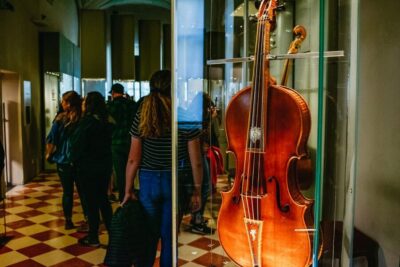
Michelangelo’s David Skip-the-Line Entry Ticket
Read our review →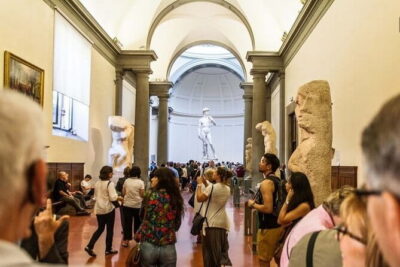
Florence Accademia Gallery Tour with Entrance Ticket Included
Read our review →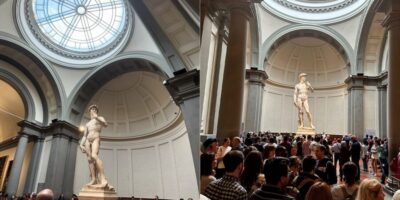
Timed Entry Ticket to Michelangelo’s David & eBook
Read our review →
Skip the line: Uffizi and Accademia Small Group Walking Tour
Read our review →
Accademia Gallery Guided Tour with Entry Ticket
Read our review →Browse the lists this tour appears in