
Reviewed · FLORENCE ARTISAN WORKSHOPS
Sculpt to Florentine Pet
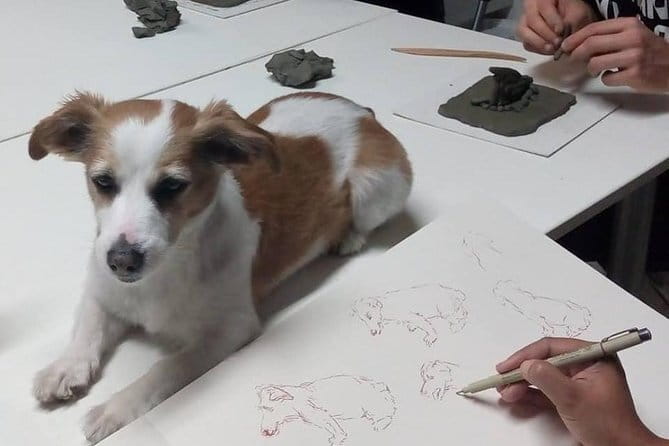
A live animal model gives this Florence art class its hook: you are not copying a postcard or following a fixed souvenir project. You are studying shape, posture, and character while working in clay at Hasta Perro with sculptor Octavio Palomino and his wife. The class is private, so your group gets the studio to itself.
I like two things right away. The instruction suits beginners and experienced artists, and the small setting should make it easier to ask for help. I also like that the afternoon includes clay, tools, snacks, and bottled water, so you can focus on the work rather than buying supplies. The main catch is the extra cost for terracotta and shipping if you want to take the finished piece further.
Key points at a glance
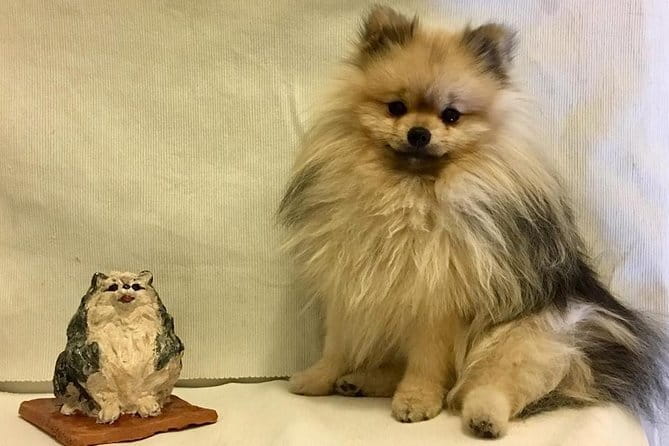
- A live pet model: Study a real animal’s form instead of working from a flat image.
- Private studio time: Only your group participates, which gives the class a personal feel.
- Named instruction: Octavio Palomino, also referred to as V. Palomino, teaches a specific Italian sculpture technique with his wife.
- A compact two-hour session: The Saturday class runs from 2:30 to 4:30 PM, making it easy to fit into a Florence afternoon.
- Supplies are provided: Clay and tools are included, along with snacks and bottled water.
- Plan for possible add-ons: Terracotta and shipping are not included in the listed price of $150.20 per person.
A Florence art class built around a live pet
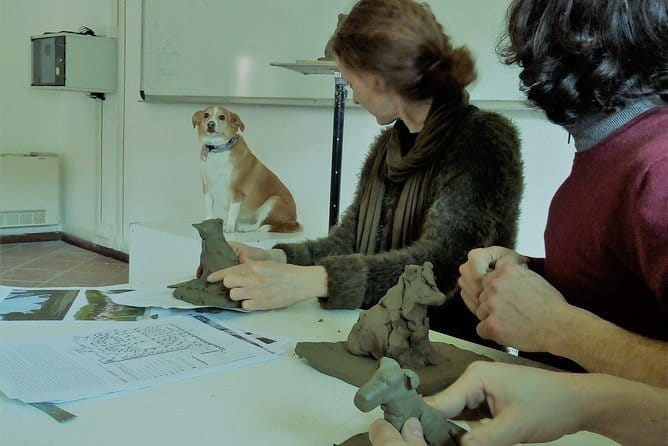
This is a hands-on studio workshop, not a sightseeing tour. You meet at Via Coluccio Salutati, 3r, in Florence, then work in the same studio until the session ends. The activity is offered in English and lasts about two hours.
The subject is a pet model, but the point is broader than making a cute animal figure. You are working with volume and proportion. A living model can shift position, which makes you pay attention to the animal’s main shapes and posture. That can be more demanding than copying a photograph, but it also gives the sculpture a sense of life.
The class is presented as an afternoon devoted to animals in fine art. That framing matters. You are not simply molding clay for entertainment. You are being introduced to a way artists have studied animals, using a physical material that responds directly to your hands.
The exact animal and the detailed sequence of poses are not specified, so you should not arrive expecting one particular breed or a set sculpture design. The strength of the experience is the process, with the live subject and the teaching taking priority over a guaranteed finished object.
More artisan workshops in Florence:
- Florence: Perfume Masterclass and Sensory Experience
★ 4.7 · 463 reviews - Perfume Masterclass in Florence: Make your Own Personal Fragrance
★ 4.5 · 253 reviews - Handmade Tuscan Ceramics Masterclass in Montelupo
★ 5.0 · 205 reviews
Meeting Octavio Palomino at Hasta Perro
The studio is run by Octavio Palomino, with his wife helping teach and host the class. One description of the instruction identifies V. Palomino as the artist and sculptor, so the names refer to the same teaching team associated with the experience.
The teaching style appears personal rather than formal or lecture-heavy. You receive clay and tools at the studio, then work under guidance on a particular Italian sculpture technique. That makes this a better choice for someone who wants to learn by doing instead of simply watching an artist demonstrate.
I especially like the report that the hosts made a solo participant feel comfortable from the start. That is useful information if you are visiting Florence alone. A private class can sometimes feel awkward when you are the only person in your booking, but the friendly host setup should help ease that concern.
At the same time, a private class is not automatically a quiet one-person lesson. If you book with friends or family, only your own group participates, and the amount of individual attention will depend on your group size. The experience is most appealing when everyone is willing to get their hands dirty and accept instruction.
What happens during the two-hour session
The advertised schedule is simple: arrive at the studio for a 2:30 PM start, work through the clay modeling session, and finish back at the same meeting point at about 4:30 PM. No separate sightseeing stops are included.
The opening portion should give you time to settle in, receive your materials, and understand the task. Since the class centers on a specific sculpture technique, pay close attention at the beginning. The early advice about shaping, proportion, and handling the clay will affect the whole piece.
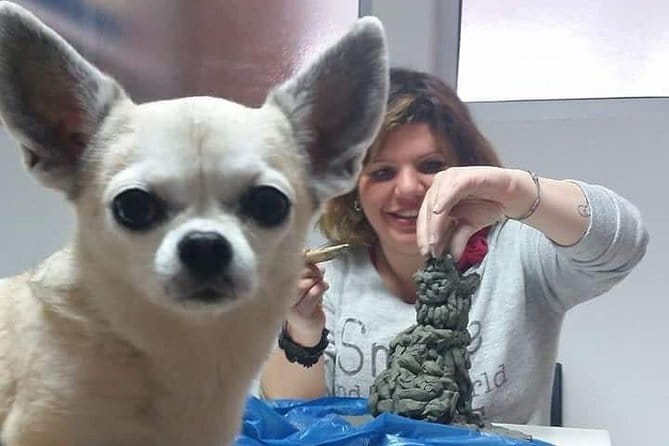
The main part is the modeling itself. You work from the live pet model, using your hands and the provided tools to build the form. The model gives you something concrete to observe, while the instructor helps you make decisions as the sculpture develops.
This is where the class may challenge beginners. Clay looks forgiving, but animal forms can be hard to capture. A small change in the angle of the head or the shape of the body can alter the character of the whole piece. The teaching team’s role is not just to show you where to press. It is to help you see the structure beneath the surface.
The final part is likely used to refine the sculpture and bring the session to a close, but the provided details do not promise a completed, fired, or shipped work of art. That distinction is important. In two hours, you can make meaningful progress and learn a technique, but you should not book this expecting a fully finished terracotta sculpture ready to place in your home that same day.
Why the live model changes the class
A pet model adds a practical challenge that a standard beginner clay class may not have. You need to observe rather than rely on a template. That can sharpen your eye, especially if you are interested in portraiture, figurative work, or animal art.
You may also find the live subject keeps the class from feeling mechanical. Everyone begins with the same broad task, but each person’s result can develop differently. The animal’s pose and character give you a starting point, while your own handling of the clay determines the final look.
This format also gives the session an authentic studio quality. You are not being rushed through a chain of tourist activities. You spend the full afternoon on one creative task, with an artist and a working method at the center.
There is a trade-off. If you prefer a predictable craft project with clear steps and a guaranteed result, this may feel open-ended. The pleasure comes from learning how to observe and adjust, not from producing an identical object to take home.
A completely different way to spend an afternoon in Florence:
- Florence: Skip-The-Line Uffizi Gallery Timed Entry Ticket
★ 4.5 · 27,832 reviews - Tuscany Day Trip from Florence: Siena, San Gimignano, Pisa and Lunch at a Winery
★ 5.0 · 21,634 reviews - Florence: Timed Entrance Ticket to Michelangelo’s David
★ 4.6 · 16,983 reviews - Florence: Michelangelo’s David Skip-the-Line Entry Ticket
★ 4.5 · 12,764 reviews
The Italian sculpture technique and level of instruction
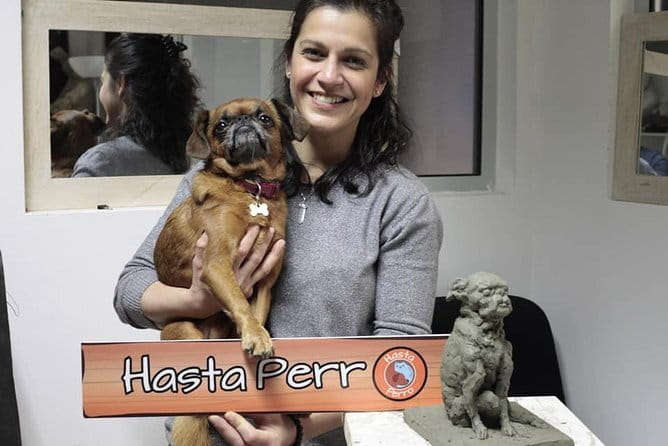
The class teaches a specific technique used in Italian sculpture. The available description does not name the method, so you should avoid expecting a formal art-school course with a detailed history of the technique. Still, the lesson has more substance than a casual activity built around pressing clay into a mold.
The instruction is designed for a wide range of ability. Beginners can take part, while experienced artists may find enough technical difficulty to stay engaged. That range is helpful for groups with mixed experience, though it also means the pace may not be tailored exclusively to advanced students or first-timers.
If you are new to sculpture, ask questions early and often. Let the instructor correct your approach before you spend too much time refining one part of the animal. If you already work with clay, you may want to treat the session as a chance to study Palomino’s method and compare it with your own.
The most useful mindset is patience. You are learning to translate a three-dimensional, moving subject into a solid form. That takes concentration. The class is short enough to fit into a busy Florence itinerary, but long enough to require real attention.
What the $150.20 price includes
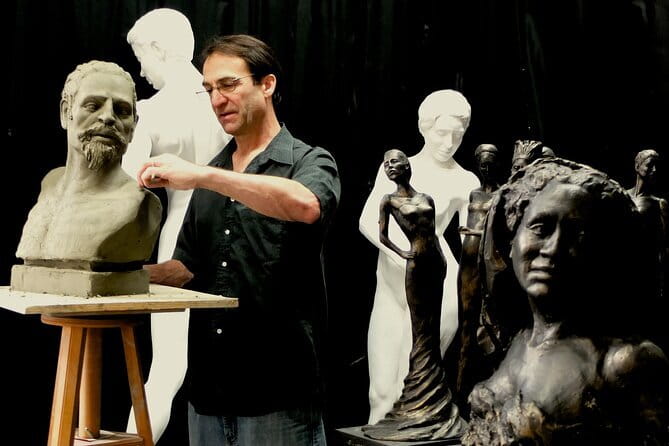
At $150.20 per person, this is not a cheap drop-in craft activity. The price makes more sense if you value private instruction, a live model, and the chance to work with an artist in a studio rather than simply making a quick souvenir.
Your fee includes the clay and tools needed for the workshop. Snacks and bottled water are also provided. Those extras are small, but they help during a hands-on afternoon, especially when you are concentrating on a detailed piece.
The private format is the bigger value point. You are not sharing the class with unrelated participants, and your group can work in a more personal setting. For two people or a small group of friends who genuinely want an art lesson, that privacy can justify the cost.
You should also budget for the possibility of extra charges. Terracotta and shipping are not included. If your goal is to have the piece turned into a terracotta work or sent elsewhere, confirm the current process and price before booking. The listed rate covers the workshop materials, not every later step connected with the sculpture.
For a casual tourist who only wants a light activity, the cost may feel high. For someone who wants instruction and a memorable creative project, it offers a more focused use of two hours than many ordinary souvenir stops.
Who will get the most from this experience
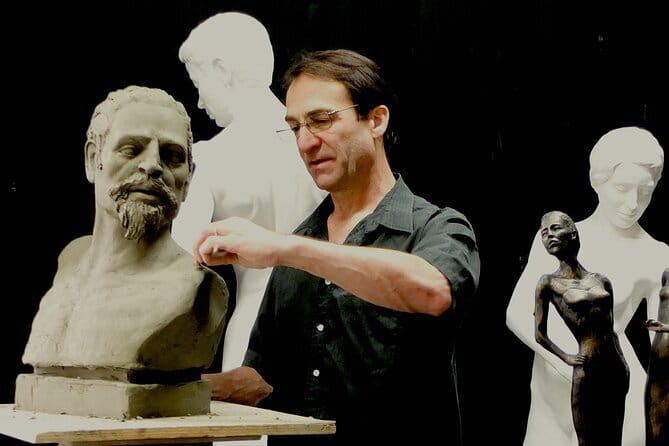
I would choose this for a solo visitor who enjoys making things, a couple looking for a shared activity, or a small group of friends with an interest in art and animals. The English-language instruction makes it accessible to visitors who do not speak Italian.
It also suits different skill levels. You do not need to arrive as an established sculptor, and you should not feel that the class is only for people with years of studio work. The technique may challenge experienced artists too, which gives the activity a useful middle ground.
Families and groups should consider the interests of every participant. The experience is private and most participants can take part, but clay modeling requires concentration and active participation. It is not designed as a show where some people watch while others are entertained.
Service animals are allowed, and the meeting point is near public transportation. Those details make the class easier to consider when planning your day, though you should still check the exact route and local transport timing before setting out.
Timing, meeting point, and practical planning
The class is scheduled on Saturdays from 2:30 to 4:30 PM. That fixed timing is useful if you want an afternoon activity, but it gives you less flexibility than a workshop offered several times each day. Build in enough time to reach Via Coluccio Salutati, 3r, rather than cutting it close after another appointment.
The activity begins and ends at the same location. That makes the transition simple. You will not need to arrange a separate pickup or find your way to another part of Florence after the workshop.
A mobile ticket is accepted, and confirmation is provided at booking. Keep the confirmation easy to access on your phone. Since this is a private appointment with a set start time, arriving prepared matters more than it would for a large public tour.
The experience is commonly reserved well in advance, with an average booking time of about 42 days. That suggests you should not assume you can decide at the last minute, particularly if your Florence dates are fixed or you want a particular Saturday.
Cancellation is free if you cancel at least 24 hours before the local start time. Cancellations or changes inside that 24-hour window are not accepted for a refund. This is worth noting because the workshop is private, so a late change may affect the studio’s schedule.
How this compares with ordinary Florence sightseeing
Florence is full of famous paintings, sculptures, churches, and grand rooms. This workshop gives you a different way to think about art. Instead of looking at finished works from behind a barrier, you handle the material and face the problems an artist faces while building a form.
That does not make it a replacement for the city’s major museums. If this is your first visit, you still need time for Florence’s major art collections and historic sights. The class works best as a change of pace between more traditional cultural visits.
I also like the fact that the activity is centered on an independent studio rather than a large group production. You spend your time with a small teaching team and a real creative task. That can feel more personal than a standard tour, especially for visitors who want to meet local artists through their work.
The limitation is scope. You will not see a range of animal sculptures or tour a broad collection of Italian art during these two hours. The reward is focus, not variety.
Should you book the Sculpt to Florentine Pet class?
Book it if you want a private, hands-on art lesson and like the idea of shaping clay from a live pet model. The named teaching team, English instruction, supplied materials, and flexible skill level make it a good fit for solo visitors, couples, and small groups who enjoy creative work.
Think twice if you want a finished terracotta sculpture included in the price, a broad tour of Florence, or a quick activity with little concentration. The extra terracotta and shipping costs also matter if taking the work home is central to your plan.
For the right person, the value is not just the clay object. It is the chance to learn a specific Italian sculpture technique from Octavio Palomino and his wife while working in a private studio. If that sounds more appealing than another hour spent simply looking at art, reserve ahead and keep your Saturday afternoon free.
FAQ
Where does the Sculpt to Florentine Pet experience begin?
It begins at Via Coluccio Salutati, 3r, 50126 Firenze FI, Italy.
Where does the activity end?
The activity ends back at the meeting point on Via Coluccio Salutati.
How long does the workshop last?
The workshop lasts approximately two hours, from 2:30 PM to 4:30 PM on Saturdays.
Is the workshop offered in English?
Yes. The experience is offered in English.
Is this a private activity?
Yes. Only your group participates in the activity.
What is included in the price?
Clay, tools, snacks, and bottled water are included.
Are terracotta and shipping included?
No. Terracotta and shipping costs are not included.
Can I cancel for a full refund?
Yes, if you cancel at least 24 hours before the experience start time. Cancellations or changes made less than 24 hours in advance are not accepted for a refund.
Recently added around Florence
- Accademia and Uffizi Small-group Guided Tour★ 4.5 · 8 reviews
- The David from Michelangelo.★ 5.0 · 3 reviews
- Combo: Accademia + walking + Uffizi Galleries Guided Tour★ 3.5 · 6 reviews
- The Complete Wine Tour Brunello, Nobile, Chianti wine experience★ 4.0 · 7 reviews
- The Best of Tuscany in 3 Days★ 4.5 · 13 reviews
- The Cooking Lab – Authentic Food Experience★ 5.0 · 113 reviews
- Florence Central Market Food Tour – Private Tour★ 4.0 · 7 reviews
- Family Friendly Florence Private City Tour★ 5.0 · 47 reviews
Florence Artisan Workshops, compared.
Perfume Masterclass in Florence: Make your Own Personal Fragrance
Read our review →
Handmade Tuscan Ceramics Masterclass in Montelupo
Read our review →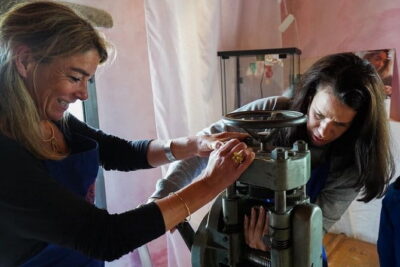
Private jewelry class in Florence, Tuscany, Italy (4 hours)
Read our review →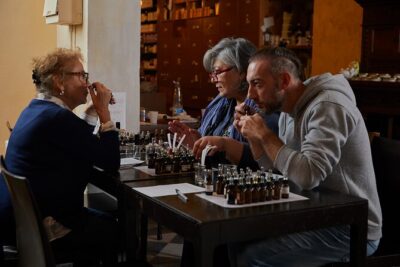
Perfume Making Workshop in the Heart of Florence
Read our review →
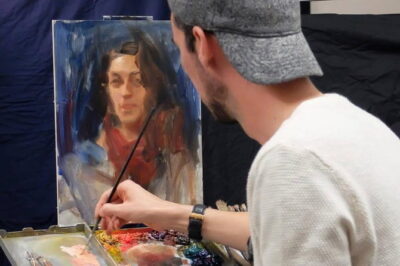
Learn to Sculpt or Paint in a Private Florence Art Studio
Read our review →Browse the lists this tour appears in