
Reviewed · PALAZZO VECCHIO TOURS
Florence: Palazzo Vecchio Ticket & Visit with optional Lunch
Florence’s Palazzo Vecchio packs medieval power and Medici splendor into one grand building. The Hall of the 500 is the main event, with Vasari’s huge painted scenes covering the walls and ceiling, but the smaller Medici rooms often reward a closer look.
I like the choice between an official audioguide and a local guide, and I like that the ticket includes temporary exhibitions held inside the palace. The main drawback is the audioguide setup: room numbers and directions can be unclear, so you may miss spaces unless you pay close attention to the route.
Key points to know
- The Hall of the 500 is the visual centerpiece: Vasari’s monumental paintings fill the largest room in the palace.
- The visit follows the Medici story: You see the courtyard, state rooms, private apartments, Francesco I’s study, and Bianca Cappello’s small chamber.
- Choose your level of help: The official audioguide is available in English, Spanish, French, German, and Italian, or you can select a local guide.
- The optional lunch adds a separate food stop: It includes a three-course Tuscan set menu in a typical old-town restaurant, but drinks cost extra.
- Tower access is not part of the basic promise: If climbing the tower matters to you, check the exact option before paying.
- Allow one to two hours: Busy periods can bring security delays, and comfortable shoes are a smart choice.
Why Palazzo Vecchio deserves a place in your Florence plan
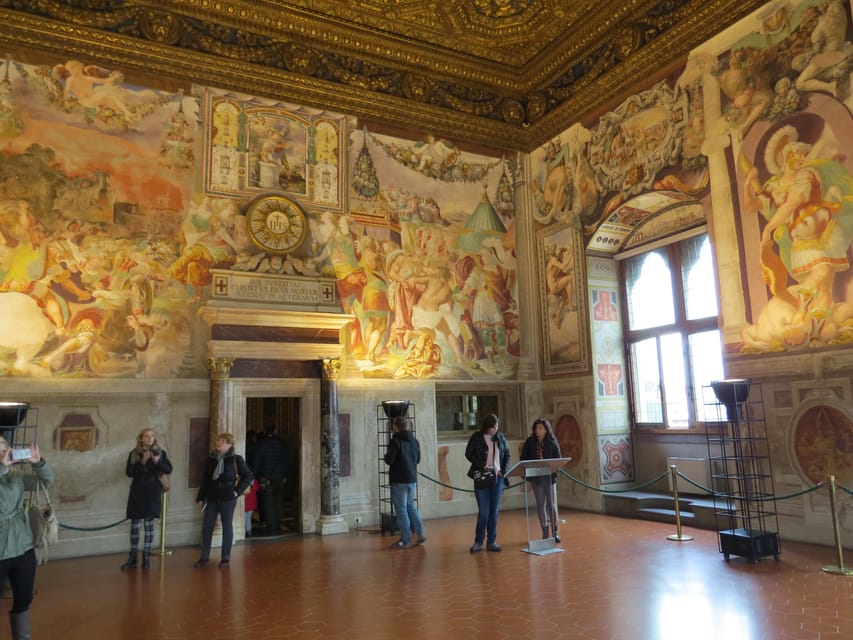
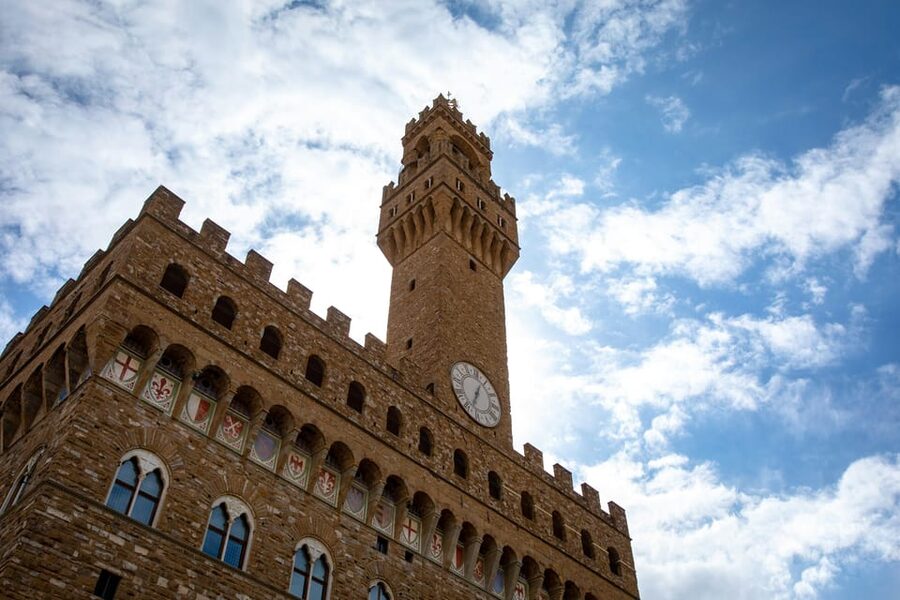
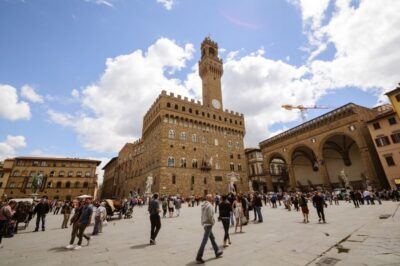
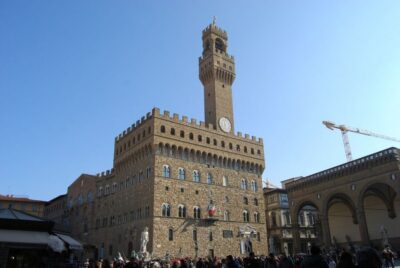
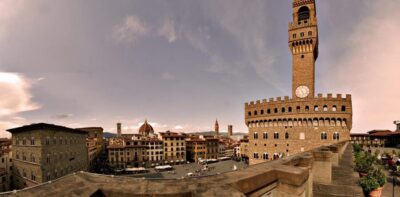
Palazzo Vecchio is not simply an art museum with a famous room. It is Florence’s old seat of government, a fortress-like medieval building later reshaped into a splendid Medici residence. That change of purpose gives the visit its special rhythm.
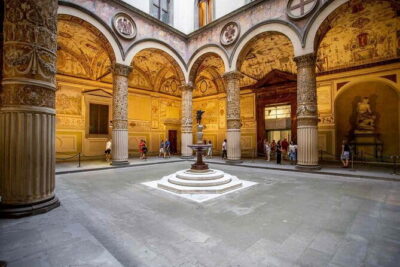
You begin in Michelozzo’s elegant courtyard, where decorative details set a gentler tone than the building’s stern exterior. Then the route leads into rooms designed to display political power, family wealth, religious devotion, and artistic taste.
I like this combination because the palace gives you more than isolated paintings. You can see how a ruling family used architecture and art to make its authority feel permanent. The public rooms are huge and formal, while the private chambers feel closer to daily life at court.
The visit lasts about one to two hours. That is enough time to see the important interiors without giving up half your day in Florence. If you are planning the Uffizi Gallery, the Accademia Gallery, and other major sights, this shorter museum visit fits neatly between them.
More Palazzo Vecchio tours:
- Florence: Palazzo Vecchio Entrance Ticket & Audioguide
★ 4.4 · 4,822 reviews - Florence: Palazzo Vecchio Guided Tour
★ 4.8 · 1,260 reviews - Florence: Palazzo Vecchio Skip-the-Line Entry Ticket
★ 4.2 · 349 reviews
Entering through Michelozzo’s courtyard
The meeting point is the Info Point and ticket office inside Palazzo Vecchio, reached through Via dei Gondi. Once inside, the courtyard by Michelozzo gives you a useful first look at the palace’s mix of practical medieval design and Renaissance decoration.
This is a good place to slow down before the larger rooms. The courtyard does not have the scale of the Hall of the 500, but it helps explain the building’s transition from fortified civic center to Medici residence.
If you are using an audioguide, collect it and make sure you understand how the room numbers work before moving on. This matters. The palace route is not always obvious, and some spaces may have no clear audioguide number or sign. A few minutes spent checking the instructions can save you from wandering past rooms.
The entrance process is generally designed to get you inside without waiting for a separate museum ticket line. During busy periods, though, security controls can slow admission. Leave some flexibility in your schedule, especially if you have a timed lunch or another booking afterward.
The Hall of the 500 and Vasari’s grand message
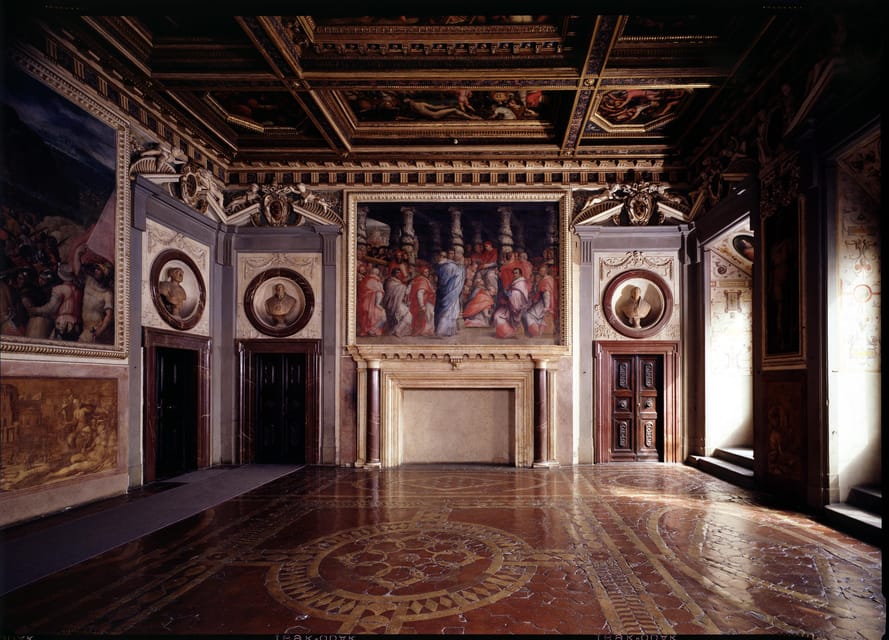
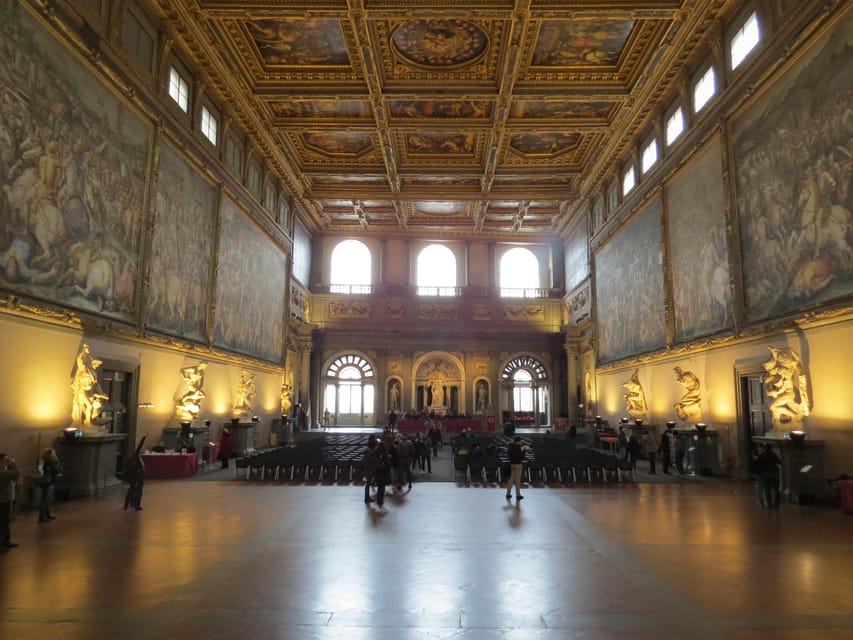
The Hall of the 500 is the room that gives this visit its dramatic punch. It was built for Florence’s governing body and later decorated under Medici rule. Giorgio Vasari’s work fills the room with battle scenes and political imagery, creating an interior made to impress large groups at once.
Look up as soon as you enter. The ceiling is crowded with painted panels, decoration, and Medici symbols. The walls carry large scenes that turn military victories into public statements. This is not quiet, intimate art. It is government art on a grand scale.
The room also carries a connection to Michelangelo, whose work is part of the palace’s artistic story even though the room’s present decoration is chiefly associated with Vasari. The supplied tour description highlights masterpieces by Michelangelo and Vasari, so the audioguide or local guide can help you sort out which artist belongs to which part of the story.
I recommend standing near the center for a moment, then moving toward the walls. From the middle, you grasp the scale. From closer up, you can inspect faces, costumes, weapons, and smaller details within the huge scenes.
The drawback is that a tablet-based audioguide can divide your attention. You may find yourself staring at the screen instead of matching the spoken explanation to the painting overhead. If you choose the audio option, listen first, then look carefully at the room.
Medici apartments and the private side of power
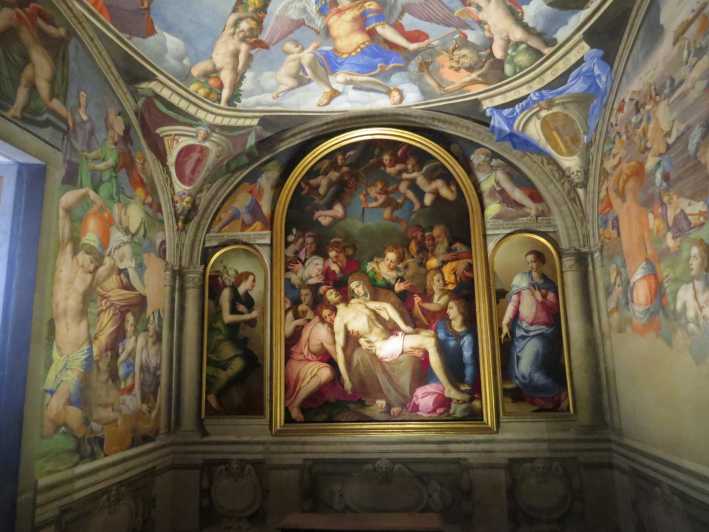
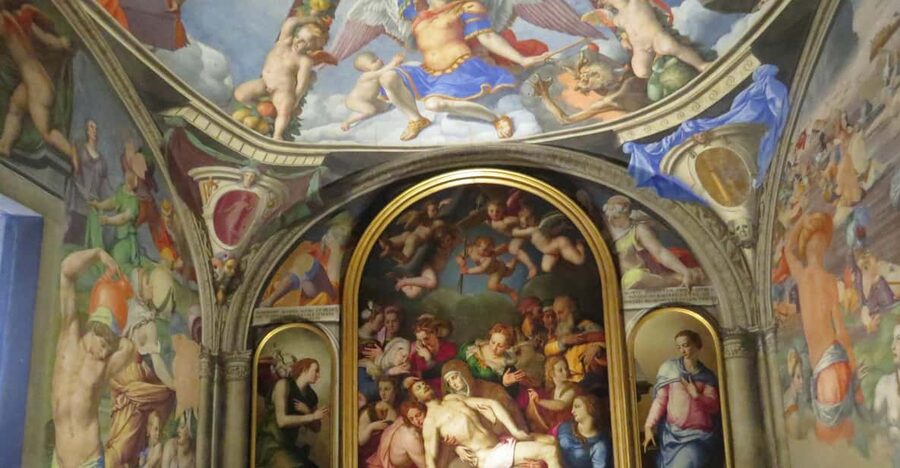
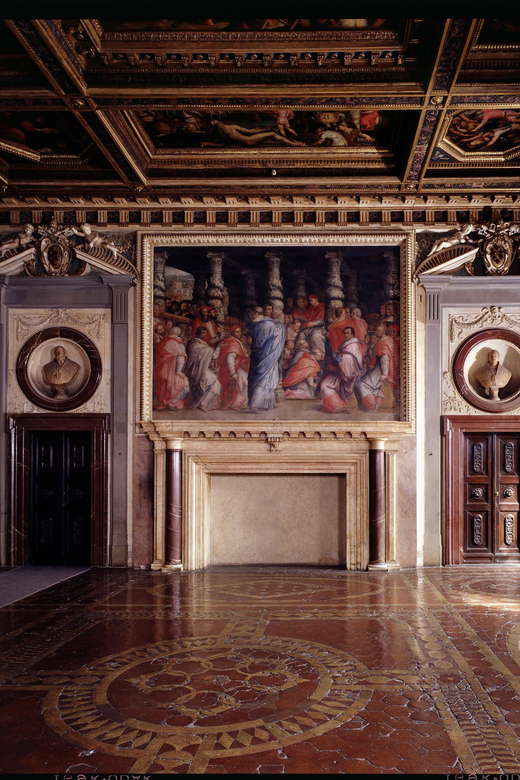
After the grand public hall, the route becomes more personal. You explore the apartments connected with Eleonora of Toledo and Cosimo I de’ Medici, where painted walls, ceilings, and decorative programs turn domestic rooms into works of art.
These rooms show how Medici power operated behind the public ceremonies. Cosimo’s household did not separate politics, family life, religion, and art in the modern way. Each room could help express status, learning, faith, or dynastic ambition.
The private apartments are also a welcome change of pace after the Hall of the 500. Instead of one enormous visual statement, you get a series of rooms with different moods and purposes. Give yourself time to look up and around. The decoration is not limited to the obvious centerpiece on a wall.
One practical problem is signage. Room lettering and directional signs may not always make the route clear. If you are relying on audio, follow the official sequence rather than simply walking toward the next open doorway. If a guide is available in your language and you prefer a clear route, that option may be worth the added structure.
More tours that include lunch in Florence:
- Tuscany Day Trip from Florence: Siena, San Gimignano, Pisa and Lunch at a Winery
★ 5.0 · 21,634 reviews - Florence: Pisa, Siena and San Gimignano Day Trip with Lunch
★ 4.6 · 9,771 reviews - Pisa, Siena and San Gimignano Day Trip with Lunch & Wine Pairing
★ 4.5 · 6,006 reviews - Cooking Class and Lunch at a Tuscan Farmhouse with Local Market Tour from Florence
★ 5.0 · 4,831 reviews
Francesco I’s study and Bianca Cappello’s secret room
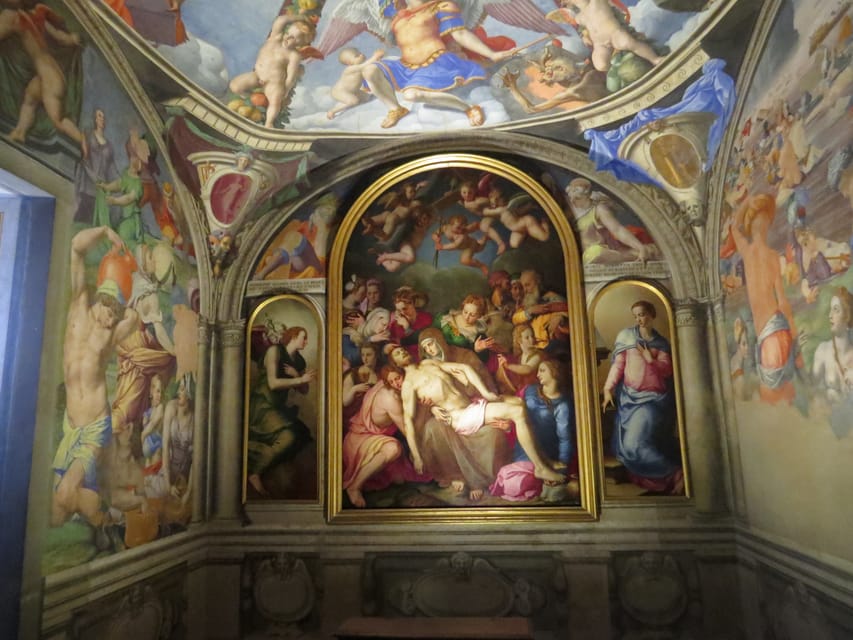
The study of Francesco I de’ Medici is one of the more intimate stops. Known as a private place associated with collecting and curiosity, it offers a sharp contrast with the civic scale of the Hall of the 500.
The smaller room makes the Medici world feel less like a public monument and more like a family’s private collection of interests. You can appreciate how Renaissance rulers used personal rooms to display learning, objects, and refined taste.
The visit also includes the Camerino di Bianca Cappello, reached through a clandestine passage. This small room is one of the most unusual parts of the route because the access itself adds a sense of intrigue. You are not simply moving from one formal gallery to another. You are seeing a less public corner tied to the personal lives of the Medici.
Do not expect the secret passage or private chamber to match the scale of the main hall. Their value is different. These rooms give you a sense of restricted access and household life, which helps balance the palace’s official image.
Audioguide or local guide?
You can choose between an official museum audioguide and an official local guide. The audioguide is available in English, Spanish, French, German, and Italian, making it the practical choice for visitors who want to move at their own pace.
The explanations are described as useful and visually helpful, but the route can be awkward. Some room numbers may be missing, and you may not receive a clear plan showing where to go next. That makes the audioguide better for independent visitors who are comfortable checking signs and retracing a few steps.
A local guide should suit you better if you want someone to point out details in real time and keep the visit moving in the right order. The provided information does not give a guide’s personal name, so do not book expecting a named specialist.
Here is the simple choice:
- Choose the audioguide if you want flexibility, your own pace, and explanations in one of the five listed languages.
- Choose the local guide if clear navigation and direct interpretation matter more than moving independently.
- If you are especially interested in painting technique, Medici politics, or the difference between public and private rooms, a live guide may help you connect the pieces faster.
What the $52 price really buys you
At about $52 per person, this is not the cheapest way to see a Florence museum. The value depends on how much structure you want and whether you add lunch.
The basic price covers museum admission and, depending on your selection, either the official audioguide or local guide. The ticket also includes temporary exhibitions held at Palazzo Vecchio, although the palace may charge an additional amount for a particular exhibition. Check the conditions attached to your chosen option.
Buying the ticket ahead of time can be useful in Florence, where popular sights often absorb time at the entrance. Here, the benefit is not only saving a possible ticket queue. You also know that Palazzo Vecchio is fixed in your day, which helps when you are planning several central Florence sights.
The optional three-course Tuscan lunch changes the calculation. It takes place at a typical restaurant in the old town and gives you a planned meal after the museum. Drinks are not included, so keep extra money available. The listing also says children’s lunch is paid on the spot, so families should clarify that cost before ordering.
I would choose the lunch only if you want convenience and a set meal. If you already have a favorite trattoria in Florence, the museum-only option gives you more control. The palace visit itself is short enough that you can easily eat elsewhere afterward.
Timing, comfort, and access
Plan for one to two hours inside, with extra time for security if Florence is crowded. Palazzo Vecchio can become warm, and one account describes uncomfortable heat during the visit. Wear light, comfortable clothing and shoes that are good for standing and walking across hard floors.
Pets are not allowed. The experience is not suitable for wheelchair users, so anyone with mobility needs should check carefully before booking.
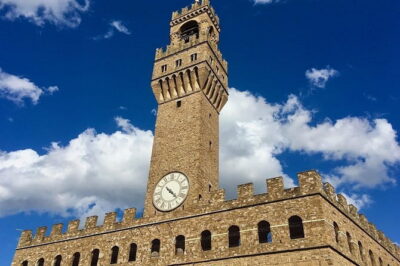
The standard experience described here does not promise access to the top of the tower. If the tower is a priority, look for a separate tower option rather than assuming the palace ticket includes it. This is one of the most important points to check before you reserve.
The palace is a good choice on a day when you want major art and architecture without committing to a four-hour museum session. It also works well in bad weather, though crowded indoor conditions can make the route less comfortable.
Who will enjoy this visit most?
This experience suits first-time Florence visitors who want a clear introduction to the city’s political and artistic past. The Hall of the 500 gives you a memorable centerpiece, while the apartments and private rooms add detail.
It is also a good match for visitors who like architecture and decorative painting more than a long list of individual objects. Much of the pleasure comes from ceilings, wall frescoes, room design, and the relationship between public and private space.
Families can manage the one to two-hour length, though younger children may have limited patience for the audioguide. The clandestine passage and Bianca Cappello’s room may provide an extra spark of curiosity, but the experience remains primarily an art and history visit.
Independent visitors should think carefully about the audio route. The explanations can be good, but unclear numbering and limited directions may cause frustration. A live guide is likely the smoother option if you do not want to manage the route yourself.
My final call on booking
I would book this Palazzo Vecchio visit if you want to see the Hall of the 500, learn how the Medici reshaped a medieval civic palace, and keep the museum portion to a manageable one or two hours. The ticket and guide choice provide useful structure, and the optional lunch can simplify your day.
I would not book it on the assumption that the tower is included, and I would think twice about the audioguide if unclear signs tend to bother you. Choose the local guide instead, or allow extra time to find your way between rooms.
For the best value, select the museum visit alone if you already know where you want to eat. Add the lunch if a three-course Tuscan meal in the old town is worth paying for the convenience. At $52, it is a fair choice for a well-planned Florence day, especially when the main goal is the palace itself rather than a tower climb.
FAQ
How long does the Palazzo Vecchio visit take?
The stated duration is one to two hours. Busy periods may add time because of security delays at the museum entrance.
What languages are available for the audioguide?
The official audioguide is available in English, Spanish, French, German, and Italian.
Can I choose a live guide instead of an audioguide?
Yes. Depending on the option selected, you can choose an official museum audioguide or an official museum local guide.
Does the ticket include temporary exhibitions?
Yes, the ticket includes temporary exhibitions held at Palazzo Vecchio. Palazzo Vecchio may apply an additional charge for a particular temporary exhibition.
Is lunch included in the ticket?
Lunch is included only if you select the lunch option. It consists of a three-course Tuscan set menu at a typical restaurant in the old town. Drinks are paid for separately.
Is the experience suitable for wheelchair users?
No. The activity is listed as not suitable for wheelchair users.
Recently added around Florence
- Accademia and Uffizi Small-group Guided Tour★ 4.5 · 8 reviews
- The David from Michelangelo.★ 5.0 · 3 reviews
- Combo: Accademia + walking + Uffizi Galleries Guided Tour★ 3.5 · 6 reviews
- The Complete Wine Tour Brunello, Nobile, Chianti wine experience★ 4.0 · 7 reviews
- The Best of Tuscany in 3 Days★ 4.5 · 13 reviews
- The Cooking Lab – Authentic Food Experience★ 5.0 · 113 reviews
- Florence Central Market Food Tour – Private Tour★ 4.0 · 7 reviews
- Family Friendly Florence Private City Tour★ 5.0 · 47 reviews
Palazzo Vecchio Tours, compared.
Palazzo Vecchio guided experience with entrance ticket
Read our review →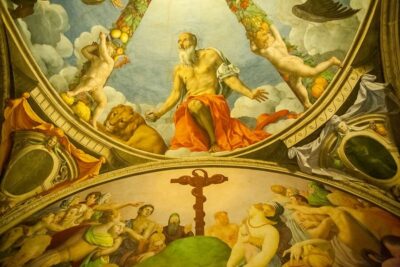
Palazzo Vecchio Skip-the-line Ticket & Audio Guide
Read our review →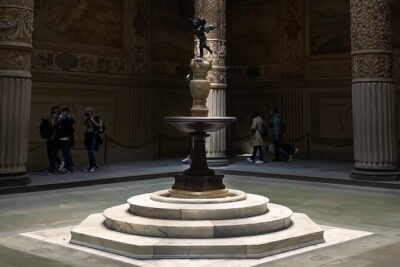
Small-Group Palazzo Vecchio Secret Passages Tour with Lunch Or “Gelato”
Read our review →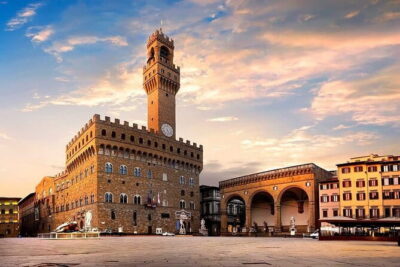
Florence Palazzo Vecchio Priority Entry Ticket with Host
Read our review →Browse the lists this tour appears in