
Reviewed · ACCADEMIA GALLERY AND DAVID TOURS
Florence City Tour & David
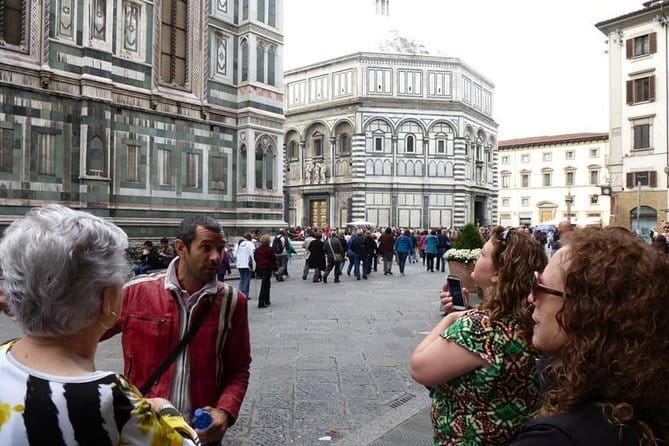
Michelangelo’s David is the headline, but the real value of this tour is the story around it. You begin inside the Accademia, then follow Florence’s Medici-powered trail through palaces, churches, public squares, and the Ponte Vecchio. Paul Costa leads with the energy of a teacher, using art to explain how Florence changed Europe.
I like the small group size, which makes three hours on foot feel more personal than a large city tour. I also like the clear route from David to the Medici palace, Piazza della Signoria, and Ponte Vecchio. The main drawback is the $464.43 price per person. That is a serious outlay for three hours, so this makes the most sense if you want focused guiding and skip-the-line Accademia access rather than a quick orientation.
Key points at a glance
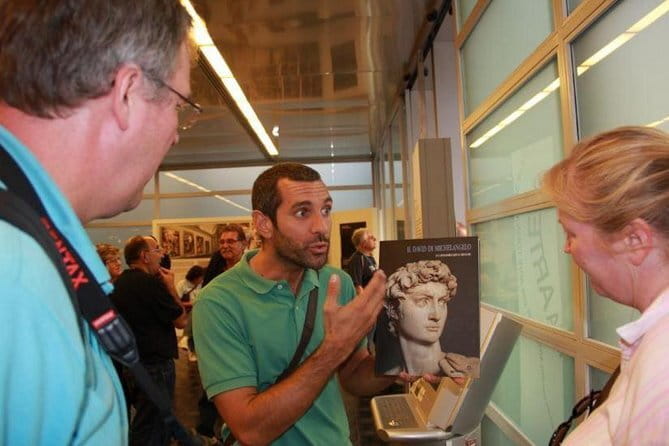
- David comes first: Spend about an hour at the Accademia with admission included.
- Paul Costa is the featured guide: His style is lively, questioning, and strongly focused on art and history.
- The Medici story shapes the walk: Palazzo Medici Riccardi and Piazza della Signoria show how one family influenced Florence.
- You see David’s original outdoor setting: The copy in Piazza della Signoria helps explain the statue’s political purpose.
- The route ends at Ponte Vecchio: Expect discussion of Vasari’s private corridor and the bridge’s survival during World War II.
- Plan for a strict no-refund booking: Confirmation is sent within 48 hours, subject to availability.
Why this Florence tour is really about power, not just art
Florence can feel like an open-air museum where every corner competes for your attention. A good guide gives those sights an order. This tour does that by linking Michelangelo’s David to the Medici family, the city’s religious buildings, its government, and its bridges.
That structure matters. You are not simply looking at a famous statue, then ticking off a palace and a square. You are following the rise of a family that used money, architecture, art, and public spaces to shape Florence.
The tour lasts about three hours and begins at 9:10 a.m. at Via Ricasoli, close to the Accademia. It finishes at Ponte Vecchio, so you end in the center rather than returning to the starting point. You will walk between stops, with short visits outside or in courtyards and longer time inside the Accademia.
The group is described as a maximum of 11 people, while the additional tour details list a maximum of 12. Either way, this is intended to be a small-group experience, not a crowd trailing behind a guide with a flag.
More ways to see the David at the Accademia:
- Florence: Timed Entrance Ticket to Michelangelo’s David
★ 4.6 · 16,983 reviews - Florence: Michelangelo’s David Skip-the-Line Entry Ticket
★ 4.5 · 12,764 reviews - Florence Accademia Gallery Tour with Entrance Ticket Included
★ 4.5 · 6,148 reviews
One hour with David at the Accademia
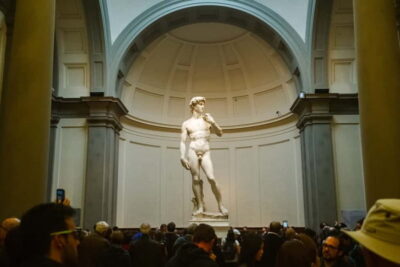
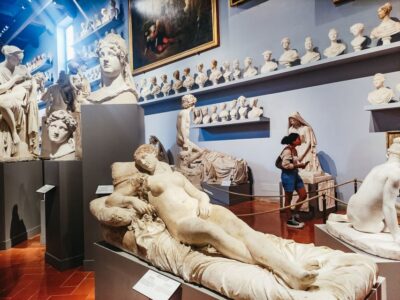
The first stop is the Galleria dell’Accademia, where admission and skip-the-line entry are included. The tour allows about an hour here, which is important. David deserves more than a quick glance and a hurried photograph.
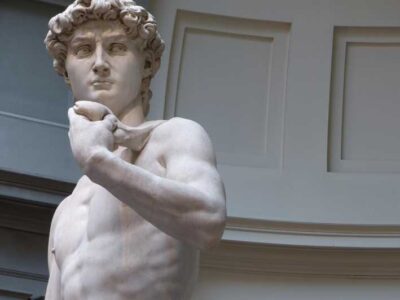
The statue is often presented as a triumph of technical skill, and it certainly is that. But the more useful question is what David meant to people in Florence when Michelangelo created him. The guide focuses on how the statue and other paintings were understood by the public more than 500 years ago.
That historical framing gives the visit purpose. David was not made as a neutral decoration. Its size, pose, and subject carried a message about courage and civic identity. You will also learn where the statue was originally placed, which prepares you for the later stop at Piazza della Signoria.
The Accademia contains more than David, and the tour description specifically mentions other paintings. Still, David is the clear center of this visit. If you want a slow, independent look at every room, one hour with a guide may feel brief. If you want a strong explanation of the main work and its setting, the timing is sensible.
Skip-the-line admission is especially useful here because the Accademia is one of Florence’s most sought-after museums. It does not mean you get the building to yourself. It means the tour removes one major source of wasted time, letting you spend more of your morning with the art.
Palazzo Medici Riccardi and the family behind Florence
From the Accademia, the route moves to Palazzo Medici Riccardi. The visit is focused on the inner courtyard and lasts about 15 minutes, with no separate admission charge listed for this stop.
The courtyard gives you a compact lesson in Medici ambition. Roman, Greek, and Renaissance ideas meet here, and the guide explains how architecture and art served the family’s public image. The description is frank about the Medici ego, and that is useful. Florence’s art was not produced in a vacuum. Wealthy patrons commissioned beauty, but they also wanted influence, status, and control.
A 15-minute courtyard visit is enough for an explanation and a close look, but it is not a full palace tour. You should not book this experience expecting extended time inside Palazzo Medici Riccardi or a detailed examination of every room.
The short stop works because the tour is built around connections. You see how a family’s private residence relates to the public buildings and open spaces that follow. The Medici story keeps returning as the walk moves through Florence.
The Duomo and Baptistery in the middle of the walk
The route also pauses to explain Florence’s great church and dome, along with the Baptistery. The supplied timing does not assign a separate duration to these stops, and no admission is listed for them, so treat them as guided exterior explanations rather than full interior visits.
The Duomo discussion centers on how Florence built its enormous church and dome during the 1300s and 1400s. That question is more useful than a simple date list. It directs your attention to the scale of the project, the city’s ambition, and the technical challenge involved.
The Baptistery offers a different angle. The guide explains why Florentine Christians considered it the city’s most important building, who was baptized there, why baptism changed in the 1300s, and why the building’s shape matters. The Doors of Paradise also enter the story.
This is one of the tour’s strengths for first-time visitors. Florence’s major monuments can blur together after a morning of churches, statues, and grand facades. The guide gives each building a role: the cathedral expresses civic ambition, while the Baptistery connects the city to religious life and ritual.
You will need to manage expectations about access. The itinerary says to learn about these places, but it does not promise entry tickets. If going inside the Duomo or Baptistery is a priority, plan a separate visit.
More city sightseeing tours in Florence:
- City Sightseeing Florence Hop-On Hop-Off Bus Tour
★ 3.5 · 1,894 reviews - Florence: Eco-Friendly Golf Cart City Tour with Audio Guide
★ 4.6 · 1,094 reviews - Florence in a Day: Michelangelo’s David, Uffizi and Guided City Walking Tour
★ 4.5 · 1,048 reviews - Florence in a Day: David, Cathedral & City Highlights Guided Tour
★ 4.5 · 947 reviews
Piazza della Signoria and David’s original political setting
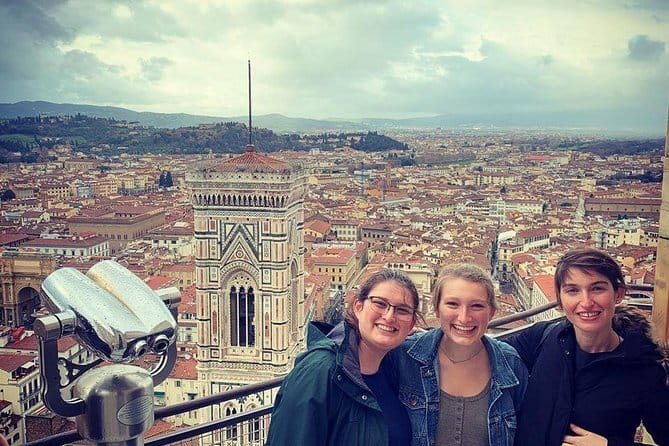
The walk continues to Piazza della Signoria, where you see the location chosen for the original David. The stop lasts about 15 minutes and has no admission fee.
This is where the statue’s public meaning becomes clearer. Inside the Accademia, you study David as a masterpiece. In the piazza, you learn how it functioned in the city. The square is filled with sculptures connected to Medici rule, and the guide explains how those works shaped the public message of Florence.
The Palazzo Vecchio has occupied this space since 1299 and still serves as City Hall. It is also a museum, though this tour does not list admission or a museum visit. You will hear about its political role and its place in the square, but you should not assume that the tour includes time inside.
I like this stop because it turns a familiar photograph into a civic lesson. The copy of David in the piazza cannot replace seeing Michelangelo’s original at the Accademia. It does, however, help you understand why the original placement mattered and how art could speak for a city.
The short timing is the trade-off. Piazza della Signoria contains far more than can be covered in 15 minutes. You will get a guided explanation and orientation, not a full survey of every sculpture or room in the Palazzo Vecchio.
Vasari’s corridor and the Medici need for privacy
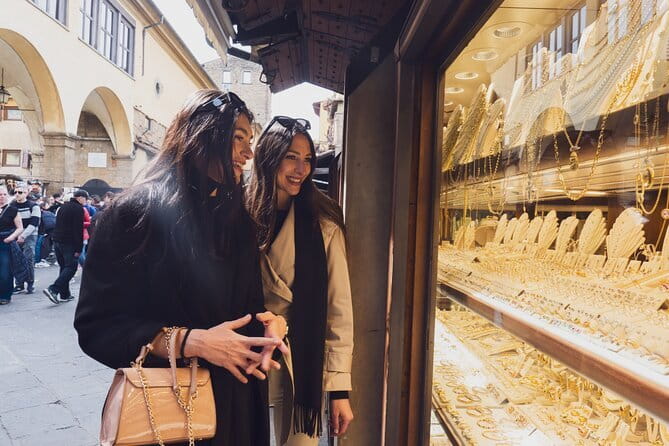
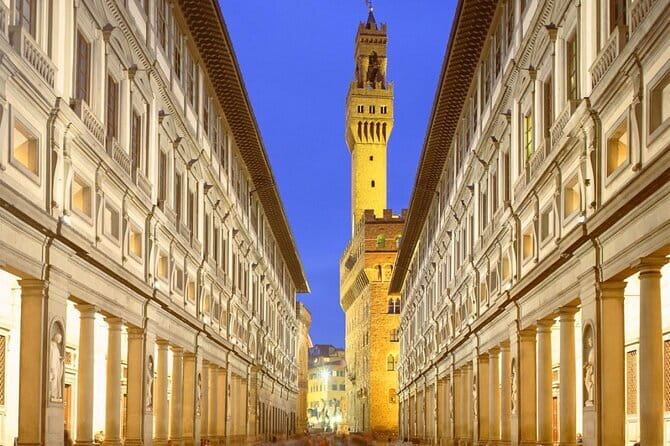
Along the route, you learn about the private corridor built by Giorgio Vasari for Cosimo de’ Medici. It allowed the ruler to cross Florence without walking outside among the public.
That detail says a great deal about power. The corridor was practical, but it was also a physical statement about separation. The Medici could move through the city while remaining above its streets and crowds.
The experience does not list admission to the corridor, so expect an explanation from the public route rather than a visit through the passage itself. The value is in seeing how the city’s buildings were connected to the needs of one ruling family.
This is the kind of small detail that makes the larger story stick. The Medici did not merely commission paintings and palaces. They altered the way the city worked around them.
Ponte Vecchio, Vasari, and the bridge that survived the war
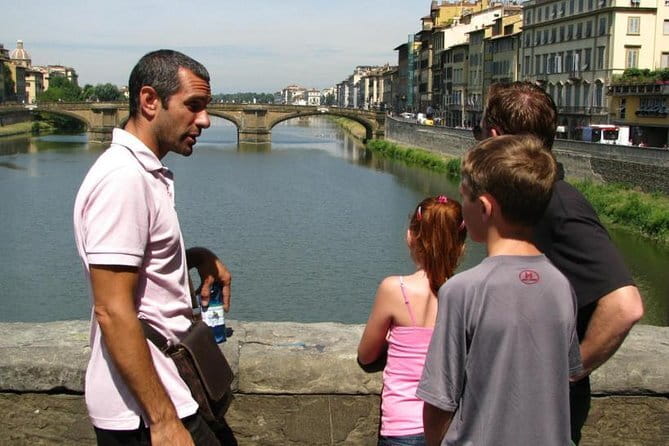
The final stop is Ponte Vecchio, with about 10 minutes devoted to the bridge. The tour ends here, near one of Florence’s best-known landmarks.
You will learn why the bridge has survived from 1333 to today, then turn to World War II. The guide explains how Renaissance art, the Axis powers, and the Allied powers all affected the bridge’s survival. That gives the crossing a longer timeline than the usual jewelry-shop photograph.
The short stop is enough for a focused story, but it is not a leisurely bridge visit. After the tour, you may want to remain in the area and walk across Ponte Vecchio on your own. Since the experience ends here, you are already in a convenient place to continue toward central Florence.
Ponte Vecchio is a fitting finish. The Accademia shows a work of art in a museum. Piazza della Signoria shows art in a political setting. Ponte Vecchio brings the story back to daily city life, commerce, war, and movement across the Arno.
What Paul Costa adds to the experience
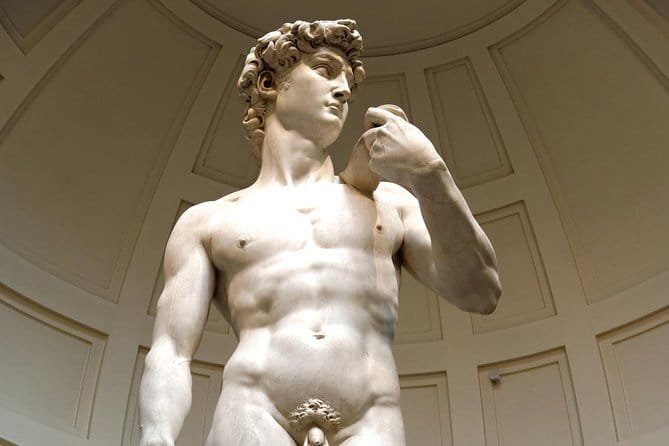
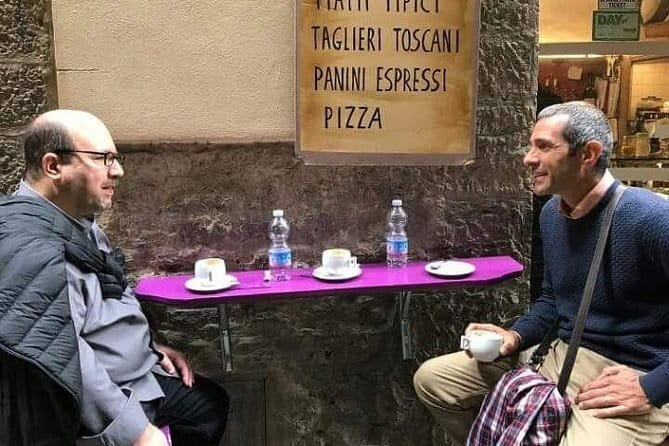
The guide’s personality is a major part of the booking decision. Paul Costa is described as animated, friendly, passionate, and comfortable teaching art history to different ages. He is also known for asking questions and testing what you have noticed, rather than delivering a flat speech.
That approach suits Florence. You can read a plaque for dates and names. A good guide helps you see why a statue was placed in one square, why a family paid for a palace, and how religious and political ideas affected the art.
The strongest pattern in the available comments is Paul’s ability to keep people engaged for the full three hours. Families with teenagers found the tour held their attention, and adults praised his humor, clear explanations, and strong command of the subject.
He has also arranged other Italian tours for some clients, including Rome, Pompeii, Venice, and the Cinque Terre. That is not part of this booking, but it suggests a guide who works across a wider Italian travel network. For this experience, the important point is his teaching style and Florence focus.
Is $464.43 per person good value?
At $464.43 per person, this is expensive for a three-hour walking tour. The price needs to be judged against what you value, not against the cost of a basic city walk.
You are paying for a small group, a guide with a strong teaching style, skip-the-line Accademia admission, and a carefully connected route through major Florence landmarks. If you have only one day in the city, that concentrated structure can save time and help you make sense of sights that otherwise feel scattered.
The value is weaker if you mainly want transportation, a quick look at David, or independent museum time. The tour includes short stops at several outdoor landmarks, but it does not list entry to the Duomo, Baptistery, Palazzo Vecchio, or Vasari Corridor.
Group discounts are available, which may change the calculation for families or larger parties. Confirmation arrives within 48 hours, subject to availability. The booking is non-refundable and cannot be amended, so check your dates carefully before paying.
Who should book this three-hour walk?
I would choose this experience if you want Florence explained through art, power, and city planning. It is a strong fit for first-time visitors, families who benefit from lively guiding, and anyone who wants David placed in a wider story.
The tour also suits people who learn best by asking questions. The reported guide style is interactive, and the small group should make it easier to hear and participate than on a large walking tour.
I would think twice if you want a quiet, self-directed museum visit or several long interior visits. The itinerary moves at a purposeful pace, and the shorter stops are designed to support the main story rather than provide exhaustive sightseeing.
Most participants can take part, and the route is near public transportation. The information provided does not give a detailed accessibility assessment, so anyone with specific mobility needs should confirm the walking conditions before booking.
FAQ
How long is the Florence City Tour and David experience?
The tour lasts approximately three hours.
Where does the tour begin?
It begins at Via Ricasoli 58 in Florence, near the Galleria dell’Accademia.
What time does the tour start?
The listed start time is 9:10 a.m.
Does the tour include admission to the Accademia?
Yes. Skip-the-line admission to the Galleria dell’Accademia is included, with about one hour allocated to the visit.
Where does the tour finish?
The tour ends at Ponte Vecchio, near the famous bridge in Florence.
How large is the group?
The experience is described as a small-group tour with a maximum of 11 people. The additional details list a maximum of 12, so confirm the exact group limit when your booking is confirmed.
Should you book it?
Book this tour if you want David to be more than a famous statue on a checklist. Paul Costa’s teaching-led approach, the small group, and the clear Medici-to-Ponte Vecchio route give the morning a strong sense of purpose.
The high price is the deciding factor. At $464.43 per person, this is not a casual add-on. It is best for a short Florence visit, a family that wants one focused history lesson, or anyone willing to pay for personal guidance and included Accademia access. If you prefer to explore at your own pace, buy museum tickets separately and use the route as your own walking plan.
Recently added around Florence
- Accademia and Uffizi Small-group Guided Tour★ 4.5 · 8 reviews
- The David from Michelangelo.★ 5.0 · 3 reviews
- Combo: Accademia + walking + Uffizi Galleries Guided Tour★ 3.5 · 6 reviews
- The Complete Wine Tour Brunello, Nobile, Chianti wine experience★ 4.0 · 7 reviews
- The Best of Tuscany in 3 Days★ 4.5 · 13 reviews
- The Cooking Lab – Authentic Food Experience★ 5.0 · 113 reviews
- Florence Central Market Food Tour – Private Tour★ 4.0 · 7 reviews
- Family Friendly Florence Private City Tour★ 5.0 · 47 reviews
Accademia Gallery and David Tours, compared.
Timed Entrance Ticket to Michelangelo’s David
Read our review →
Michelangelo’s David Skip-the-Line Entry Ticket
Read our review →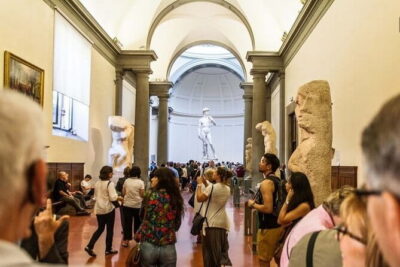
Florence Accademia Gallery Tour with Entrance Ticket Included
Read our review →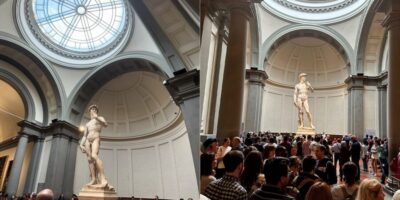
Timed Entry Ticket to Michelangelo’s David & eBook
Read our review →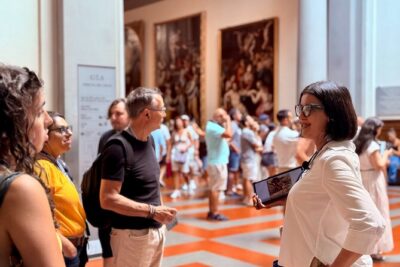
Skip the line: Uffizi and Accademia Small Group Walking Tour
Read our review →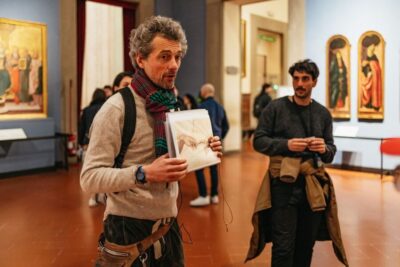
Accademia Gallery Guided Tour with Entry Ticket
Read our review →Browse the lists this tour appears in