
Reviewed · PITTI PALACE AND BOBOLI GARDENS TOURS
Florence: Boboli Gardens Reserved Entry Ticket & eBook
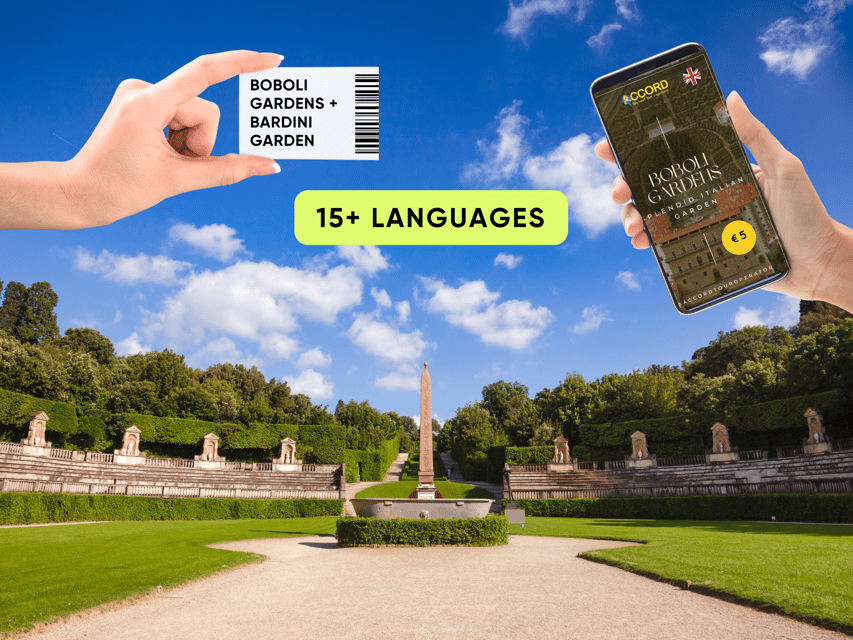
Florence’s Boboli Gardens turn a palace visit into a walk through Medici power, Renaissance art, and grand courtly design. I like the reserved entry and the chance to explore the Garden of Villa Bardini on the same day, especially for its views over Florence.
The multilingual eBook gives you useful background without requiring a guide, and the Tuscan food tasting bonus adds a pleasant local touch. The main drawback is timing: Boboli is large, some sections may be closed for restoration, and a late entry can leave you rushing before the gardens close.
Key points to know before booking
- Boboli is much larger than a quick palace garden: Allow several hours, and potentially most of the day, to walk its paths, statues, fountains, grottos, and upper viewpoints.
- Your timed entry applies to Boboli only: Villa Bardini can be visited anytime during the same day.
- The Buontalenti Grotto and grand fountains are major highlights: Look for the Fountain of Neptune and Fountain of the Ocean as you explore.
- The eBook replaces a live guide, not a personal tour: Art historians prepared the multilingual PDF, which is sent by WhatsApp or email.
- Restoration can affect the visit: Statues, paths, and sections of the gardens may be closed or covered during repair work.
- The $29 price is strongest when you use both gardens: A short Boboli visit alone offers less value than a well-planned day with Villa Bardini and the food tasting bonus.
Why Boboli Gardens deserve more than a quick stroll
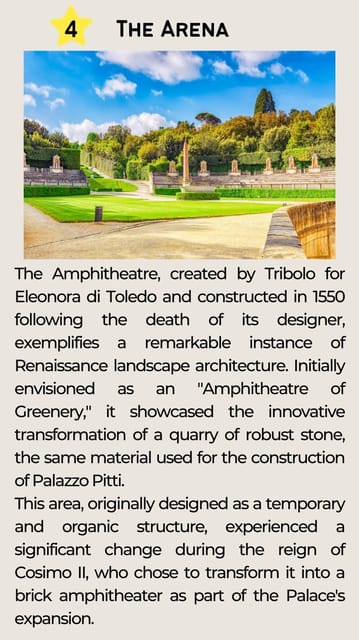
Directly behind Pitti Palace, Boboli Gardens offer one of Florence’s clearest views of how a ruling family used art and outdoor space to display authority. The Medici family first developed the gardens, creating a formal Italian garden style that later influenced royal courts across Europe.
I like Boboli because it is not simply a pretty patch of greenery. It is an open-air collection of statues, fountains, grottoes, buildings, and carefully arranged paths. The setting lets you see how design, politics, and leisure worked together in the world of Florence’s ruling families.
You will find broad formal sections, shaded routes, rising paths, and viewpoints over the city and surrounding countryside. The gardens are large enough to give you a break from Florence’s crowded central streets, but they are not flat or compact like a small urban park.
A visit in February showed the gardens’ strengths and limits. The paths and views remained enjoyable, but restoration work, scaffolding, and closed areas affected the experience. You should expect some change from one visit to the next, since weather emergencies and repair work can alter opening hours or access.
More Pitti Palace and Boboli Gardens visits:
- Florence: Uffizi, Pitti Palace & Boboli Combined 5-Day Pass
★ 4.5 · 1,726 reviews - Florence: Pitti Palace and Boboli Gardens Ticket & eBook
★ 4.5 · 835 reviews - Florence: Pitti Palace, Boboli Garden, Palatine Gallery Tour
★ 4.9 · 558 reviews
Entering Boboli behind Pitti Palace
Your Boboli ticket has a reserved time, and this is the part of the booking you need to treat most carefully. The ticket uses a separate entrance for skip-the-line access, but you still need to arrive for the chosen time.
Access is possible from the Pitti Palace side and the Annalena entrance on Via Romana. You can also enter through the gates at Forte di Belvedere and Porta Romana. These options matter because Boboli covers a broad area, and the entrance you use affects the order of your walk.
Before leaving your hotel, check your WhatsApp or email for two separate messages. One contains instructions for collecting the ticket, and the other contains the link or file for the Boboli eBook. Download the eBook before you arrive, since relying on a good phone connection at the entrance is an avoidable nuisance.
Bring a passport or ID card for each visitor, including children. Large bags and luggage are not allowed, smoking is prohibited, and pets cannot enter except for assistance dogs. You are also expected not to touch the plants.
The gardens are wheelchair accessible, which is useful for visitors who need step-free access. Still, Boboli is a large historic garden with many routes and changes in level, so you should use the entrance instructions supplied with your ticket and ask staff about the most suitable route on the day.
A walking route through Medici design
Once inside, give yourself time to get your bearings. Boboli’s formal layout can feel confusing at first, particularly if you try to cover every path without a plan.
The garden’s design reflects the taste of a powerful court. Axial routes, terraces, sculptural decorations, and fountains were arranged to create grand views and carefully controlled movement. You are not just walking from one attraction to the next. The whole setting was designed to make visitors feel the scale and refinement of palace life.
The collection of ancient and Renaissance statues gives the walk its museum quality. Some pieces need restoration, and certain sections may be inaccessible, so the condition of individual works can vary. Even so, the mix of art and outdoor space is what makes Boboli different from a standard city garden.
The Fountain of Neptune is one of the major stops. The Fountain of the Ocean is another, and together they show how water features helped organize the garden and add theatrical effect. Take time to look at how the fountains relate to the paths around them rather than treating them as quick photo stops.
The garden also includes grottos, with Bernardo Buontalenti’s famous grotto as the best-known example. These spaces bring a different mood to the visit, with an artificial, theatrical quality that contrasts with the open terraces and formal routes.
The later Habsburg-Lorraine and Savoy dynasties expanded Boboli, extending it along the old city walls toward Porta Romana. This explains why the garden feels broader than a single Medici project. You are seeing a site altered over several periods while retaining its original formal character.
The Kaffeehaus and Lemon House
Two buildings add variety to the statues and fountains. The Kaffeehaus is an 18th-century Rococo pavilion and a rare example of that style in Tuscany. It offers a reminder that the gardens were used not only for grand display but also for courtly relaxation.
The Lemon House, designed by Zanobi del Rosso in the late 1770s, reflects another practical side of palace gardens. Its presence connects the decorative garden with the care and storage of citrus plants, which were prized features of aristocratic estates.
These buildings may not take long to see, but they help you read Boboli as a complete court environment. The paths, plants, sculptures, waterworks, and service buildings all had a role.
The eBook should be most useful here. Since it was prepared by art historians and is available in multiple languages, you can pause at a fountain, grotto, or pavilion and read the background at your own pace. It is a good fit if you enjoy understanding what you are looking at but do not want to join a group tour.
There is no live guide included, and there is no physical or multilingual audio guide. That keeps the visit independent, but it also means you must make a little effort. Download the PDF, charge your phone, and use headphones only if you are listening to another guide app separately.
More skip-the-line tickets in Florence:
- Florence: Skip-The-Line Uffizi Gallery Timed Entry Ticket
★ 4.5 · 27,832 reviews - Florence: Michelangelo’s David Skip-the-Line Entry Ticket
★ 4.5 · 12,764 reviews - Florence: Skip-the-Line Uffizi Small Group Tour
★ 4.6 · 5,926 reviews - Skip the line: Uffizi and Accademia Small Group Walking Tour
★ 4.5 · 3,135 reviews
Adding Villa Bardini to your Florence day
The Garden of Villa Bardini is included, and it has a different appeal from Boboli. Boboli gives you scale, courtly design, fountains, grottos, and a large sculpture collection. Villa Bardini is especially valuable for its elevated views across Florence.
You do not have a separate timed appointment for Villa Bardini. You can visit it at any point during the same day, which gives you flexibility around lunch, the Pitti Palace, or your Boboli route.
I would not treat Villa Bardini as an optional afterthought. If you are paying $29, use this second garden to improve the value of the ticket. The city view gives you a clear reason to make the extra stop, and it provides a change of pace after Boboli’s long paths.
A practical plan is to visit Boboli at its reserved time, then go to Villa Bardini while you still have daylight. You can also reverse the order only if your schedule permits, but remember that Boboli is the garden with the fixed entry time.
The exact order depends on your booking time and the gardens’ closing hours. Check the current hours before setting out, particularly in winter. One afternoon entry at 3 p.m. was paired with a 4:30 p.m. closing time, leaving far too little room for a proper visit. Last admission to Boboli is one hour before closing, so a late slot can be a poor bargain.
How long should you allow?
The activity is sold as a one-day experience, and that description makes sense if you want to see both gardens without racing. Boboli itself may take several hours because of its size, slopes, viewpoints, fountains, buildings, and scattered statues.
You can make a shorter visit, but you will have to choose what to skip. A quick walk through the lower sections will not give you the full sense of the garden’s scale, and it may leave the eBook’s explanations unused.
For a relaxed day, schedule Boboli around your timed entry and keep the rest of the day open. Add Villa Bardini when you have enough daylight and energy for another garden visit. If you also plan to visit Pitti Palace, remember that this ticket covers Boboli and Villa Bardini, not the palace itself.
The gardens are a good choice for people who enjoy walking, views, historic architecture, and art in an outdoor setting. They are less suitable if you want a short, highly guided activity with a fixed route and constant narration.
Is the $29 ticket good value?
At $29 per person, the value depends on how much of the package you use. The reserved Boboli entry is useful in a busy Florence schedule, especially if avoiding a long wait matters to you. The Villa Bardini admission adds a second location, while the eBook gives you context without the cost of hiring a private guide.
The bonus Tuscan food tastings also add interest. The selection includes extra-virgin olive oil, truffle specialties, schiacciata, cantuccini, and other local baked goods. The supplied information does not specify where or when you redeem these tastings, so read the delivery instructions carefully before planning around them.
For someone who only wants to walk Boboli for an hour, the price may feel less convincing. A few statues may need repair, some areas can be closed, and the gardens may not look at their best during restoration work.
For someone who will spend much of a day exploring both gardens, the calculation improves. You receive timed entry, a second garden, historical material, and food-related extras in one booking. The package is most useful when you prepare ahead rather than treating it as a spontaneous stroll.
The activity is non-refundable, so choose your date carefully. Weather emergencies may lead to temporary closures or changed hours, and garden conditions can affect the visit. That is a normal risk with outdoor sights, but it matters more when you cannot cancel.
What the independent format feels like
This is a self-guided visit, not a group tour. That gives you freedom to pause at a fountain, skip a closed section, sit with the views, or leave when you have had enough.
I like the independence, particularly in a garden where different people want different amounts of time. You can read the eBook only when you need context, instead of following a guide’s pace.
The tradeoff is that no guide is there to point out details in real time. If you miss the PDF message or arrive without downloading it, the visit becomes more dependent on signs and your own planning.
The eBook is therefore an important part of the experience rather than a minor extra. Check your phone before leaving for the gardens, confirm that the file opens, and keep the ticket instructions easy to find.
Who should book this experience?
I would recommend it to first-time Florence visitors who want a strong outdoor addition to the Pitti Palace area. It also suits art lovers, garden enthusiasts, families who prefer to set their own pace, and anyone who wants city views without joining a guided group.
It is a sensible choice if you appreciate historical explanation but prefer reading to listening. The multilingual format is helpful for international visitors, and the art historian preparation gives the eBook a clear purpose.
I would hesitate if you have only a narrow gap in your schedule. Boboli rewards time, and an entry close to closing can leave you seeing only a fraction of it. I would also think twice if you dislike uneven access, restoration work, or long walks through large formal gardens.
Should you book Boboli Gardens with Villa Bardini?
Book it if you can give Boboli several hours and will use Villa Bardini the same day. The reserved entry, art-focused eBook, second garden, city views, and Tuscan food tasting bonus make $29 reasonable for a well-planned visit.
Skip it if your schedule allows only a short stop, or if your chosen entry is late in the afternoon. Check the closing time before paying, and remember that restoration may change what you can see.
For the best experience, download the eBook, confirm both WhatsApp or email messages, carry identification, arrive for the Boboli time slot, and save Villa Bardini for a flexible part of the day.
FAQ
Is the Boboli Gardens ticket timed?
Yes. Boboli Gardens has the date and time selected during booking, and you must follow that appointment. Villa Bardini does not have a specific time constraint during the same day.
Can I visit Villa Bardini at any time?
Yes. The Garden of Villa Bardini can be visited throughout the day covered by your booking, without a separate timed appointment.
Is a guide included?
No. A live tour guide is not included. You receive a multilingual Boboli Gardens eBook in PDF format, prepared by art historians.
Is an audio guide included?
No. A multilingual audio app and a physical audio guide are not included.
How do I receive my ticket instructions and eBook?
The ticket collection instructions and eBook download information are sent in separate WhatsApp messages or emails using the contact details provided when booking.
What identification should I bring?
Bring a passport or ID card for every visitor, including children.
Is Boboli Gardens wheelchair accessible?
Yes, the activity information states that Boboli Gardens is wheelchair accessible. The gardens can also be affected by temporary closures or changed hours during weather emergencies.
Recently added around Florence
- Accademia and Uffizi Small-group Guided Tour★ 4.5 · 8 reviews
- The David from Michelangelo.★ 5.0 · 3 reviews
- Combo: Accademia + walking + Uffizi Galleries Guided Tour★ 3.5 · 6 reviews
- The Complete Wine Tour Brunello, Nobile, Chianti wine experience★ 4.0 · 7 reviews
- The Best of Tuscany in 3 Days★ 4.5 · 13 reviews
- The Cooking Lab – Authentic Food Experience★ 5.0 · 113 reviews
- Florence Central Market Food Tour – Private Tour★ 4.0 · 7 reviews
- MaMa Florence: The Art of Corzetti – Hands-On Pasta Class★ 5.0 · 15 reviews
Pitti Palace and Boboli Gardens Tours, compared.
Uffizi, Pitti Palace & Boboli Combined 5-Day Pass
Read our review →

Pitti Palace, Boboli Garden, Palatine Gallery Tour
Read our review →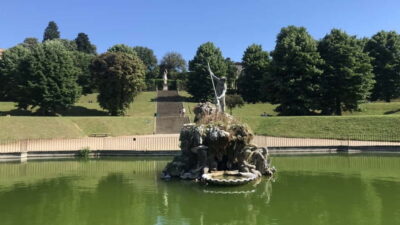
Uffizi, Pitti, Boboli and 7 Attractions 5-Day Pass
Read our review →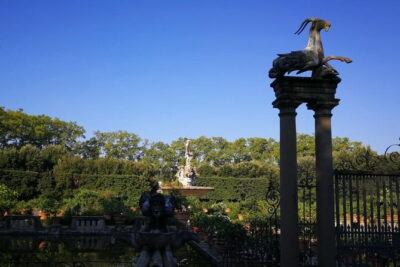
Pitti Palace, Boboli Garden & Palatina Gallery Guided Tour
Read our review →
Pitti Palace and Palatina Gallery Ticket and Tour
Read our review →
Pitti Palace, Palatina Gallery and the Medici: Arts and Power in Florence.
Read our review →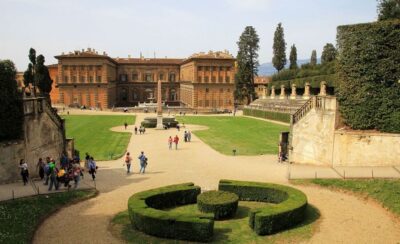
Browse the lists this tour appears in