
Reviewed · FLORENCE AUDIO GUIDE AND SELF-GUIDED TOURS
Florence: Best Of – with Tour Leader & Multilingual Audio Guide
Florence is compact, beautiful, and easy to misunderstand if you only follow the crowds between the Duomo and Ponte Vecchio. This small-group walking tour gives you a quick sweep of the historic center, linking famous squares, palaces, churches, shopping streets, and river views in about two and a half hours.
I like the low price, especially since it includes a tour leader, earphones, art-history audio content, and a Florentine schiacciata or charcuterie board. I also like the practical route: guides such as Isabella, Natalia, Valeria, Remo, and Yaniel have helped visitors get oriented and choose where to return later.
The main drawback is the uneven guide experience. Some people have found the English hard to follow, the pace too quick, or the audio equipment unreliable. This is a city overview, not an intimate museum tour, and no entry tickets are included.
Key points to know before you book
- See Florence’s major sights in one walk: The route covers the Uffizi area, Piazza della Repubblica, Ponte Vecchio, Palazzo Vecchio, Santa Croce, the Bargello, Piazza della Signoria, the Duomo, Via de’ Tornabuoni, and Pitti Palace.
- Expect exterior sightseeing: The tour does not include admission to the Uffizi, Palazzo Vecchio, Santa Croce, the Bargello, the Duomo, or Pitti Palace.
- Use the tour to get oriented: It works best near the beginning of your stay, when you want to learn the shape of central Florence and mark places for later.
- Keep your ears open: Earphones and multilingual audio content are supplied, but the guide may also speak in more than one language.
- Plan for city walking: Wear comfortable shoes, watch the pace, and arrive 15 minutes early at Piazza di Madonna degli Aldobrandini.
- Check the food details: A schiacciata or charcuterie board is included, but older descriptions of a gelato stop may no longer match the current route.
Why this two-and-a-half-hour walk works
At about $17.54 per person, this is priced as an orientation walk rather than a full cultural tour. That distinction matters. You are paying for a guided look at Florence’s main landmarks, not admission to its great museums or a long discussion at every stop.
I see the value in using this as your first activity in Florence. The city center is dense with churches, palaces, sculptures, and narrow streets. A guide can connect them quickly, explain what you are seeing, and point out places you might otherwise pass without noticing.
The group is capped at 15 people, which is small enough for a more personal feel than a large flag-and-speaker procession. Still, you should not expect the same quiet attention you would get on a private tour. In a busy square, staying close to the guide is part of the job.
The route begins at Piazza di Madonna degli Aldobrandini, near the central market area, and ends at Piazza del Mercato Nuovo by the Fontana del Porcellino. That one-way design is useful, but it means you will not finish where you began. The end point remains central, and the Duomo can help you get your bearings if you need to walk back.
More audio guide and self-guided tours in Florence:
- Florence: Palazzo Vecchio Entrance Ticket & Audioguide
★ 4.4 · 4,822 reviews - Florence: Eco-Friendly Golf Cart City Tour with Audio Guide
★ 4.6 · 1,094 reviews - Florence: Uffizi Skip-the-Line Ticket & Digital Audio Guide
★ 4.2 · 1,044 reviews
The Uffizi square gives you Florence at a glance
The first stop is Piazzale degli Uffizi, the open space in front of the Uffizi Gallery. You get a look toward the Arno and the historic center, with Palazzo Vecchio nearby. It is a fine place to begin because Florence’s political power, artistic life, and river trade all seem to meet here.
The stop is brief, about 10 minutes, and the Uffizi ticket is not included. That is important. You will hear about the setting and see the exterior, but you will not enter the gallery as part of this experience.
If you plan to visit the Uffizi on your own, book that separately. This walk can help you decide where the museum fits into your schedule, but it does not replace time inside its galleries.
Piazza della Repubblica shows modern Florence
From the Uffizi area, the walk continues to Piazza della Repubblica, one of the city’s broadest and most polished squares. Historic buildings, cafés, shops, arches, and the familiar carousel give the square a different feel from Florence’s medieval lanes.
The guide may use this stop to explain how the center has changed over time. You get 10 minutes here, enough to take in the architecture and watch the city move around you. It is also a useful pause before the tighter streets near the river.
This is not the most old-world corner of Florence, and visitors seeking untouched medieval atmosphere may find it less compelling than the smaller lanes nearby. Its value is contrast: Florence is not only Renaissance façades and church interiors. It is also a living city with shopping, cafés, and open public spaces.
Ponte Vecchio brings the history to the river
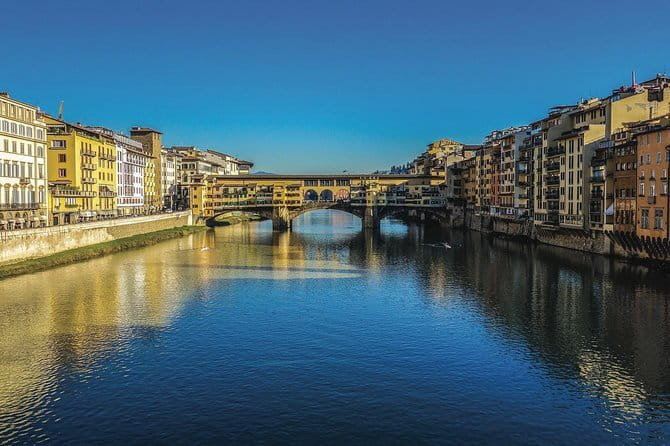
Ponte Vecchio is one of the strongest stops on the route. The medieval stone bridge crosses the Arno with shops lining both sides, creating a view unlike any other bridge in Florence.
Today’s shops mainly sell jewelry, but the bridge once held butchers and fishmongers. The change from food trades to goldsmiths helps explain why Ponte Vecchio feels both historic and commercial. You can also look toward the Vasari Corridor, the elevated passage associated with the Medici rulers.
The guide has about 10 minutes here. That is enough for a short explanation and photos, but not enough for a long historical talk. Past tour experiences have varied, so listen carefully and ask questions if the guide moves on before you understand the story.
Ponte Vecchio also carries memories of war and floods. The bridge survived events that destroyed or damaged other crossings, adding another layer to its importance. If this is your first visit, I would return later when you can cross it slowly and look along the river without the pressure of a group schedule.
A completely different way to spend an afternoon in Florence:
- Florence: Skip-The-Line Uffizi Gallery Timed Entry Ticket
★ 4.5 · 27,832 reviews - Tuscany Day Trip from Florence: Siena, San Gimignano, Pisa and Lunch at a Winery
★ 5.0 · 21,634 reviews - Florence: Timed Entrance Ticket to Michelangelo’s David
★ 4.6 · 16,983 reviews - Florence: Michelangelo’s David Skip-the-Line Entry Ticket
★ 4.5 · 12,764 reviews
Palazzo Vecchio and Piazza della Signoria form Florence’s civic heart
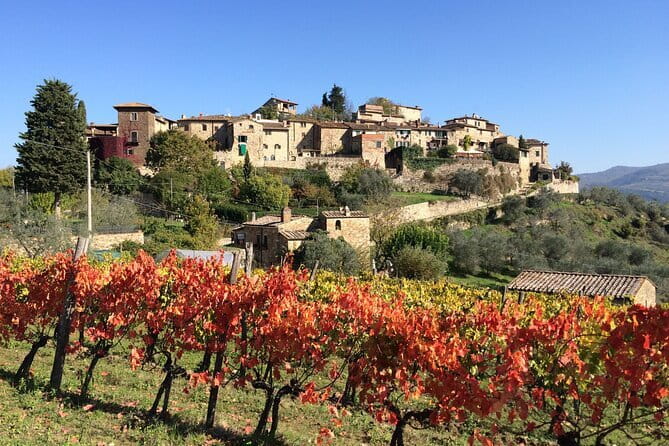
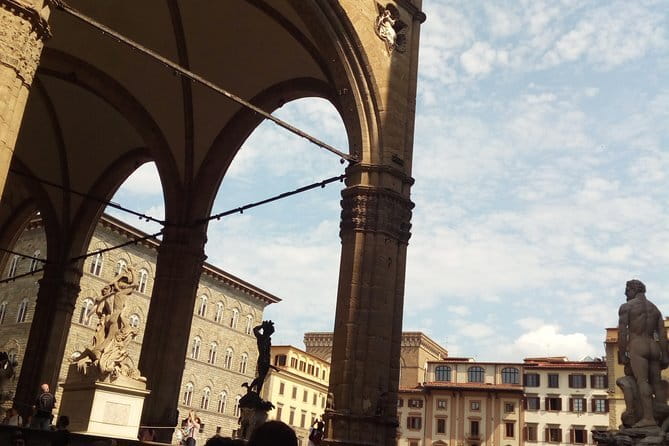
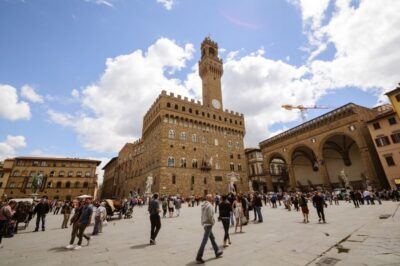
Palazzo Vecchio is shown from the outside, with roughly 10 minutes in the area. Its heavy stone walls, tall clock tower, and decorated façade make it easy to understand why the building feels more like a fortress than a palace.
The palace faces Piazza della Signoria, Florence’s historic political center. The square also contains the Loggia dei Lanzi, the Fountain of Neptune, and a replica of Michelangelo’s David. The open-air sculptures give the visit real substance even without entering a museum.
This is one place where the guide’s storytelling makes a big difference. A strong guide can help you see the square as more than a photo stop, explaining how power was displayed through buildings and sculpture. A less effective explanation may leave you with a list of names and dates.
Admission to Palazzo Vecchio is not included. If you want to explore the rooms inside, you will need a separate ticket and additional time.
Santa Croce and the Bargello add art and famous names
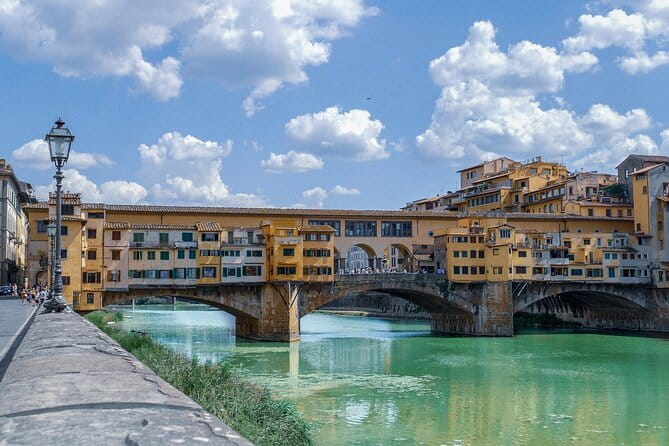
The route also takes in the Basilica di Santa Croce and the Museo del Bargello. The supplied schedule does not give a separate time for either stop, so treat them as part of the wider walking route rather than guaranteed interior visits.
Santa Croce is a Gothic Franciscan church known for its marble façade, frescoes linked to Giotto, and tombs associated with Michelangelo, Galileo, and Machiavelli. Even from outside, it is an impressive building and a useful reminder that Florence’s story is not limited to the Medici and the Duomo.
The Bargello occupies a former medieval palace that served as a town hall and prison. Inside are major Renaissance sculptures by Donatello, Michelangelo, and Verrocchio, along with decorative arts, weapons, textiles, and ceramics. The museum is not included, but the exterior stop can help you decide if it deserves a later visit.
If art is your main reason for coming to Florence, make room for these interiors separately. This walking tour introduces them. It does not give you the time or admission needed to study their collections.
The Duomo is the visual centerpiece
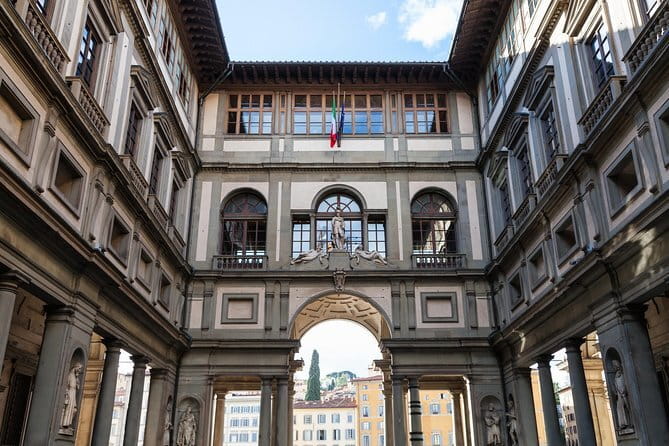
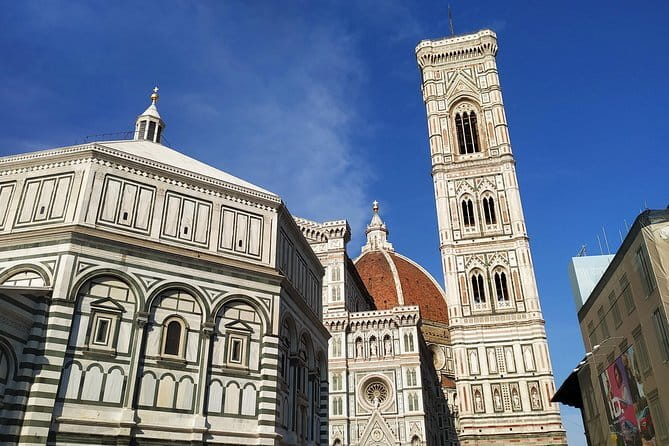
Piazza del Duomo is the route’s most obvious highlight. The cathedral, Brunelleschi’s dome, Giotto’s Campanile, and the Baptistery create one of Europe’s great architectural ensembles.
The visit is to the exterior, with about 10 minutes listed. That is enough to admire the marble patterns and the scale of the buildings, but far too little for the cathedral, dome, bell tower, or museum. No admission ticket is included.
The Duomo stop can also be the most crowded and difficult part of the walk. You may need to stand close to hear, especially if the group is using earphones or the guide is speaking in several languages. If you want to climb the dome or enter the cathedral complex, arrange that independently and allow much more time.
Some people have found the guide’s explanation here too formal or difficult to understand. Others have praised guides such as Yaniel, Natalia, and Valeria for bringing Florence’s past to life. Your experience may depend heavily on who leads the departure.
Via de’ Tornabuoni changes the mood
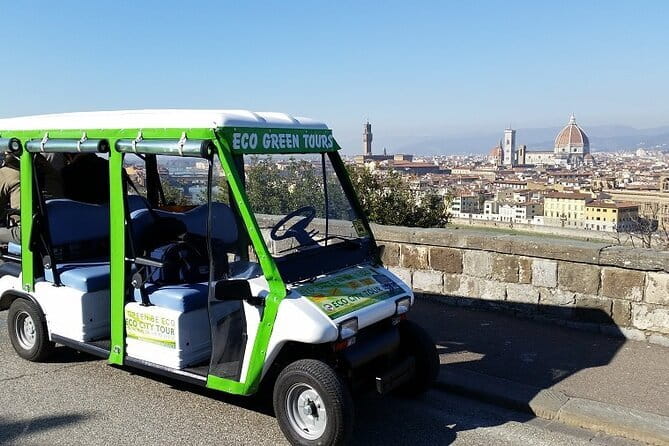
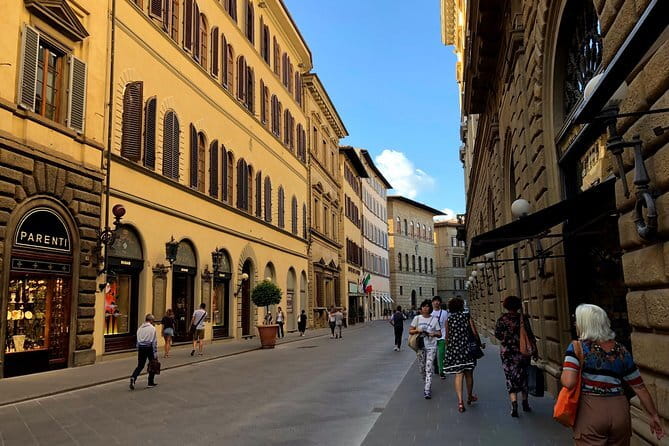
Via de’ Tornabuoni offers a polished contrast to the churches and civic buildings. Since the Renaissance, it has been associated with grand palaces and elite life. Today, it is lined with luxury boutiques and jewelry shops, including names such as Gucci and Ferragamo.
The street connects the Piazza Santa Trinita area with the Arno, and the walk gives you a look at Florence’s present-day style economy. Palazzo Strozzi and Palazzo Spini Feroni add historic interest, while the Ferragamo connection ties fashion to the city’s artistic traditions.
You get about 10 minutes here. That is enough to see the street and note places you may want to revisit, but it is not a shopping tour. Prices are aimed at the luxury market, so admire the window displays unless your budget says otherwise.
Pitti Palace closes the route with a grand finale
Pitti Palace appears near the end of the route. The huge Renaissance building began as the home of the Pitti family and later housed the Grand Dukes of Tuscany and the Italian royal family.
Inside are museums including the Palatine Gallery, with works associated with Raphael, Titian, and Caravaggio. The Boboli Gardens extend behind the palace and offer a separate half-day possibility. Neither the palace nor its museums are included in this walking tour.
Seeing Pitti Palace from outside gives you a useful sense of scale, but this stop may feel rushed after so many earlier sights. If you are staying in Florence for several days, return with a separate ticket. If your visit is short, the exterior view may be enough, especially if museums are not your main interest.
The guide and audio setup matter
The experience includes a professional tour leader, earphones, and multilingual audio content prepared by an art historian. This is a slightly unusual combination. The guide leads the group, while the audio material can add prepared explanations about art and architecture.
It also creates a practical concern. Several people have had trouble hearing or understanding the guide, sometimes because of a strong accent, sometimes because the pace made it hard to stay close. One person reported not receiving earphones, while another found the equipment did not work well.
I would arrive early, check that your earphones work, and speak up immediately if you cannot hear. The point of a guided walk is lost if you are trailing behind or guessing at the explanation. The operator says the tour may be multilingual, so ask at the start which languages will be used and how that will affect timing.
The strongest guide feedback has been specific. Isabella was praised for explaining the monuments and history. Natalia was valued for stories, restaurant suggestions, and ideas for later visits. Valeria was particularly good at turning historical figures into memorable characters, while Remo was noted for his energy and curiosity.
The less favorable experiences are useful warnings, not reasons to dismiss the whole format. Guide quality can vary, and a low-cost tour with rotating staff will not offer the same consistency as a private guide.
Food, pace, and family practicality
A Florentine schiacciata or charcuterie board is included, with options to check when booking. That small meal adds real value to a $17.54 tour, especially if you are trying to keep sightseeing costs under control.
There is confusion around gelato. Some past descriptions and experiences included a gelato stop, while a later departure reportedly did not. Do not book this tour expecting gelato unless the current booking details confirm it.
The walk lasts about 2.5 hours, and some departures have felt quick. You will be moving through crowded streets, crossing public squares, and stopping for short explanations. Wear shoes that can handle city pavement, and dress for the weather forecast.
The tour is family-friendly, and families with a baby and toddler have completed it successfully. Still, the pace may be tiring for very young children, especially when the group cannot stop whenever it wishes. Most people can participate, and service animals are allowed.
Who should choose this Florence walk?
I would choose it if you are visiting Florence for the first time, have limited time, or want a clear map of the historic center before exploring alone. It is also useful if you want practical ideas about where to eat, shop, or return for a museum visit.
You should be comfortable with an overview rather than a detailed study. The tour touches many landmarks, but most stops last only about 10 minutes. It cannot provide serious time inside the Uffizi, the Duomo, Santa Croce, the Bargello, or Pitti Palace.
The tour is less suitable if you need guaranteed English clarity, a slow pace, or a specialist art historian guiding every minute. The audio content helps, but it does not remove the need to hear the tour leader and stay with the group.
Cancellation is free up to 24 hours before the start time. Changes or cancellations made later are not refunded, so check the local start time before making plans.
Should you book it?
Book this walk if you want an inexpensive first look at Florence’s major sights, a small group, a short introduction, and a snack included. The route is broad, practical, and well suited to someone who wants to return later to the places that catch their eye.
Skip it if you want interior access, a relaxed pace, or a guaranteed standout guide. At this price, the tour offers good value, but you are accepting some uncertainty in guide style, language clarity, and audio equipment. Arrive early, wear good shoes, and treat the walk as your Florence orientation rather than your complete art experience.
FAQ
How long does the Florence walking tour last?
The tour lasts approximately 2 hours and 30 minutes. A multilingual departure also has a stated duration of 2.5 hours.
What sights are included on the walking route?
The route includes the Uffizi area, Piazza della Repubblica, Ponte Vecchio, Palazzo Vecchio, Santa Croce, the Bargello, Piazza della Signoria, the Duomo area, Via de’ Tornabuoni, and Pitti Palace.
Are entry tickets included?
No. This is a city walking tour, and entry tickets are not included for the Uffizi, Palazzo Vecchio, Santa Croce, the Bargello, the Duomo, or Pitti Palace.
Where does the tour start and finish?
It starts at Piazza di Madonna degli Aldobrandini, 8, in Florence. It ends at Piazza del Mercato Nuovo by the Fontana del Porcellino.
Is food included?
Yes. The tour includes either a Florentine schiacciata or a charcuterie board, depending on the available option. Gelato should not be assumed unless confirmed in the current booking information.
How many people can join the tour?
The maximum group size is 15 people.
What happens if I need to cancel?
You can cancel up to 24 hours before the experience for a full refund. Cancellations or changes made less than 24 hours before the start time are not accepted for a refund.
Recently added around Florence
- Accademia and Uffizi Small-group Guided Tour★ 4.5 · 8 reviews
- The David from Michelangelo.★ 5.0 · 3 reviews
- Combo: Accademia + walking + Uffizi Galleries Guided Tour★ 3.5 · 6 reviews
- The Complete Wine Tour Brunello, Nobile, Chianti wine experience★ 4.0 · 7 reviews
- The Cooking Lab – Authentic Food Experience★ 5.0 · 113 reviews
- Florence Central Market Food Tour – Private Tour★ 4.0 · 7 reviews
- The Best of Tuscany in 3 Days★ 4.5 · 13 reviews
- Family Friendly Florence Private City Tour★ 5.0 · 47 reviews
Florence Audio Guide and Self-Guided Tours, compared.
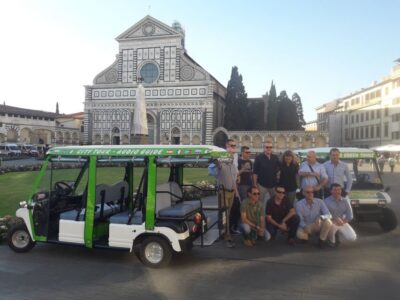
Eco-Friendly Golf Cart City Tour with Audio Guide
Read our review →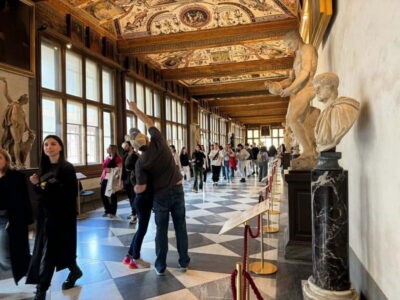
Uffizi Skip-the-Line Ticket & Digital Audio Guide
Read our review →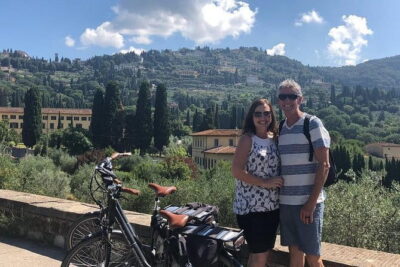
Private Self-Guided E-Bike Ride in Tuscany with Vineyard Visit
Read our review →
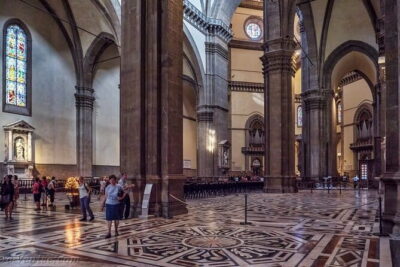
Florence Duomo Cathedral with Host & Audio Guide (Interior Only)
Read our review →
Accademia Gallery Ticket with Optional Audio Guide
Read our review →
Uffizi Gallery Tickets with Optional Audio Guide
Read our review →Browse the lists this tour appears in