
Reviewed · FLORENCE OPERA AND CONCERTS
Florence: Italian Opera
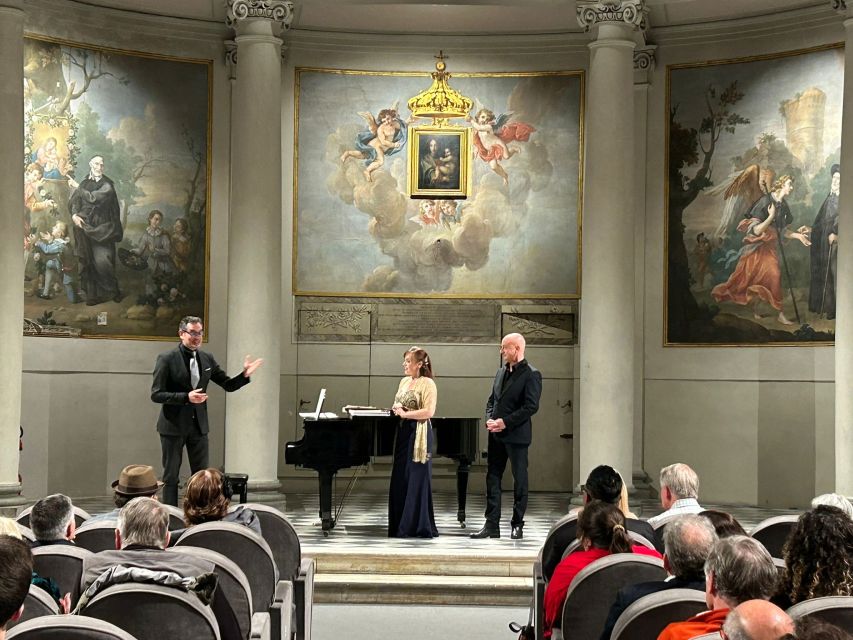
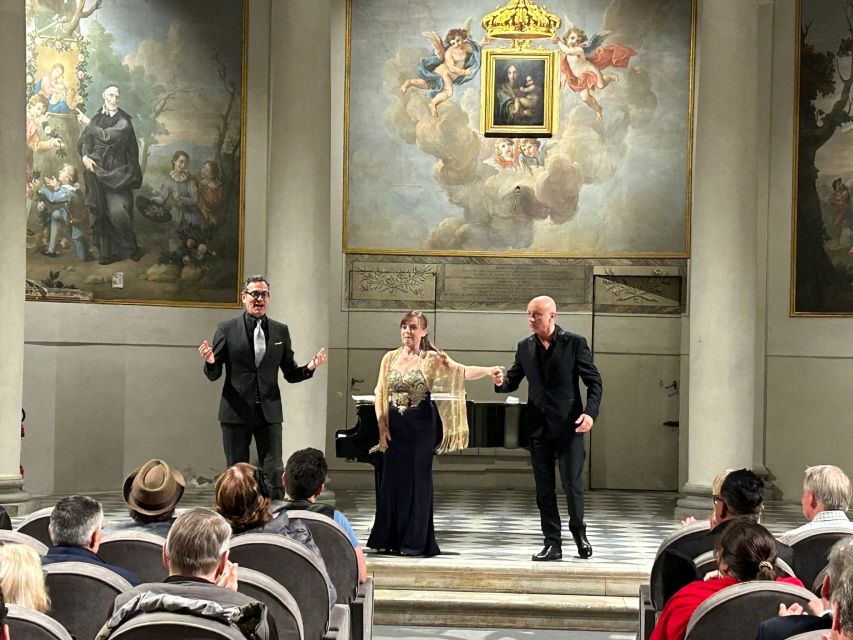
Florence gives you a fine introduction to opera without asking you to sit through a full four-hour production. This concert brings familiar arias by Puccini, Verdi, Mozart, and Rossini into a historic setting near Ponte Vecchio, with soprano Alessia Battini, baritone David Ciarrocchi, and pianist Gianni Cigna.
I like the personal scale of a singer-and-piano performance, and I like the chance to hear famous pieces such as O mio babbino caro and Largo al factotum in one evening. The main point to check is the venue and meeting point, since these can vary with the option you book, and some listeners may find the intermission longer than expected.
Key points at a glance
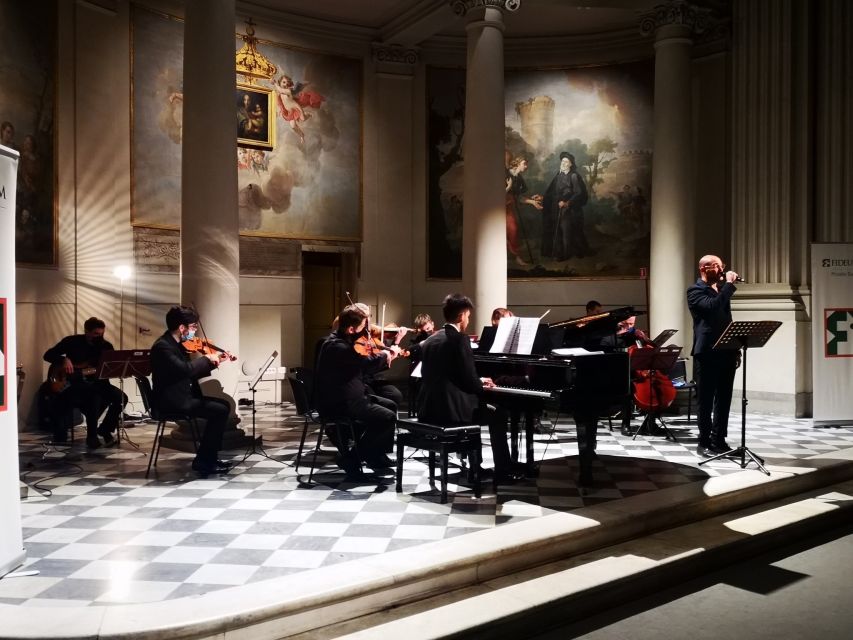
- Historic Florence setting: Performances take place at the Zeffirelli Concert Hall or the Auditorium of Santo Stefano, near Ponte Vecchio.
- A friendly first opera: The program uses well-known arias and duets rather than requiring you to follow a complete story.
- Three seating categories: You can choose a lower-cost seat or pay more for a preferred category.
- Three featured performers: Soprano Alessia Battini, baritone David Ciarrocchi, and pianist Gianni Cigna lead the evening.
- Useful extras: A printed program is included, while drinks and food are available only at your own expense.
- Strong value at $41: The ticket covers a full concert experience, making this an accessible cultural night in Florence.
Why this is an easy first opera in Florence
Opera can feel intimidating when you are standing outside a grand theater, trying to work out the plot, the language, and the dress code all at once. This format removes much of that work. You hear a series of famous pieces, each lasting only part of the evening, so you can enjoy the singing even if Italian opera is new to you.
The program also gives you a useful sampler of styles. Rossini brings comic speed and sparkle, Mozart offers elegant ensembles, Puccini supplies emotional warmth, and Verdi adds drama and vocal force. You are not following a single story from beginning to end. Instead, the evening works like a well-chosen introduction to the composers most closely tied to the Italian opera tradition.
I especially like the presence of both a soprano and a baritone. That gives the concert more variety than a solo recital, with room for character exchanges and duets. Gianni Cigna’s piano replaces the full orchestra, which means the texture is lighter and more intimate, but the singers remain at the center.
The trade-off is important. This is not a full staged opera with scenery, costumes, chorus, and orchestra. If you want the grand machinery of a major production, this concert may feel modest. If you want famous arias in a beautiful room, without committing an entire day to opera, it makes much more sense.
More opera and concert nights in Florence:
- Florence: Santa Monaca Church Italian Opera Concert Ticket
★ 4.7 · 2,692 reviews - Florence Duomo, Baptistery & Opera Museum Audioguided Tour
★ 4.2 · 607 reviews - Italian Opera Concert Ticket in Florence’s Santa Monaca Church
★ 4.5 · 602 reviews
Choosing between the two historic venues
The experience is connected with the Zeffirelli Concert Hall and the Auditorium of Santo Stefano. Your specific meeting point depends on the option you book, so check the confirmation carefully before setting off across Florence.
The Auditorium of Santo Stefano is next to Ponte Vecchio, putting the concert in one of the most central parts of town. The building began in Romanesque style and later received Gothic and Baroque changes. It has also survived serious damage from World War II, the 1966 flood, and the 1993 Georgofili bombing before restoration in the late 1990s.
That background matters because the room is part of the evening, not just a container for the music. The interiors give the performance a sense of place, while the acoustics help a trained voice carry without the support of a large orchestra. One especially useful point is the availability of a beautiful garden and a tea room at the venue, though food and drinks are not included in the ticket.
If your option uses the Zeffirelli Concert Hall, you still receive the same basic concert concept, with singers and piano in a formal cultural setting. Since the location can differ, leave enough time to find the correct entrance. Florence is compact in the center, but a wrong address can turn a relaxed pre-concert walk into a hurried arrival.
The singers and pianist you will hear
Soprano Alessia Battini is presented as an emerging Italian singer with a clear stage presence and an approach that combines vocal power with feeling. Her selections include some of Puccini and Verdi’s most demanding soprano writing.
Her program begins with Quando me’n vo from La Bohème, a stylish and theatrical number, then moves to È strano… Sempre libera from La Traviata. The evening closes its first half with Mozart’s Cinque, dieci, venti from The Marriage of Figaro, where the soprano shares the stage with the baritone.
Baritone David Ciarrocchi brings a lower, darker vocal color to the program. He performs regularly with the Teatro del Maggio Musicale Fiorentino and has taken important roles in Mozart and Verdi operas. His selections include Figaro’s comic Largo al factotum, Verdi’s È sogno o realtà from Falstaff, and the Mozart duet La ci darem la mano from Don Giovanni.
Gianni Cigna accompanies the singers on piano. He is also a vocal coach, solo pianist, and chamber musician, so his role is more than simply keeping time. In this kind of concert, the pianist supplies rhythm, mood, transitions, and much of the musical structure normally provided by an orchestra.
A piano accompaniment has one clear advantage: you can hear the words and vocal detail more directly. The compromise is scale. The music will not have the same wall of sound as an orchestral production, but that smaller sound can suit an intimate historic hall.
What the first half includes
The program opens with Rossini’s Largo al factotum from The Barber of Seville. This is a smart opening choice. It is quick, comic, and instantly recognizable, giving the baritone a chance to establish his character and vocal agility.
Next comes Puccini’s Tre sbirri una carrozza from Tosca. The mood shifts from comic energy to tension and drama. You get a quick sense of how different composers use the voice to create action, even without a full production around it.
A piano solo intermezzo follows. This creates a pause from the sung material and gives Cigna space to perform on his own. If you mainly came for the voices, this is the point where the pace may feel slower. One piece of direct advice: treat it as a musical reset rather than expecting every minute to be a vocal highlight.
The soprano then performs Quando me’n vo from La Bohème. Often known as Musetta’s waltz, it has a flirtatious, polished character and gives Battini a chance to show style as well as vocal strength.
Verdi’s È strano… Sempre libera from La Traviata follows. This is a more demanding soprano showcase, moving from reflective lines into fast, high-energy singing. It is one of the clearest examples of the program’s aim: give you a famous aria that can make sense on its own.
The first half ends with Mozart’s Cinque, dieci, venti from The Marriage of Figaro. With soprano and baritone together, it adds a comic duet quality before the break. The printed program is helpful here, especially if you want to identify each number as it comes.
A completely different way to spend an afternoon in Florence:
- Florence: Skip-The-Line Uffizi Gallery Timed Entry Ticket
★ 4.5 · 27,832 reviews - Tuscany Day Trip from Florence: Siena, San Gimignano, Pisa and Lunch at a Winery
★ 5.0 · 21,634 reviews - Florence: Timed Entrance Ticket to Michelangelo’s David
★ 4.6 · 16,983 reviews - Florence: Michelangelo’s David Skip-the-Line Entry Ticket
★ 4.5 · 12,764 reviews
The second half and its best-known melodies
After the intermission, the soprano returns with Puccini’s O mio babbino caro from Gianni Schicchi. This is probably the most immediately familiar melody in the program for many first-time listeners. It is short, lyrical, and emotionally direct, making it a natural re-entry after the break.
Verdi’s È sogno o realtà from Falstaff shifts the focus back to the baritone. Unlike a solemn Verdi scene, this number has a comic edge. It shows why the program works better as a sampler than as a single mood: you move between romance, comedy, tension, and grand vocal display.
Mozart’s La ci darem la mano from Don Giovanni brings the two singers together. This is a graceful duet with an easy conversational quality. It also gives you a chance to hear the contrast between Battini’s soprano and Ciarrocchi’s baritone within the same musical scene.
The final selection is Rossini’s Dunque io son from The Barber of Seville. It returns to the comic world of Rossini and gives both singers a lively finish. Ending with a duet rather than a quiet solo leaves the concert with a sense of exchange and movement.
The full program is appealing because most of the titles are famous. The limitation is that the evening gives you excerpts, not complete scenes with all their dramatic context. I recommend reading the printed program during the interval and treating each number as a small window into a larger opera.
Seating, sound, and the $41 price
At $41 per person, this is a reasonable cultural splurge in Florence. The ticket includes the concert and a printed program, but not drinks, food, or transportation. That keeps the basic price clear and lets you decide how much extra to spend before or after the performance.
There are three seating categories. The higher categories may make sense if you care about position and want to reduce uncertainty, while the lower category gives you the cheapest way into the same musical event. A particularly useful detail is that the auditorium may not feel overcrowded, so the least expensive category can still be perfectly satisfactory.
I would choose a middle or VIP category if the price difference is modest and you want the most comfortable overall evening. A budget-minded visitor should not assume that the cheapest seat ruins the experience, especially in a room where the acoustics are a major part of the appeal.
Sound matters more than seat prestige here. The performers use a piano rather than an orchestra, and the venues are known for good acoustics. Still, your exact view and listening position depend on the seating layout and selected category, so I would check the option details before paying more.
Planning your evening around the concert
The activity is listed as a one-day experience, but the actual event is an evening concert. Starting times vary, so you need to check availability for your date rather than assume a fixed hour.
No hotel pickup or drop-off is included. Plan to reach the venue independently, and pay close attention to the meeting point because it may differ by booking option. If the performance is at Santo Stefano, its location near Ponte Vecchio makes it easy to combine with an evening walk through central Florence.
Food and drinks are also separate. You can use the tea room or relax in the garden where available, but do not expect dinner to be part of the ticket. I would eat beforehand or plan a nearby meal, then arrive with enough time to locate the correct hall without rushing.
The activity is wheelchair accessible. Free cancellation is available up to 24 hours before the start time, and the reserve-now, pay-later option can help if your Florence plans are still shifting. These policies are useful, but they do not replace checking the exact date, start time, and venue before booking.
Who will get the most from this performance
This concert suits a first-time opera listener who wants the famous melodies without the cost or time commitment of a major theater production. You can arrive with no specialist background and still recognize several selections or understand their basic mood.
It also works well for a couple looking for a cultured evening near Ponte Vecchio, especially if you value atmosphere as much as spectacle. The historic room, garden, and intimate piano format give the night a strong Florence identity.
Opera regulars should set expectations carefully. You are coming for a selection of arias and duets, not a full opera, and the production does not include the large cast, orchestra, scenery, or costumes associated with a full staging. The reward is close attention to the voices and a compact program of familiar music.
Families and mixed-interest groups may also find this format easier than a long opera. The program changes composers and moods often enough to keep the evening moving, though younger children who struggle with seated performances may not be the best match.
Should you book Florence Italian Opera?
I would book this concert if you want a manageable, atmospheric introduction to Italian opera at a moderate price. The strongest reasons are the famous program, the historic Florence venues, and the combination of two singers with an experienced pianist.
I would think twice only if your priority is a full-scale theatrical production or an orchestral sound. For everyone else, $41 buys a focused evening with Puccini, Verdi, Mozart, and Rossini, plus the pleasure of hearing live voices in an old Florentine setting. Check the venue, seating category, and start time, then let the music do the rest.
FAQ
Where does the Italian opera concert take place?
The concert is associated with the Zeffirelli Concert Hall and the Auditorium of Santo Stefano in Florence. The meeting point may vary depending on the option you book.
How much does the experience cost?
The listed price is $41 per person.
How long is the experience?
The activity is valid for one day, with the concert taking place in the evening. The exact starting time depends on availability for your selected date.
Which composers are included?
The program includes works by Giuseppe Verdi, Giacomo Puccini, Wolfgang Amadeus Mozart, and Gioachino Rossini.
Who performs during the concert?
The featured performers are soprano Alessia Battini, baritone David Ciarrocchi, and pianist Gianni Cigna.
What music will be performed?
The program includes pieces from The Barber of Seville, Tosca, La Bohème, La Traviata, The Marriage of Figaro, Gianni Schicchi, Falstaff, and Don Giovanni.
Is food or drink included?
No. Food and drinks are not included. You may be able to relax in the garden or use the tea room at the venue, but those purchases are separate.
Is the concert wheelchair accessible?
Yes, the activity is listed as wheelchair accessible.
Recently added around Florence
- Accademia and Uffizi Small-group Guided Tour★ 4.5 · 8 reviews
- The David from Michelangelo.★ 5.0 · 3 reviews
- Combo: Accademia + walking + Uffizi Galleries Guided Tour★ 3.5 · 6 reviews
- The Complete Wine Tour Brunello, Nobile, Chianti wine experience★ 4.0 · 7 reviews
- The Best of Tuscany in 3 Days★ 4.5 · 13 reviews
- The Cooking Lab – Authentic Food Experience★ 5.0 · 113 reviews
- Florence Central Market Food Tour – Private Tour★ 4.0 · 7 reviews
- Family Friendly Florence Private City Tour★ 5.0 · 47 reviews
Florence Opera and Concerts, compared.
Santa Monaca Church Italian Opera Concert Ticket
Read our review →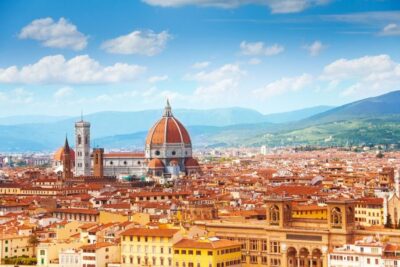
Florence Duomo, Baptistery & Opera Museum Audioguided Tour
Read our review →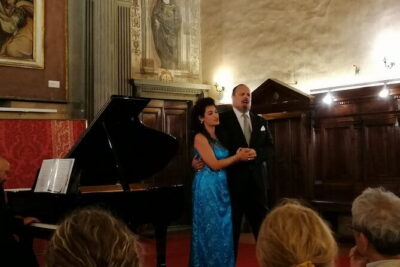
Italian Opera Concert Ticket in Florence’s Santa Monaca Church
Read our review →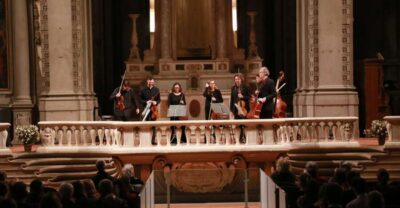
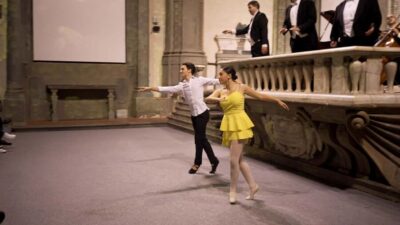
Heart of Florence: Dinner and Three Tenors Concert Ticket
Read our review →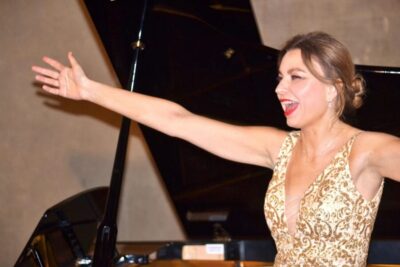
Dinner and Concert with “Three Tenors”: A Real Italian Experience
Read our review →
Browse the lists this tour appears in