
Reviewed · UFFIZI GALLERY TOURS
Uffizi Gallery Small Group Tour: Discover Uplifting Masterpieces
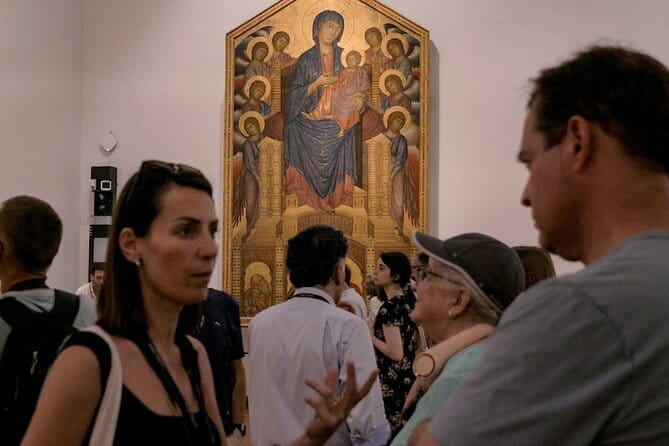
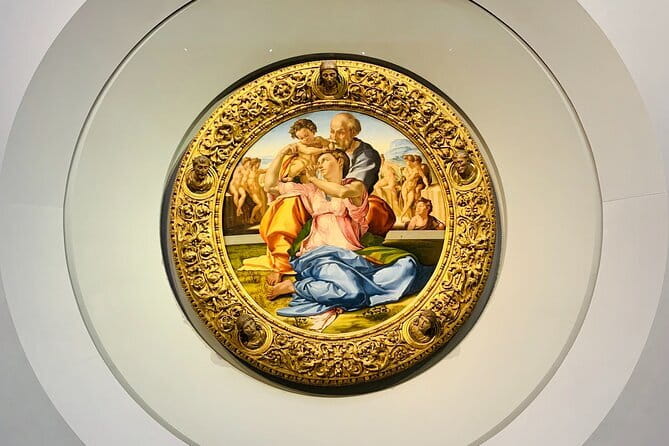
The Uffizi is one of those museums where a good guide can turn a grand collection into a clear, memorable story. In about two and a half hours, you’ll see Botticelli’s Birth of Venus, Leonardo’s Annunciation, Michelangelo’s Doni Tondo, and Caravaggio’s Medusa without wasting time in the main ticket line.
I like the small group size, capped at nine people, because you have a fair chance to hear the guide and ask a question. I also like the focus on major works, with time for art-history context rather than a rushed march past famous names. The drawback is simple: two hours inside the Uffizi cannot cover everything, and the tour includes steps and staircases.
Key points to know before you book
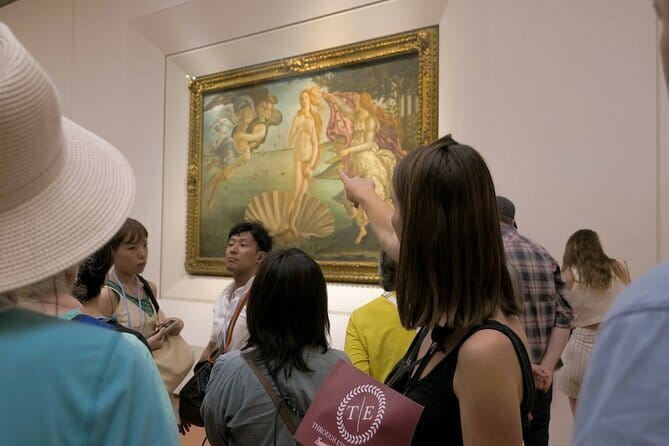
- Botticelli’s Birth of Venus and Spring give the visit its most famous opening moments.
- An expert English-speaking guide explains how to look at the works, not just where they are.
- A maximum of nine people keeps the experience more personal than a large museum group.
- Prepaid admission and direct access help you avoid the regular ticket line.
- Headsets are supplied for groups of six or more, useful in crowded galleries.
- Comfortable shoes and water matter, since this is a walking visit with stairs.
Why this Uffizi visit works well in Florence
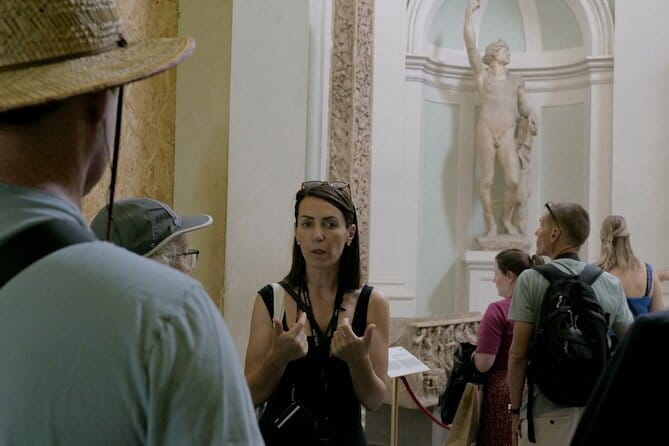
The Uffizi can feel intimidating. Its corridors are packed with famous paintings, its rooms cover centuries of art, and the most important works are not always easy to find on your own. You can walk into the museum with a short list of names and still miss the connections that make the collection click.
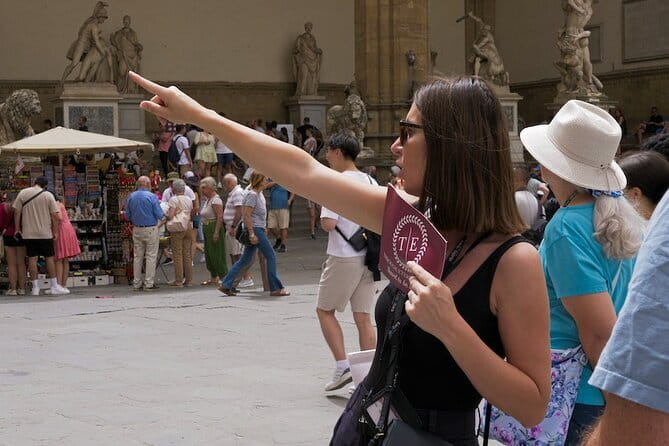
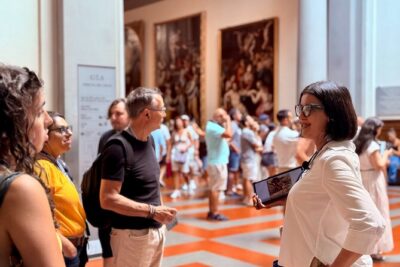
This tour gives you a route through the museum’s essential works. You are not simply handed an audio guide and left to decode the collection alone. An English-speaking guide leads the visit and explains why each painting matters, what to look for, and how the works relate to Florence and to one another.
The group is limited to nine people according to the activity details. That is a useful size for a museum tour. You still have company, but the guide can usually keep the conversation more direct than with a large group of twenty or thirty.
The experience costs $92.52 per person. That is not a cheap museum admission, so value depends on what you want. If you only need to enter the Uffizi and prefer to explore silently at your own pace, buying admission alone may suit you better. If you want the museum organized for you, with a guide who can add context to difficult works, the price pays for structure, access, and interpretation.
More ways into the Uffizi:
- Florence: Skip-The-Line Uffizi Gallery Timed Entry Ticket
★ 4.5 · 27,832 reviews - Florence: Uffizi Priority Ticket & Masterpieces Audio App
★ 4.2 · 6,402 reviews - Florence: Skip-the-Line Uffizi Small Group Tour
★ 4.6 · 5,926 reviews
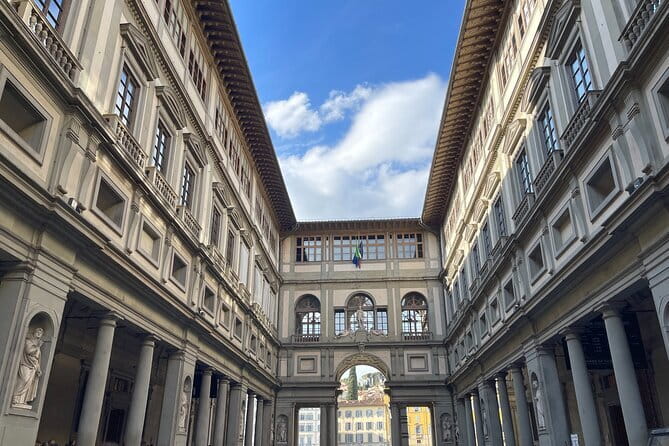
Meeting at Piazzale degli Uffizi
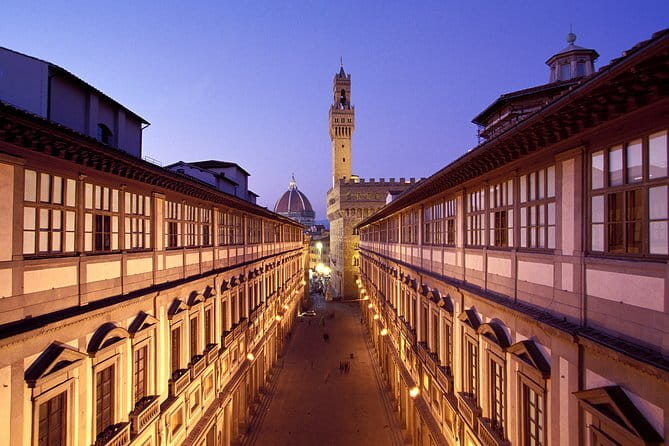
You meet at the Uffizi Galleries, Piazzale degli Uffizi 6, in Florence. The tour also ends at the Uffizi, which keeps the logistics easy if you are planning another central Florence activity afterward.
There is no transportation included. That is not much of a problem because the meeting point is in the heart of Florence and near public transportation, but you do need to make your own way there. Give yourself enough time to find the entrance and meeting area without arriving flustered.
The activity is offered in English. Confirmation arrives at booking, and the experience is available to most people, though you should mention mobility concerns when booking. The visit involves walking, steps, and staircases, so comfortable shoes are more than a nice extra.
Botticelli gives the Uffizi its famous face
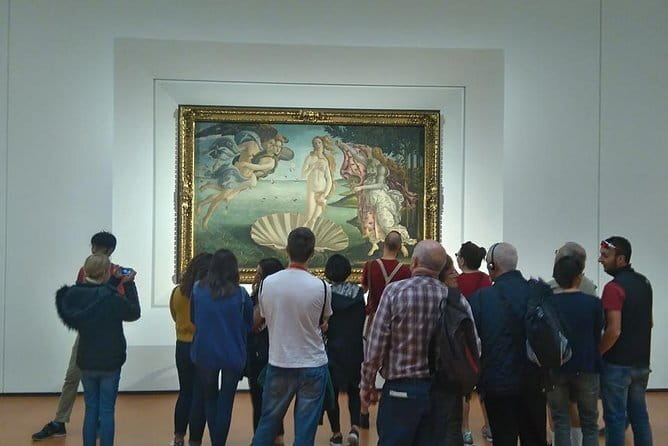
The first major reward is likely to be Botticelli’s Birth of Venus. The painting is familiar from books, posters, and screens, but seeing it in the Uffizi gives you a chance to study its scale, delicate lines, and unusual sense of movement.
A guide can help you notice details that disappear when you only recognize the image. Venus is not presented as a realistic portrait of an ordinary person. The scene is a carefully arranged vision of beauty, grace, and myth. The pale figure, flowing hair, winds, flowers, and shore all work together to create something more poetic than naturalistic.
You will also see Botticelli’s Spring, another key work for understanding the artist. It is filled with figures, gestures, flowers, and symbols, and it rewards patient looking. This is exactly the kind of painting that can feel confusing when you stand in front of it alone. A guide gives you a way into the scene without asking you to memorize every detail.
These two Botticelli paintings are a strong reason to choose a guided visit. You get the famous image, but also a better sense of the ideas behind it.
Leonardo and Verrocchio bring technique into focus
The itinerary includes the Annunciation and the Baptism of Christ, connected with Leonardo and his teacher Verrocchio. These works are valuable not only because of the names attached to them, but because they let you see artistic change in motion.
The Annunciation presents a calm but important biblical moment. You can look at the arrangement of the figures, the setting, and the treatment of the landscape while the guide explains what makes the painting significant. Leonardo’s early work is especially interesting because you can see both the traditions he inherited and the observations that pushed painting in a new direction.
The Baptism of Christ is also notable for its connection to Leonardo and Verrocchio. It offers a chance to consider how artists worked together and how a younger artist’s contribution could begin to attract attention beside that of an established master.
This part of the tour should appeal to you if you like process and development, not just finished masterpieces. The guide’s role is important here because these paintings benefit from comparison. You are looking at relationships between artists, not isolated objects.
More museums and galleries in Florence:
- Florence: Leonardo Interactive Museum Entry Ticket
★ 4.5 · 11,763 reviews - Florence Accademia Gallery Tour with Entrance Ticket Included
★ 4.5 · 6,148 reviews - Uffizi Gallery Small Group Tour with Guide
★ 4.5 · 4,923 reviews - Florence: Accademia Gallery Guided Tour
★ 4.6 · 4,156 reviews
Michelangelo, Raphael, and Titian show different kinds of power
Michelangelo’s Doni Tondo brings sculpture-like strength to painting. The figures are muscular and tightly arranged, with an energy that feels different from Botticelli’s elegance. It is a useful contrast, and a guide can help you see how the painting reflects Michelangelo’s distinctive approach to the human form.
Raphael’s portrait of Pope Leo X shifts the mood again. This is not a mythological scene or a religious narrative. It is a portrait of authority, ceremony, and status. Look at the sitter’s expression, clothing, and the objects placed near him. Small choices can tell you how the portrait was meant to be read.
Titian’s Venus of Urbino offers another change in tone. The reclining figure is direct and commanding, and the painting’s use of color and texture gives it a strong physical presence. It is one of those works where the guide can help you separate the subject from the way the artist builds mood through paint.
Together, these paintings keep the tour from feeling like a single-artist lesson. You move from Botticelli’s graceful mythmaking to Michelangelo’s force, Raphael’s controlled portraiture, and Titian’s rich color. The variety is part of the Uffizi’s appeal.
Caravaggio’s Medusa adds drama and shock
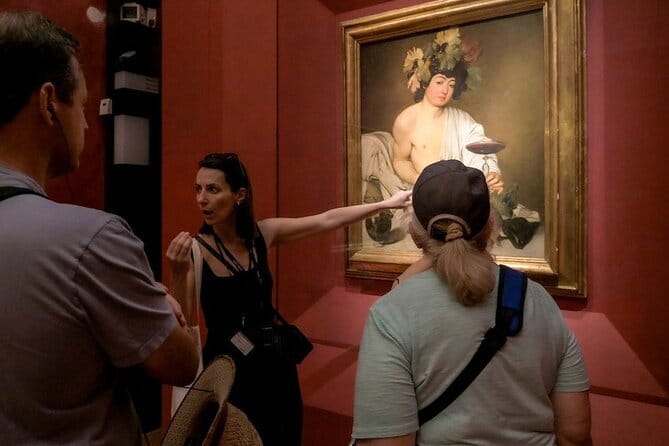
Caravaggio’s Medusa is one of the most immediately dramatic works on the route. The subject is already frightening, but Caravaggio intensifies it with a direct, almost confrontational presentation.
The painting asks you to look at a face caught at the moment of transformation. A guide can point out how the expression, light, and forceful realism make the image feel so immediate. Caravaggio does not let the myth remain distant or decorative. The effect is meant to unsettle you.
This is a good moment to notice how different the Uffizi collection can feel from room to room. After the measured beauty of Botticelli or the formal control of Raphael, Medusa delivers a jolt. You will probably remember it because it asks for an emotional response as much as an art-historical one.
Artemisia Gentileschi brings a different point of view
Artemisia Gentileschi’s Judith and Holofernes is another highlight, and it gives the tour a chance to move beyond the most commonly repeated male names in Italian art.
The biblical story is violent, but Gentileschi’s treatment is also controlled and purposeful. The strength of the figures and the seriousness of the action demand attention. You can look at how the bodies are arranged, how the scene is lit, and how the painting creates tension without becoming visually confused.
This is a useful stop because it expands your sense of the museum. The Uffizi is not only a parade of Botticelli, Leonardo, Michelangelo, Raphael, and Caravaggio. Artemisia Gentileschi’s work adds another major voice and makes the route feel more complete.
The Tribuna closes the route with concentrated grandeur
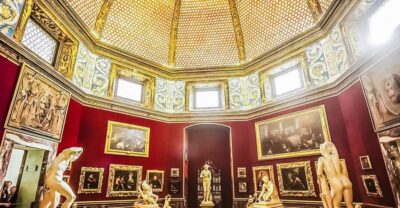
The Tribuna of the Uffizi is included in the visit and gives you a final look at the museum’s collecting tradition. It is a special room, known for bringing important objects together in a highly decorated setting.
The room can feel visually crowded, which is part of its character. Instead of presenting one painting in isolation, the Tribuna surrounds you with layers of display, decoration, and prestige. Your guide can help you understand why this room matters and how it reflects the way powerful collectors wanted art to be seen.
For some people, the Tribuna will be a highlight because it feels unlike a standard gallery room. For others, its ornament may compete with the works. Either way, it is a fitting part of a tour designed to show how the Uffizi functions both as a museum and as a historic collection of prized objects.
What the two-and-a-half-hour schedule feels like
The advertised experience lasts about two hours and thirty minutes, while the gallery portion is listed as about two hours. That leaves the tour with a clear focus, but not enough time for every room or every major artist in the museum.
I think this timing suits a first visit when you want an organized introduction. You will see a strong selection of headline works and gain a framework for returning later. It is less suitable if you want to study paintings at length, sketch, photograph every room, or wander wherever curiosity takes you.
The pacing also depends on the guide and the group. One particularly praised guide is Breanda, whose background in art history and experience giving tours allowed the group to spend time on individual paintings rather than rushing onward. That detail matters. A museum tour is far better when the guide can pause for a useful explanation instead of treating each masterpiece like a box to check.
Headsets are included for groups of six or more. In a busy museum, that can make a real difference. You can stay near the guide while still hearing the explanation, rather than relying on hand signals or trying to read lips over the room’s noise.
Practical value at $92.52
At $92.52, this experience is priced for convenience and guidance, not for the lowest possible admission cost. Prepaid entry removes one task from your Florence planning, and direct access helps you avoid the regular ticket line. Those benefits are most useful during a busy visit when time is limited.
The stronger value comes from the guide. A good guide can show you what makes the Annunciation different from the Baptism of Christ, why Medusa feels so immediate, and how paintings by Botticelli, Michelangelo, Raphael, Titian, and Gentileschi fit into a larger story.
You should also be clear about what the price does not cover. Transportation to or from the meeting point is not included, and neither are food, drinks, or gratuities. The tour starts and ends at the Uffizi, so you can plan around it without arranging a separate transfer.
Free cancellation is available if you cancel at least 24 hours before the start time. Changes or cancellations made inside that 24-hour period are not accepted for a refund, so check your schedule before the cut-off.
Who will enjoy this Uffizi tour most
I would choose this experience if you are visiting the Uffizi for the first time and want help deciding what deserves your attention. It is also a good fit if you enjoy art but do not want to prepare by reading a guidebook before arriving.
The tour suits couples, friends, and families who prefer a small group rather than a private visit. The group is still shared, but the maximum of nine people keeps it personal enough for questions and conversation.
You may prefer independent admission if you already know the museum well, want a slow visit, or dislike fixed routes. The two-hour gallery focus also means you should not expect to see every important room. Think of it as a guided introduction to the Uffizi’s major works, not a complete survey.
Bring water and wear shoes you can comfortably use on stairs. If anyone in your party has mobility concerns, mention that during booking so the operator can see how best to accommodate you.
Should you book it?
Book this tour if you want the Uffizi’s biggest paintings explained by an English-speaking guide, with prepaid admission and a group capped at nine. The combination of Botticelli, Leonardo, Michelangelo, Caravaggio, Raphael, Titian, Artemisia Gentileschi, and the Tribuna makes a strong first visit.
Skip it if you want to roam alone, spend twenty minutes with one painting, or keep museum costs as low as possible. For most first-time visitors with only a few hours in Florence, the structure and art-history guidance make the $92.52 worthwhile, especially if you value clear explanations over total freedom.
FAQ
Where does the Uffizi tour start?
The tour starts at the Uffizi Galleries, Piazzale degli Uffizi 6, 50122 Florence, Italy.
Where does the tour end?
The tour ends at the Uffizi Galleries at the same Piazzale degli Uffizi meeting location.
How long does the experience last?
The experience lasts approximately two hours and thirty minutes. The Uffizi Gallery visit itself is listed as about two hours.
What language is the tour offered in?
The tour is offered in English with an expert English-speaking guide.
How many people can join the tour?
The activity has a maximum of nine travelers. It is described as a small-group experience, with a maximum of 10 people in the tour highlights.
Is admission to the Uffizi included?
Yes. Prepaid admission, direct access, and all fees and taxes are included.
Are headsets provided?
Headsets are included for groups of six or more.
Can I cancel for a full refund?
Yes. You can cancel for a full refund at least 24 hours before the experience start time. Cancellations or changes made less than 24 hours before the start time are not refunded or accepted.
Recently added around Florence
- VIP PRIORITY ACCESS: UFFIZI GALLERY- Guided Tour★ 4.5 · 42 reviews
- Florence Highlights: Guided Walking Tour of the Historic Center★ 5.0 · 27 reviews
- Academia Gallery Live Guided Tour & Skip-the-Line Entrance★ 4.5 · 53 reviews
- Florence Duomo: Evening Dome Tour with Exclusive Terrace Access★ 5.0 · 31 reviews
- Val d’Orcia private tour: Montalcino, Pienza and Montepulciano★ 5.0 · 31 reviews
- 4 Wines & 2 Olive Oils Tasting in Chianti Winery with Tour★ 5.0 · 20 reviews
- Uffizi and Palazzo Vecchio Combo Private Tour★ 5.0 · 3 reviews
- Priority Access to Michaelangelo’s David Guided Tour★ 4.5 · 8 reviews
Uffizi Gallery Tours, compared.
Skip-The-Line Uffizi Gallery Timed Entry Ticket
Read our review →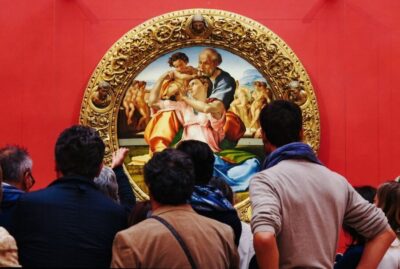
Uffizi Priority Ticket & Masterpieces Audio App
Read our review →
Skip the line: Uffizi and Accademia Small Group Walking Tour
Read our review →
Uffizi Gallery and Accademia Gallery Guided Tour
Read our review →
Uffizi Gallery Small-Group Guided Tour with Ticket
Read our review →
Michelangelo’s David, Accademia & Uffizi Small Group Tour
Read our review →Browse the lists this tour appears in