
Reviewed · FLORENCE SUNSET AND EVENING TOURS
Private Tour of the Dark Heart of Florence at Sunset
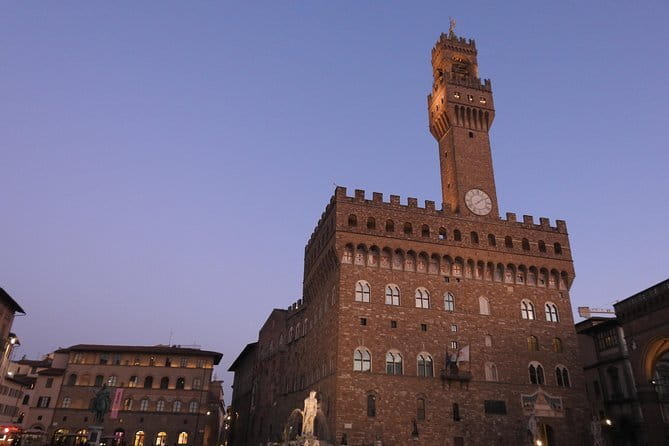
Florence looks polished in daylight, but its older streets conceal a rougher story. This private evening walk follows family feuds, murder plots, political warnings, suspected poisonings, and medieval tower-houses from Piazza della Repubblica to Ponte Santa Trinita. The city’s beauty becomes part of the drama, since elegant palaces once belonged to people competing fiercely for power.
I like the private format, which lets one price cover up to 10 people rather than charging each person separately. I also like the mix of famous places and less obvious details, from the Pazzi family’s fate to the daily dangers of medieval Florence. The main consideration is pace: nine stops in about two hours means you will hear many short stories rather than receive a slow, detailed visit inside major buildings.
Key points to know before booking
- Alessia Carmignani leads a lively history walk: Her humor, empathy, and strong command of Florentine stories are central to the experience.
- The tour uses famous sights differently: The Duomo, Piazza della Signoria, Ponte Vecchio, and Palazzo Pitti become settings for crime, politics, and family rivalry.
- You visit after sunset: Monday through Saturday departures run from 6:30 PM to 9 PM, giving the walk a natural evening mood.
- The $230.48 fee covers your whole group: Up to 10 people can join, making the cost more reasonable for families or friends.
- The final stop includes a gelato taste: Ponte Santa Trinita gives you a nighttime view toward Ponte Vecchio.
- Expect an outdoor walking tour: Admission is free at the listed stops, but the route focuses on streets, squares, bridges, and exterior sights.
Florence after sunset, with the polished surface removed
This is not a standard introduction to Florence. You will not spend the evening working through museum rooms or ticking off every major artwork. Instead, you follow a licensed guide through central streets while the city’s palaces and churches provide the setting for tales of ambition, betrayal, violence, and uncertain deaths.
That approach suits you if you already plan to see Florence’s big sights during the day and want a different way to read the city at night. It also works well for families with older children. Two teenagers enjoyed the Halloween departure, and the storytelling format gives younger visitors a reason to look closely at buildings they might otherwise find imposing but dull.
Alessia Carmignani is the named guide associated with the tour. Her style, based on the available comments about the experience, combines cultural depth with humor and warmth. One Italian-language account especially praised her sympathy, empathy, and broad culture. That matters here. Stories about conspiracies can become a list of names and dates unless the guide gives them a human shape.
You should also keep the theme in proportion. The title promises Florence’s dark side, but the tour is still a city walk, not a fright attraction. Expect local tales and historical mysteries rather than theatrical scares, costumes, or special effects.
More sunset and evening tours in Florence:
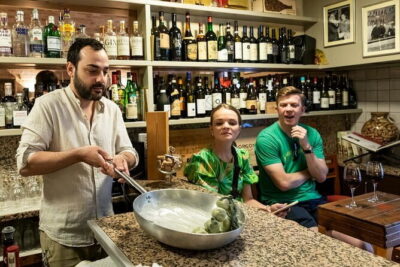
- Winner 2025 Florence Sunset Food & Wine Tour by Eating Europe
★ 5.0 · 5,015 reviews - Florence: Evening Classical Music Concert
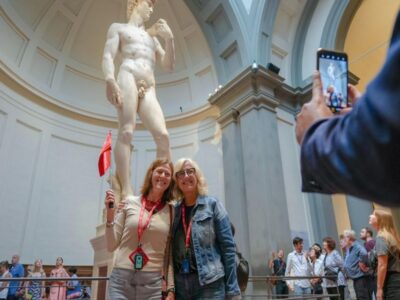
★ 4.6 · 574 reviews - Florence: Statue of David Evening Tour
★ 4.6 · 442 reviews
Starting at Palazzo Strozzi and Via de’ Tornabuoni
The walk begins at Piazza della Repubblica, then moves toward Palazzo Strozzi, one of Florence’s grand Renaissance palaces. The building introduces one of the tour’s main subjects: powerful families using alliances, schemes, and money to defeat their enemies.
The Strozzi story works well as an opening because Florence’s political history is inseparable from its private families. The city was not simply governed by an abstract state. Large households competed for influence, reputation, and control. A palace like Palazzo Strozzi can look calm and formal now, yet its owners lived in a world where family strategy could determine safety and social rank.
From there, Via de’ Tornabuoni brings a more elegant view of the same struggle. This street is lined with grand residences and old family palaces. Your guide explains the clever methods used to gather more influence, giving you a useful way to read the architecture: these are not just attractive facades, but statements about wealth and status.
The stop lasts about 15 minutes, so do not expect a full architectural lecture. The value comes from connecting the street to the people who shaped it. Look up as you walk, but keep an eye on the group and the guide. Florence’s central streets can be busy, even in the evening.
The Duomo and the bloodiest Florentine conspiracy
At Piazza del Duomo, the tour turns to one of Florence’s most famous political crimes. The major church becomes the setting for a bloody conspiracy, linking a familiar landmark to the dangerous competition between powerful Florentine families.
This is one of the strongest parts of the route for anyone who has already seen the cathedral in daylight. You may have admired the marble exterior and Brunelleschi’s dome, but the story gives the square another layer. The same religious center that now feels monumental and timeless was once part of a tense political world where public ceremonies and sacred spaces could also become stages for conflict.
The guide’s job here is especially important. Conspiracy stories contain many people, loyalties, and reversals, and the 15-minute stop cannot cover every detail. Still, you should come away understanding why the cathedral was central to Florentine power struggles and why the Pazzi family remains tied to the city’s darker reputation.
If your interest is primarily art, this stop will not replace a proper cathedral visit. The tour does not include an admission visit inside the Duomo, and all listed stops have free admission. Think of it as a historical story told in the square, not as an architectural tour.
Political warnings in Piazza della Signoria
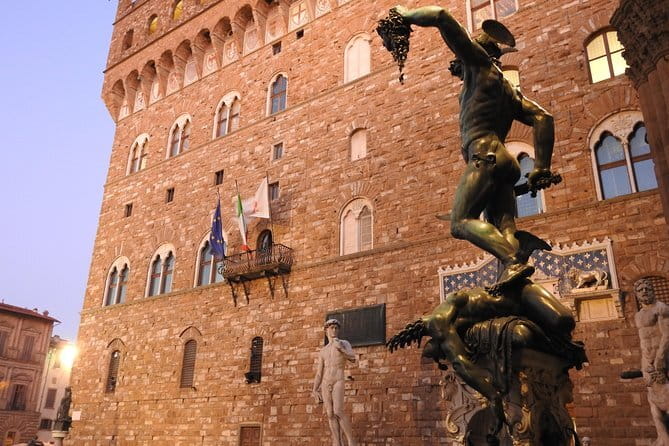
Piazza della Signoria provides one of the best settings for the tour’s theme. Its statues are not treated only as masterpieces. Your guide points out political messages and warnings hidden in the square’s public art, then explains the fate of the Pazzi family, including the story of members being hanged outside the windows of the Bargello palace.
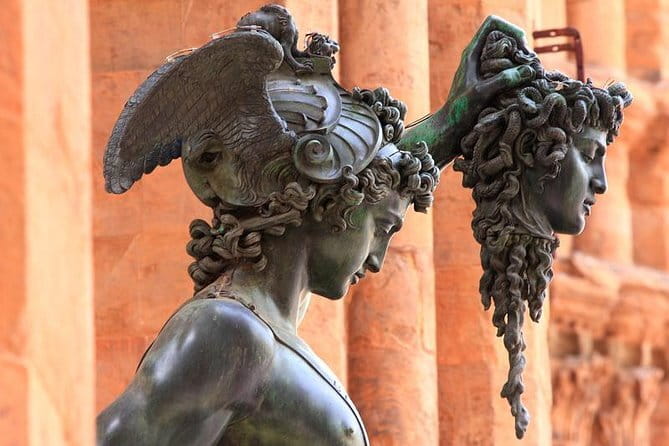
This is a useful shift in perspective. Public sculpture in Florence was never only decoration. The placement of a statue, the subject it showed, and the place where it was displayed could send a message about loyalty, punishment, and authority. With the guide’s help, you can look at the square as a political noticeboard carved in stone.
The stop lasts about 15 minutes. That is enough to make the main connections, though you may want to return in daylight if you want time to study individual sculptures. The evening light should help the mood, but it may make small details harder to see. Bring your attention to the guide’s explanations rather than expecting every artistic detail to be visible.
A completely different way to spend an afternoon in Florence:
- Florence: Skip-The-Line Uffizi Gallery Timed Entry Ticket
★ 4.5 · 27,832 reviews - Tuscany Day Trip from Florence: Siena, San Gimignano, Pisa and Lunch at a Winery
★ 5.0 · 21,634 reviews - Florence: Timed Entrance Ticket to Michelangelo’s David
★ 4.6 · 16,983 reviews - Florence: Michelangelo’s David Skip-the-Line Entry Ticket
★ 4.5 · 12,764 reviews
Ponte Vecchio, war damage, and the flood of 1966
At Ponte Vecchio, the story moves beyond Renaissance family plots. You will hear what happened in Florence during World War II and see photographs connected with the dramatic flood of 1966.
The bridge is one of Florence’s most recognizable sights, so this stop gives you a welcome change of period. The city’s troubles did not end with the Medici or the medieval factions. War and natural disaster also reshaped the streets, buildings, and daily life.
The flood images are especially valuable because they connect the scenic river crossing in front of you with a much more difficult recent past. You are not simply looking at a postcard view toward the Arno. You are being reminded that Florence has faced serious damage within living memory.
Again, the stop lasts around 15 minutes. The guide shows pictures rather than taking you into a dedicated museum display. That makes it easy to follow during a walking route, but it also means the treatment remains brief. If the flood interests you greatly, note the subject and investigate it further during your own time.
Palazzo Pitti and the Medici climb to power
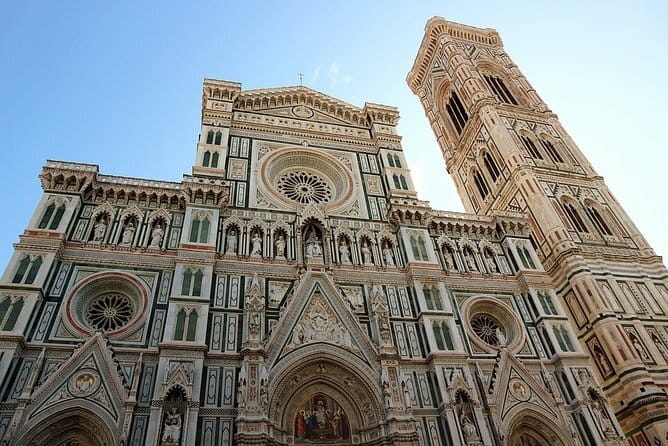
Palazzo Pitti marks the last residence of the Medici family, the rulers of Florence and Tuscany. Here, the focus returns to dynastic power and the long climb from influence to rule.
The palace is an excellent backdrop for this part of the story. Its scale helps you understand the reach of the family, while the guide’s account explains how the Medici built and defended their position. You will hear about the rise of a family that became central to Florence’s political and cultural identity.
This stop is scheduled for about 10 minutes. You will see the exterior context, not tour the palace interiors. That distinction matters if you want paintings, royal apartments, or a detailed examination of the collections. For a compact evening walk, however, the outside view keeps the group moving and lets you connect the palace to the next story on Via Maggio.
Via Maggio and the mystery of Bianca Cappello
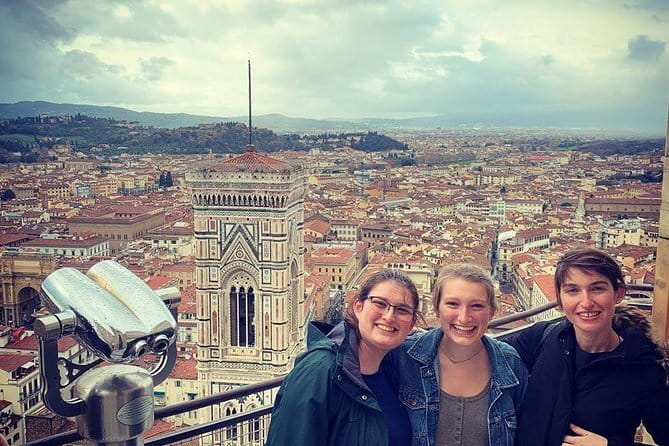
Via Maggio is lined with elegant Renaissance palaces and gives the tour another look at aristocratic Florence. The main tale here concerns Francesco de’ Medici and Bianca Cappello, whose love story ended tragically.
The unresolved question is part of the appeal. Was Bianca Cappello killed by poison, or did a fatal illness cause her death? The tour presents the uncertainty rather than pretending that every historical mystery has a neat answer. That is a good habit in historical storytelling. Florence’s past includes legends, accusations, and competing explanations, and you should expect some questions to remain open.
This section lasts about 10 minutes. It is short, but the combination of romance, court politics, and possible poisoning gives the walk a more personal tone after the broader stories of war and family power.
You will also get another chance to see how old families used streets and palaces to display their rank. Via Maggio is best appreciated at walking speed. The guide’s narrative gives the buildings a social context that a quick daytime stroll may not provide.
A nighttime view and gelato at Ponte Santa Trinita
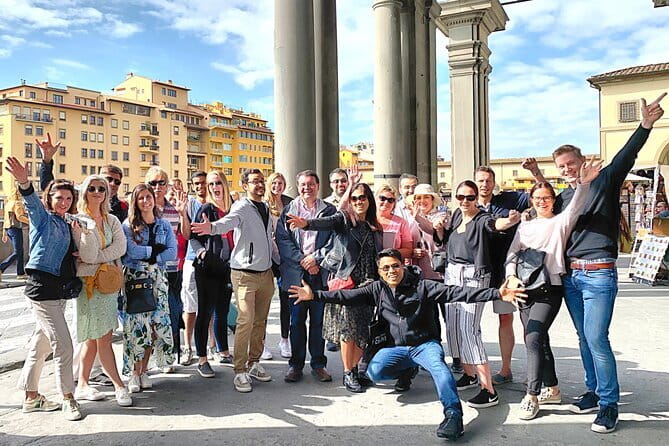
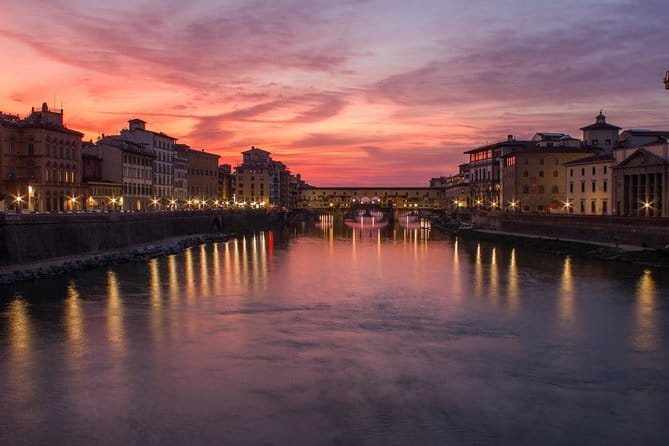
The route reaches Ponte Santa Trinita, where you can look back toward Ponte Vecchio at night. A nearby gelato stop adds a simple pleasure to the end of an otherwise grim evening.
This ending is well judged. After stories of executions, conspiracies, war, and suspected poison, a gelato gives the group a relaxed moment to finish the walk. The stop is listed as about five minutes, so do not expect a long tasting session or a full food tour. You should also tell the provider about food allergies in advance.
The view from Ponte Santa Trinita is one of the strongest visual payoffs on the route. You finish with the Arno, the bridges, and the evening lights rather than ending in a crowded square. Since this is also the endpoint, you can continue your own evening from there without needing to return to the starting point.
Medieval tower-houses in the district of Santi Apostoli
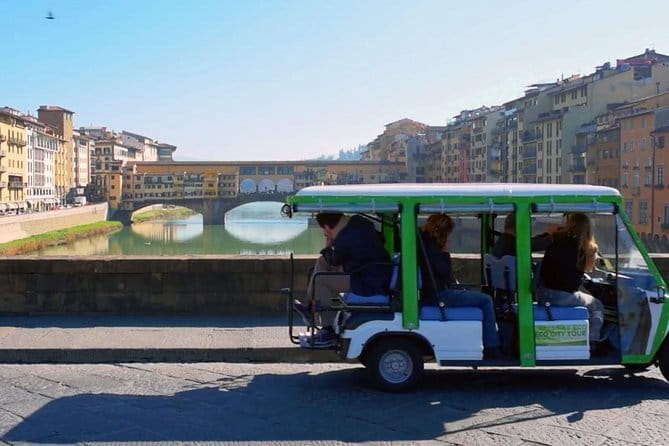
The final listed sightseeing stop is the Church of Santi Apostoli and its medieval district. Here, the focus shifts away from ruling families and toward ordinary urban life, including typical tower-houses and the hazards of living in medieval Florence.
Tower-houses are important because they show how families adapted buildings to a city where protection and status mattered. The route uses them to explain what daily life could feel like when danger might appear around any corner. You may find this one of the most useful parts of the experience because it moves the story beyond famous rulers and concentrates on how the city itself functioned.
The stop lasts about 10 minutes. As with the other locations, the emphasis is on the guide’s interpretation rather than a formal interior visit. You should expect to see the district and its exterior features, then hear how medieval residents lived among narrow streets, fortified homes, and family rivalries.
There is a slight practical complication in the stated route order: the tour description places Santi Apostoli among the stops, while the published endpoint is Ponte Santa Trinita. Confirm the exact walking sequence with the provider when your booking is confirmed, especially if you need to meet someone afterward.
What the private price means for your group
The listed cost is $230.48 per group of up to 10 people. For one or two people, that is a substantial price for a two-hour walk. For a family, wedding party, or group of friends, the calculation changes. Ten people sharing the fee would pay about $23 per person, before any separate personal purchases such as gelato.
The private setup is the main reason to consider the price. Only your group participates, so you are not joining a large mixed party. That can make the experience easier for families, allow the guide to respond to your interests, and give you a more personal feel than a standard group outing.
The tour does not include paid admissions, but that is not a weakness for this particular route. The selected stops are mainly public squares, streets, bridges, and exterior views. You are paying for the guide’s storytelling and local interpretation, not for museum entry.
The experience is booked, on average, 49 days ahead, which suggests that planning early is sensible if your dates are fixed. Confirmation arrives within 48 hours, subject to availability.
Timing, walking comfort, and practical details
Departures run Monday through Saturday between 6:30 PM and 9 PM, with the tour lasting about two hours. Since the experience is designed for sunset and evening, check the exact starting time carefully when booking. The meeting point is Piazza della Repubblica, and the advertised endpoint is Ponte Santa Trinita.
Pickup is offered, though the supplied details do not specify the pickup area or whether it changes the price. Ask before booking if you want to use it. The tour is near public transportation, and most people can participate. Service animals are allowed.
Wear comfortable shoes. The route covers nine locations and keeps moving through central Florence. You will want to hear the stories, look at buildings, and stay with your private group, so a relaxed pace and practical footwear will help.
The tour has free cancellation up to 24 hours before the start time for a full refund. Changes or cancellations made less than 24 hours in advance are not accepted for a refund, and the cutoff follows local Florence time.
Who should book this Florence night walk
I would choose this experience if you enjoy history told through people, scandals, and places rather than through a long list of dates. It suits couples, families with teenagers, and groups of friends who want a private evening activity after a day of museums and churches.
It is also a good fit if you have already seen Florence’s main sights and want fresh stories at familiar locations. The Duomo, Ponte Vecchio, Piazza della Signoria, and Palazzo Pitti are not new sights, but the guide uses them to reveal political and personal drama.
I would be more cautious if you want extensive time inside monuments, detailed art analysis, or a slow architectural study. This is a brisk outdoor route with many stops. The dark theme is atmospheric, but the experience depends on storytelling rather than theatrical fright.
Should you book the Dark Heart of Florence?
Book it if you want a private evening story walk and your group can share the $230.48 fee. The best reasons are the personal format, the unusual subject matter, Alessia Carmignani’s warm and humorous style, and the chance to connect famous sights with conspiracies, family rivalries, war, floods, and medieval life.
Skip it if your priority is museum access or a detailed tour of the Duomo and Palazzo Pitti interiors. For everyone else, this is a smart second look at Florence: familiar streets, darker stories, and a gelato at the end to keep the evening from becoming too grim.
FAQ
Where does the tour begin?
The meeting point is Piazza della Repubblica in Florence, Italy.
Where does the tour end?
The advertised endpoint is Ponte Santa Trinita in Florence.
How long does the experience last?
The walking tour lasts approximately two hours.
When does the tour operate?
It operates Monday through Saturday, with listed hours from 6:30 PM to 9 PM, during the stated operating period through April 30, 2026.
How many people can join a private booking?
One private group of up to 10 people can participate under the group price.
Is admission to the stops included?
The listed stops have free admission. The experience focuses mainly on streets, squares, bridges, churches, and exterior views rather than paid interior entries.
Can I cancel for a full refund?
Yes. You can cancel at least 24 hours before the local start time for a full refund. Cancellations or changes made less than 24 hours before the start are not accepted for a refund.
Recently added around Florence
- Accademia and Uffizi Small-group Guided Tour★ 4.5 · 8 reviews
- The David from Michelangelo.★ 5.0 · 3 reviews
- Combo: Accademia + walking + Uffizi Galleries Guided Tour★ 3.5 · 6 reviews
- The Complete Wine Tour Brunello, Nobile, Chianti wine experience★ 4.0 · 7 reviews
- The Best of Tuscany in 3 Days★ 4.5 · 13 reviews
- The Cooking Lab – Authentic Food Experience★ 5.0 · 113 reviews
- Florence Central Market Food Tour – Private Tour★ 4.0 · 7 reviews
- Family Friendly Florence Private City Tour★ 5.0 · 47 reviews
Florence Sunset and Evening Tours, compared.
Winner 2025 Florence Sunset Food & Wine Tour by Eating Europe
Read our review →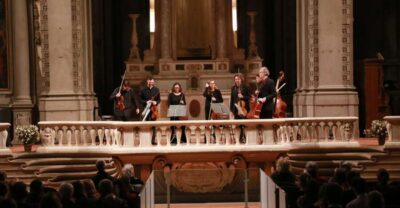
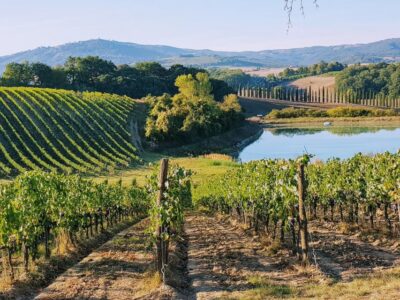

Chianti Wine Tastings Day Trip at Sunset from Florence
Read our review →
Florence Evening Walking Tour: Stories of Power, Love & Betrayal
Read our review →
Browse the lists this tour appears in