
Reviewed · FLORENCE DUOMO TOURS
Cooking Art Brunelleschi
The best part of Cooking Art Brunelleschi is the setting: you make pasta inside a medieval tower from the 1200s, just steps from Brunelleschi’s Dome. Over about three hours, a chef guides you from flour and dough to three finished pastas, then you sit down to eat what the group has prepared. It is hands-on, social, and far more useful than a meal you simply watch someone else cook.
I like the clear three-pasta format and the chance to learn techniques you can repeat at home. I also like the generous food and drinks, with Tuscan wine and unlimited soft drinks included. The main consideration is the group setup: your pasta is combined with the rest of the class before cooking, and the room can feel warm and crowded.
Key points to know before booking
- Three pastas in one class: Make ravioli, tortelli, and pappardelle from fresh dough.
- Three classic sauces: Match the pasta with butter and sage, arrabbiata, and old-fashioned Tuscan ragù.
- A remarkable cooking room: The class takes place in a 1200s tower near Brunelleschi’s Dome, with a connection to Dante Alighieri’s wife’s family.
- Plenty to eat and drink: Lunch, Tuscan wine, water, and unlimited soft drinks are included.
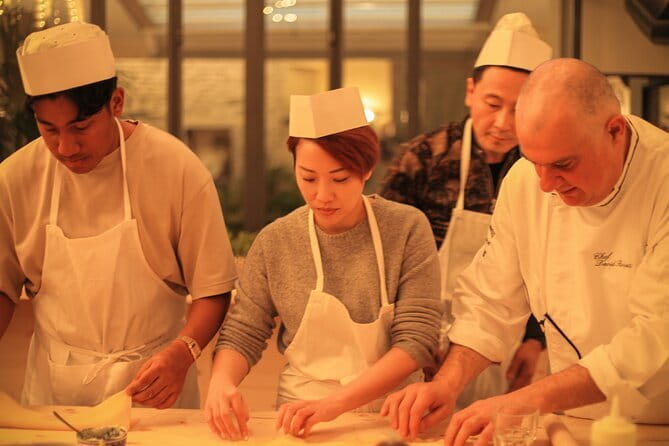
- A social class of up to 19 people: You’ll work around shared tables with a professional chef nearby.
- Good value at $39.92: The price covers instruction, ingredients, equipment, a full meal, and drinks.
Cooking pasta in a 1200s tower near the Duomo
Location does much of the work here. Cooking Art Brunelleschi meets at Via de’ Bardi, 23 r, on the Oltrarno side of the Arno, close to central Florence and within easy reach of public transportation. The class itself takes place in a stone medieval tower, only a short walk from Brunelleschi’s Dome.
This is not just a neutral kitchen rented for the afternoon. The tower dates to the 1200s, and the experience connects the building with the family of Dante Alighieri’s wife. That detail gives the class a sense of place before you even touch the flour. You are not cooking in a modern demonstration studio with no link to Florence. You are working in an old building in the heart of the city, surrounded by the history of the medieval and Renaissance eras.
The location is also practical. You can pair the class with a walk through the historic center, a visit to the Duomo, or time around the Arno. Since the activity returns to its meeting point, you do not need to arrange a separate ride at the end. Private transportation is not included, but you should not need it for a central Florence activity.
One small logistical point matters: the class starts at the stated time, and you may be asked to wait across the street until the doors open. Arrive with the meeting point clear on your phone, but do not expect to enter early.
More Duomo and cathedral tours in Florence:
- Florence: Duomo Cathedral Guided Tour
★ 3.9 · 5,970 reviews - Florence: Brunelleschi’s Dome Climb Entry Ticket & Duomo
★ 4.5 · 3,815 reviews - Florence: Duomo Guided Tour with Optional Dome Climb Upgrade
★ 4.1 · 3,706 reviews
Starting with flour, eggs, and fresh pasta dough
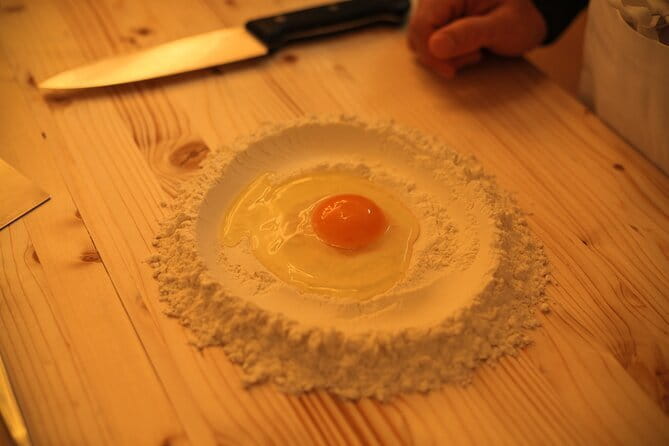
The class follows the full process, rather than handing you ready-made dough. You begin with the basic ingredients and learn how the dough changes as you mix and knead it. The chef gives instructions at each stage and moves around the tables to help with the parts that need a practiced hand.
That makes this a good choice if you want more than a cheerful meal. You learn how to handle the dough, knead it, and roll it thin enough for different pasta shapes. One of the most useful parts is the individual help with kneading and rolling. The techniques are simple, but the texture and thickness of the dough matter greatly.
You do not need to bring equipment. Flour, ingredients, tools, and cooking gear are supplied. That is especially helpful if you are packing light or visiting Florence between sightseeing stops.
The class is designed for beginners. You do not need prior pasta-making experience, and the instruction is broken into manageable steps. Families with teenagers have found it easy to follow, while adults who already cook can still pick up useful tips for dough, shaping, and cooking.
Three pasta shapes, three different jobs
The class does not stop at one familiar pasta shape. You prepare ravioli, tortelli, and pappardelle, which gives you a useful lesson in how pasta changes with its sauce and shape.
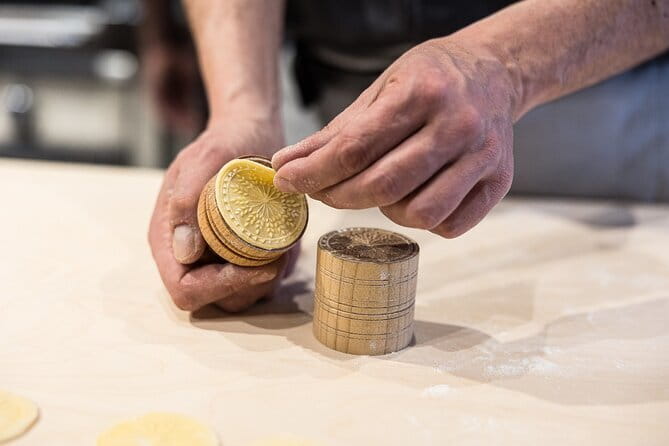
Ravioli and tortelli require care because you are filling and sealing the dough. The edges must close properly, and the pasta needs to be thin without tearing. This is the part where the chef’s help is most useful. You learn how to work with the dough instead of treating it like a fixed sheet.
Pappardelle gives you a different task. These are broad ribbons, so rolling and cutting become the focus. The wide shape works well with a hearty sauce, and the class pairs it with Tuscan ragù.
The sample menu includes:
- Ravioli with butter and sage
- Tortello with arrabbiata sauce
- Pappardelle with Tuscan ragù
The exact order may vary, but the lesson remains the same: shape and sauce should work together. Delicate filled pasta suits a simple butter and sage sauce, while broad pappardelle can carry a meatier ragù. Arrabbiata brings tomato and heat to the tortelli.
This is one of the best reasons to choose the class over a shorter pasta demonstration. You are not only shown three shapes. You see why the shapes are made differently and how the sauces fit them.
The chef makes the sauces while you work
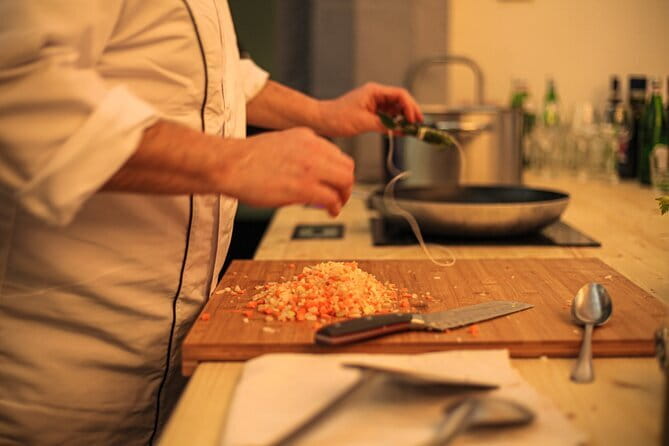
While you shape the pasta, the chef prepares the sauces. This keeps the three-hour class moving and lets you watch parts of the meal that would be difficult to manage alone in a group setting.
The sauces reflect familiar Italian combinations rather than complicated restaurant tricks. Butter and sage is direct and delicate. Arrabbiata adds a spicy tomato flavor. The old-fashioned Tuscan ragù gives the pappardelle a fuller, more substantial finish.
Several chefs lead the classes, and the experience depends partly on which instructor is assigned to your group. Names praised in the available feedback include Valentino, Lorenzo, Andrea, Arturo, Victoria, Eno, Giordano, Jacob, Sal, Francesca, and Antonio. The strongest descriptions focus on chefs who keep the pace lively while still offering personal help.
Valentino is noted for bringing energy and keeping children and adults involved. Jacob receives special praise for teaching practical techniques that can be used at home. Lorenzo is described as both entertaining and helpful, while Francesca adds facts about Florence and the surrounding region. You cannot request a particular chef from the information provided, so book for the class itself rather than expecting one specific instructor.
More cooking classes in Florence:
- Florence: Pasta Cooking Class with Unlimited Wine
★ 4.9 · 10,285 reviews - Florence: Pasta & Tiramisu Cooking Class with Unlimited Wine
★ 4.9 · 6,708 reviews - Florence: Pasta Cooking Class with Unlimited Wine
★ 5.0 · 6,413 reviews - Cooking Class and Lunch at a Tuscan Farmhouse with Local Market Tour from Florence
★ 5.0 · 4,831 reviews
Eating the pasta you helped prepare
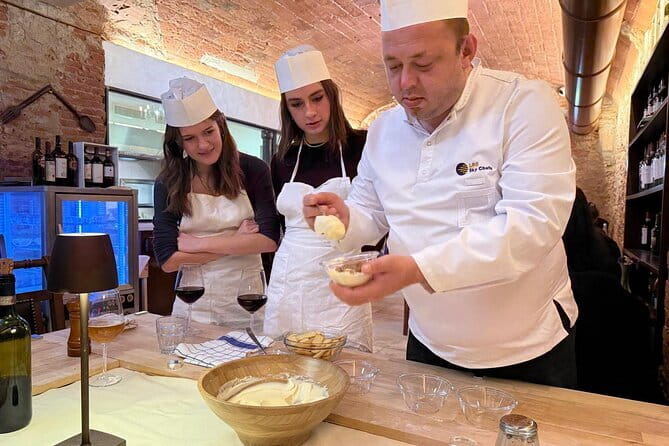
At the end, the food becomes lunch. You sit down with the pasta made during the class, along with the sauces prepared by the chef. There is enough food for many people to treat the experience as a full meal, not a small tasting.
Tuscan wine is included, along with unlimited soft drinks and water. Alcohol is available only to people aged 18 and over. The drink arrangement adds value, especially in Florence, where a sit-down meal and several drinks can quickly cost more than the class itself.
There is one important detail you should know before booking. The pasta from the class is placed together in shared pots rather than cooked separately for each person. That means you may eat pasta made by another member of the group, not only the pieces you shaped.
Most people will see this as part of the social nature of the class. It helps the cooking run smoothly, and it lets everyone eat all three dishes without waiting for separate batches. If you are uncomfortable with shared food preparation, however, this could be a real drawback. The description of the experience says you will eat what you prepare, but the group cooking method means personal portions are not kept separate.
A social class, not a private lesson
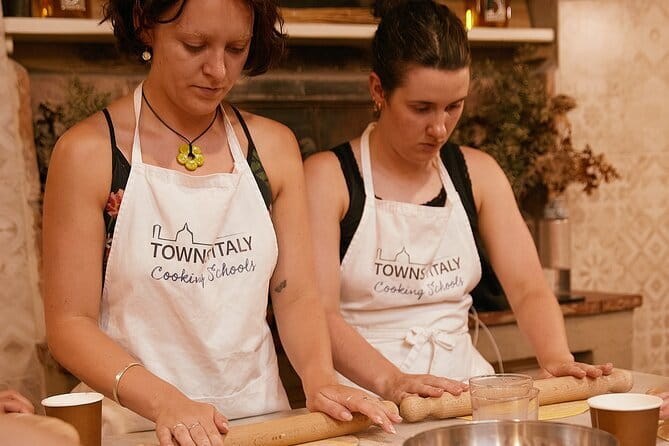
The maximum group size is 19 people, so this is not a quiet one-on-one lesson. You work at shared tables, meet other people, and cook as part of a larger class. That social setup suits couples, families, and solo visitors who enjoy conversation while they work.
The class can feel crowded at times. Some reports describe a tight space and a warm room, especially during the cooking period. Wear light clothing, particularly during the warmer months. The smooth floor tiles also call for care if you have low mobility or are unsteady on your feet.
The group format has a clear benefit: you are less likely to get stuck. While the chef cannot spend the entire class beside you, the instructors move around and give individual guidance. A strong chef can keep several tables on schedule, explain a technique more than once, and help when a ravioli seal or a sheet of dough goes wrong.
The mood can also vary with the group. Wine is included, and a large class may be lively. Most groups create an easy way to meet people, but a particularly loud group can make the room feel chaotic. If you want a private, slow-paced lesson, this is not the right format.
What the $39.92 price really covers
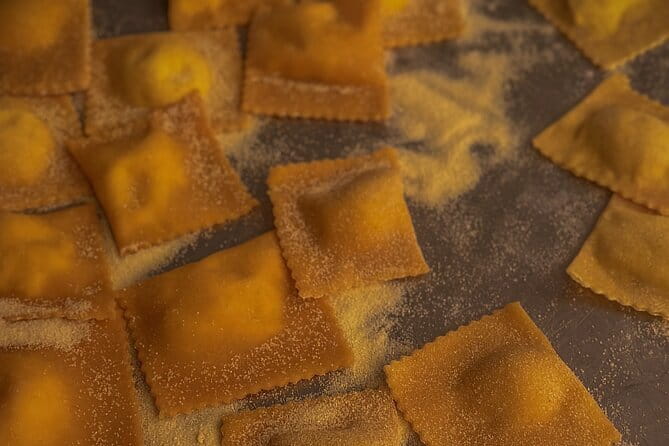
At $39.92 per person, the value is strong. You receive roughly three hours of instruction, all ingredients, equipment, three pasta dishes, professional chef guidance, Tuscan wine, water, and unlimited soft drinks.
The meal alone gives the price practical weight. You are not paying for a short demonstration followed by a tiny sample. You make enough pasta to count as lunch, and several people find they do not need dinner later that evening.
The class also gives you a skill you can use after Florence. Fresh pasta is not hard to make once you understand the dough, but a first attempt at home can be frustrating without seeing the correct texture and thickness. Watching a chef explain kneading, rolling, sealing, and cooking helps turn a recipe into something you can repeat.
The main value limit is the shared preparation. This is not a private chef experience, and you are not making an individual plate from beginning to end. You are paying for a group lesson and a group meal in a memorable old building. At this price, that is a fair trade for most people.
Who will enjoy this Florence cooking class?
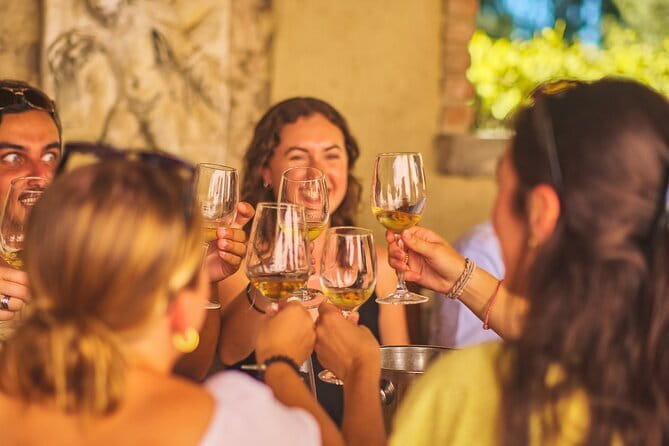
I would recommend it to families with older children and teenagers, couples wanting an evening or midday activity beyond museums, and solo visitors who like meeting people while learning something practical.
It also suits mixed-interest groups. One person can enjoy the food, another can focus on the history of the tower, and another can concentrate on learning pasta techniques. You do not need to be an experienced cook. The class is structured for beginners, yet the dough and shaping work remain useful for people who already make simple meals at home.
It may not suit you if you want strict control over ingredients, private table service, or a completely separate serving of food you made yourself. The class is social, shared, and lively. You should also think twice if you dislike warm rooms, tight group spaces, or included alcohol being part of the atmosphere.
The activity is available in English, which keeps the instruction accessible to English-speaking participants. Confirmation is provided at booking, and the experience is often reserved well ahead of time, with an average booking window of about 26 days. If your Florence dates are fixed, booking early is sensible.
Practical details for a smoother class
Wear light clothing and comfortable shoes. You will be standing and working with dough, and the room may feel warm. You do not need to carry cooking equipment because everything is provided.
The meeting point is Via de’ Bardi, 23 r, 50100 Firenze FI, Italy. The activity ends back at that same meeting point. Plan to arrive ready to wait briefly outside if the doors have not opened yet.
The class lasts about three hours. That includes the cooking lesson and the meal, so avoid scheduling a tight museum entry or train departure immediately afterward. The food is substantial, and the pace can feel full rather than rushed.
Free cancellation is available if you cancel at least 24 hours before the local start time. Changes or cancellations made less than 24 hours before the start are not refunded.
Should you book Cooking Art Brunelleschi?
Book it if you want a hands-on Florence activity with a meal included, especially if you like the idea of leaving with a pasta skill rather than only photographs. The medieval tower, central location, three pasta shapes, generous drinks, and friendly chef-led instruction make this a strong value at $39.92.
Go in with the right expectations. You will cook in a group of up to 19 people, the room may be warm, and the pasta is combined for cooking. If those points do not bother you, this is a practical and enjoyable way to spend three hours near the Duomo. Families, couples, and solo visitors who enjoy a lively class should put it high on their Florence list.
FAQ
How long does Cooking Art Brunelleschi last?
The experience lasts approximately three hours, including the pasta lesson and the meal.
Where does the cooking class meet?
It meets at Via de’ Bardi, 23 r, 50100 Firenze FI, Italy. The activity ends back at the meeting point.
Which types of pasta will I make?
You will prepare three fresh pastas: ravioli, tortelli, and pappardelle.
Which sauces are included?
The planned sauces include butter and sage, arrabbiata, and old-fashioned Tuscan ragù.
Are drinks included?
Yes. Tuscan wine, water, and unlimited soft drinks are included. Alcoholic beverages are available only to people aged 18 and over.
What is the cancellation policy?
You can cancel for a full refund up to 24 hours before the experience start time. Cancellations or changes made less than 24 hours before the start are not accepted for a refund.
Recently added around Florence
- Accademia and Uffizi Small-group Guided Tour★ 4.5 · 8 reviews
- The David from Michelangelo.★ 5.0 · 3 reviews
- Combo: Accademia + walking + Uffizi Galleries Guided Tour★ 3.5 · 6 reviews
- The Complete Wine Tour Brunello, Nobile, Chianti wine experience★ 4.0 · 7 reviews
- The Best of Tuscany in 3 Days★ 4.5 · 13 reviews
- The Cooking Lab – Authentic Food Experience★ 5.0 · 113 reviews
- Florence Central Market Food Tour – Private Tour★ 4.0 · 7 reviews
- MaMa Florence: The Art of Corzetti – Hands-On Pasta Class★ 5.0 · 15 reviews
Florence Duomo Tours, compared.
Brunelleschi’s Dome Climb Entry Ticket & Duomo
Read our review →
Duomo Guided Tour with Optional Dome Climb Upgrade
Read our review →
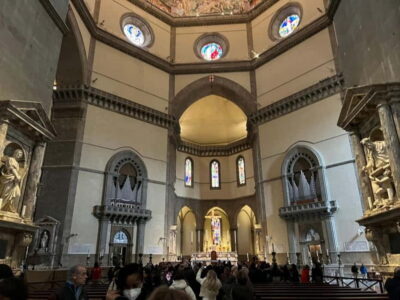
Skip-the-Line Duomo, Baptistery, Giotto Bell Tower
Read our review →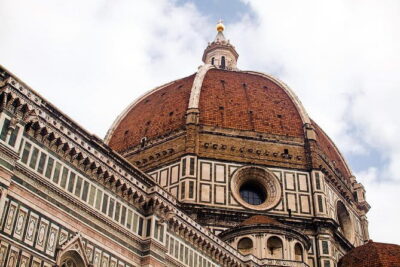
Best of Florence: Small Group Tour Skip-the-Line David & Accademia with Duomo
Read our review →
Florence Skip-the-Line Duomo Tour with Guide & Brunelleschi Dome
Read our review →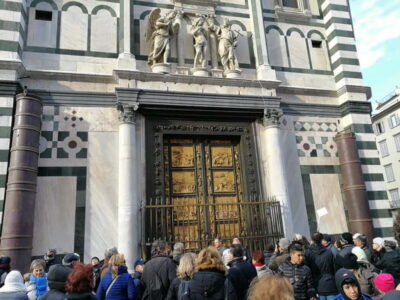
Duomo Area Tour and Brunelleschi Dome Climb Ticket
Read our review →Browse the lists this tour appears in