
Reviewed · PITTI PALACE AND BOBOLI GARDENS TOURS
Royal Paths of Florence: Explore the Boboli Gardens
Boboli Gardens is more than a pleasant patch of green behind Florence’s Pitti Palace. It is an outdoor museum of fountains, statues, grottos, cypress-lined paths, and Medici-era design, with the best parts arranged on a steep hillside. The tour’s route takes you from the palace courtyard up to the Artichoke Fountain, then across the garden’s main sights before ending near the Buontalenti Grotto.
I like the reserved garden admission, which saves you from arranging a separate ticket, and the radio system, which can make a guide easier to follow in a group. I also like the leisurely pace, especially since the route includes uphill walking and stops for explanations rather than a quick march from one statue to the next.
The main concern is reliability. Some visitors have had excellent guides, including Matteo, Iliria, and Francesca, while others reported faulty headsets, poor communication, or a guide who did not manage the group well. Arrive 15 minutes early, and treat the one-hour tour as a highlights visit, not a full exploration of every corner.
Key points to know before booking
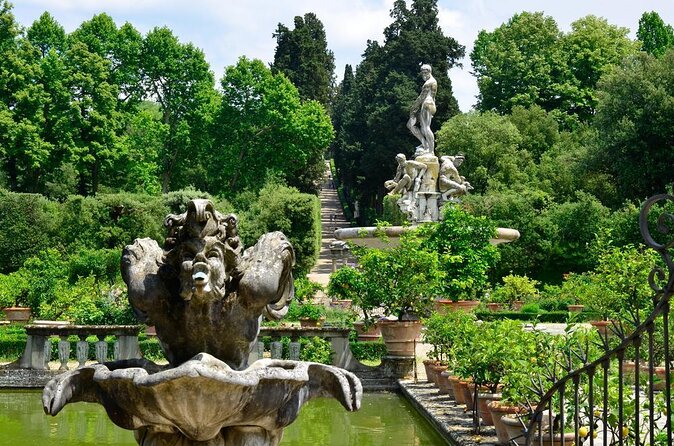
- Artichoke Fountain first: Begin in the Pitti Palace courtyard before heading uphill into the garden.
- Steep sections matter: The route includes slopes, steps, and uphill walking, especially early in the tour.
- A compact introduction: One hour covers the major sights but leaves you time to return to favorite areas afterward.
- The radio headset is useful: It should help you hear the guide, though equipment quality may vary.
- Small group size: The maximum is 15 people, with a minimum of two required for the tour to operate.
- Strict timing: Late arrivals cannot join, and no refund or rescheduling is offered for missed departures.
Why Boboli Gardens deserves an hour of your Florence day
Florence is packed with indoor art, so Boboli offers a useful change of pace. You trade crowded galleries for open paths, formal gardens, stone fountains, and broad views across the city. The setting also helps explain how the Medici court used gardens as a display of wealth, taste, engineering, and power.
This is not a flat stroll. Boboli rises behind the Pitti Palace, and much of the route climbs before descending again. On a hot or humid day, that uphill section can feel strenuous. The guide’s slower pace is valuable here, since you have time to stop, listen, and catch your breath.
At $54.19 per person, the tour is not the cheapest way into Boboli Gardens. You are paying for the ticket, a certified guide, the radio system, and a planned route through a large site. The price makes the most sense if you want context and direction. If you are happy reading signs and wandering alone, a guided visit may feel less worthwhile.
The current rating is 3.7 from 35 ratings, which tells you to book with realistic expectations. The strongest experiences depend heavily on the guide and the equipment working properly. When those pieces come together, this can be a clear and efficient introduction to a garden that is easy to underestimate.
More Pitti Palace and Boboli Gardens visits:
- Florence: Uffizi, Pitti Palace & Boboli Combined 5-Day Pass
★ 4.5 · 1,726 reviews - Florence: Pitti Palace and Boboli Gardens Ticket & eBook
★ 4.5 · 835 reviews - Florence: Pitti Palace, Boboli Garden, Palatine Gallery Tour
★ 4.9 · 558 reviews
Starting at Piazza de’ Pitti and the Artichoke Fountain
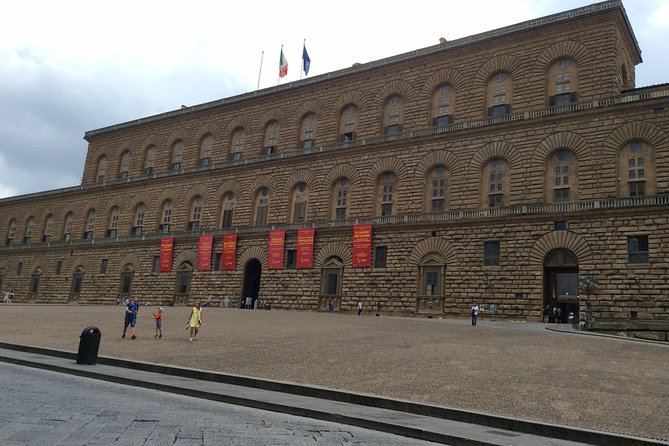
Meet at Piazza de’ Pitti, by the main entrance to Palazzo Pitti. The meeting point is the palace entrance gate, not a separate garden entrance or transport stop. Because the guide may wait only about five minutes for late arrivals, I would arrive 15 minutes before the scheduled start.
The tour begins by crossing the palace courtyard. This short approach gives you a sense of Boboli’s original relationship with the Pitti Palace. The garden was not designed as an isolated public park. It was planned as a grand extension of court life, with paths and monuments arranged to impress from below and above.
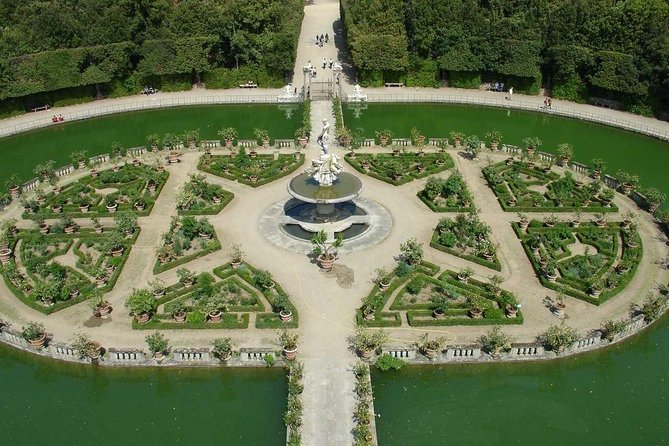
Your first major stop is the Artichoke Fountain, a large octagonal basin decorated with statues and topped by a bronze lily. It is an unusual opening sight, and the guide uses it to explain the first stage of the garden’s design.
This is one reason a guide can add value. Without context, you might see a fountain, take a photo, and move on. With an explanation of the garden’s layout, the climb ahead begins to make more sense.
The Amphitheatre and the first uphill climb
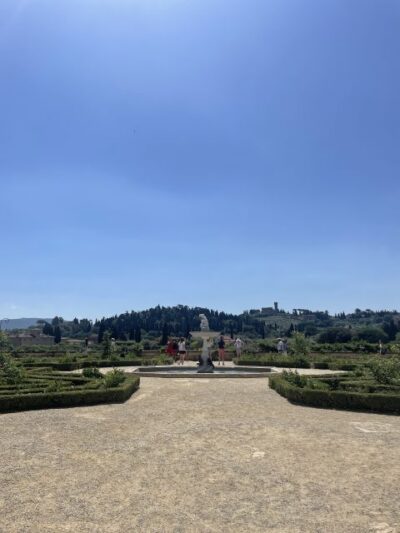
From the Artichoke Fountain, you face the Amphitheatre, set against the hill behind the palace. This was the first major phase of Boboli’s development, and its position helps you understand the garden’s central axis.
The early part of the route climbs. The slope is described as gentle in places, but the full visit includes steeper sections and steps. You do not need to race, and the guide is expected to keep a leisurely pace, but this is still an active walking tour.
The garden is particularly demanding in hot weather. One especially difficult account described a hot day, an uphill start, and headsets that were hard to hear. That is a useful warning rather than a reason to avoid the tour entirely: wear comfortable shoes, bring water, and do not assume the one-hour duration means the route is physically effortless.
The audio equipment is supplied so you can hear the guide while walking. It is a good idea to check your headset early, not halfway up the hill. If the sound is weak, tell the guide at once. The success of the tour depends on being able to hear the explanations as the group moves.
Neptune’s Fountain and Giambologna’s Abundance
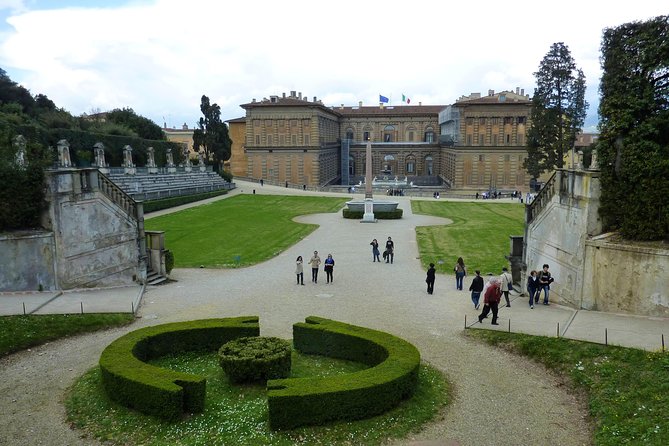
Higher on the hill, the route reaches Neptune’s Fountain. From here, the garden’s change in height becomes clear. You are not simply walking through planted beds. You are moving through a carefully arranged sequence of terraces, avenues, statues, and water features.
At the top of the hill is the large statue of Abundance by Giambologna. This is an important stop because it marks the high point of the route before the tour turns downhill. The guide explains the sculpture and its place in Boboli’s design.
I like this part of the tour because the uphill effort has a clear reward. You see the garden from a different angle, and the climb reveals how the designers used height to create drama. The drawback is equally clear: people with limited stamina may find this section tiring, especially under the Tuscan sun.
The tour is described as suitable for most people, but that should not be confused with fully accessible or level. The available information does not promise step-free access. If slopes and steps are a concern, contact the operator before booking rather than assuming the route can be changed.
A completely different way to spend an afternoon in Florence:
- Florence: Skip-The-Line Uffizi Gallery Timed Entry Ticket
★ 4.5 · 27,832 reviews - Tuscany Day Trip from Florence: Siena, San Gimignano, Pisa and Lunch at a Winery
★ 5.0 · 21,634 reviews - Florence: Timed Entrance Ticket to Michelangelo’s David
★ 4.6 · 16,983 reviews - Florence: Michelangelo’s David Skip-the-Line Entry Ticket
★ 4.5 · 12,764 reviews
The Viottolone and its cypress-lined route
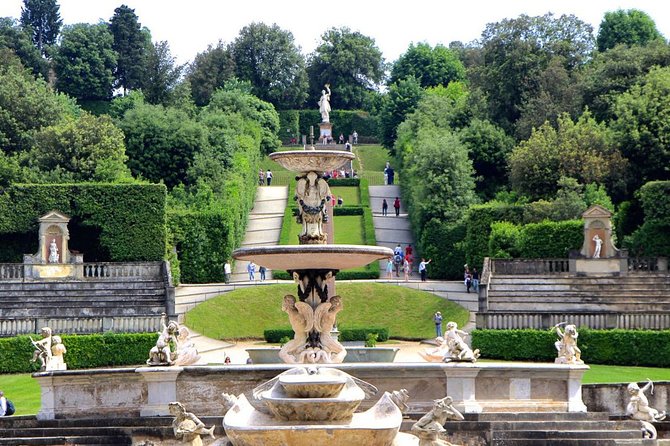
After the high point, the guide leads you down a steep sloping avenue toward the Viottolone. This long avenue is lined with cypress trees and small statues. It provides one of Boboli’s most recognizable views and gives the garden a strong central spine.
The Viottolone is less about one single monument and more about the experience of moving through a formal axis. The cypresses draw your eye forward, while the statues add decoration along the route. This is a good place to listen to the guide’s explanation of how the garden’s paths were meant to control movement and perspective.
The descent may be easier than the climb for some people, but a steep slope can still be awkward. Watch your footing and take your time. The tour’s radio system means you should not need to crowd around the guide to hear, though the equipment must be working well.
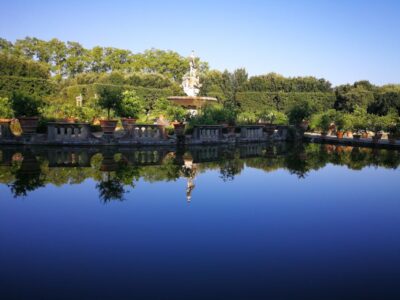
The avenue leads toward the Isolotto, a large pond with the Ocean Fountain by Giambologna. This is one of the tour’s strongest visual moments. Water, sculpture, and the surrounding garden come together in a more theatrical setting than the earlier fountains.
The Isolotto and the Ocean Fountain
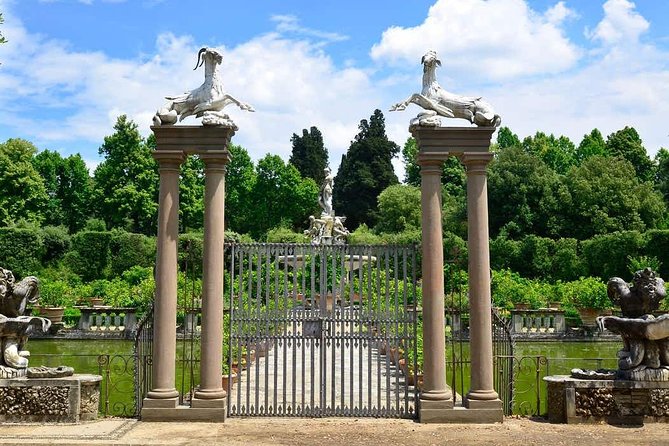
The Isolotto gives the route a change of mood. After the formal uphill sequence and long cypress avenue, the pond creates an open focal point. The Ocean Fountain, created by Giambologna, adds a major sculptural centerpiece.
Your guide spends time explaining the fountains and sculptures rather than simply pointing them out. That matters because Boboli can feel like a collection of disconnected objects if you do not understand the plan behind it.
The one-hour schedule means this stop will not become a long, quiet pause beside the water. You receive an introduction, some explanation, and time to look around before continuing. If you want to linger for photographs or study individual statues, you can return after the guided portion ends.
That freedom is one of the tour’s practical strengths. You get a route through the major sights first, then you can decide if the Isolotto, Viottolone, or another area deserves more of your own time.
The Giardino del Cavaliere and the Kaffeehaus
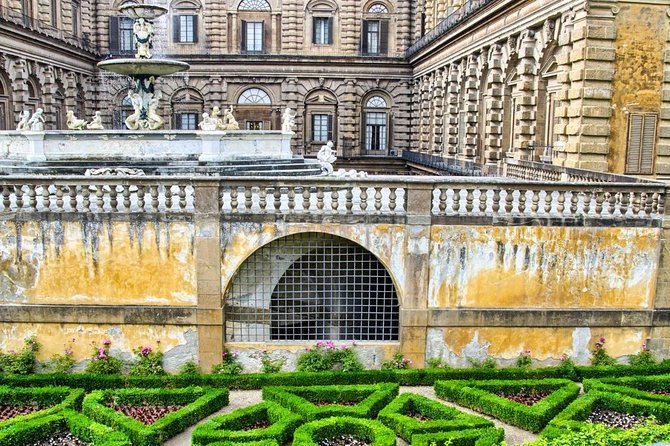
The final part of the route includes the Giardino del Cavaliere and the Kaffeehaus. The Giardino del Cavaliere is associated with Michelangelo, adding another major artistic name to a garden already linked with Giambologna and Buontalenti.
The Kaffeehaus offers a different kind of garden architecture. It is not simply another fountain or statue, and its position helps show how Boboli combined leisure spaces with formal design. The guide explains these places as part of the garden’s wider story, rather than treating them as isolated photo stops.
The route’s variety is a real advantage. You see formal axes, water, sculpture, a pond, a grotto, and garden buildings within a short period. The drawback is that one hour can feel compressed if you want detailed information about every monument.
This is best understood as a guided orientation. You are learning what deserves a closer look, not receiving an exhaustive tour of the entire property. That distinction helps explain why the tour works well as an opening visit but may disappoint someone expecting a long art-history lecture.
The Buontalenti Grotto and its theatrical details
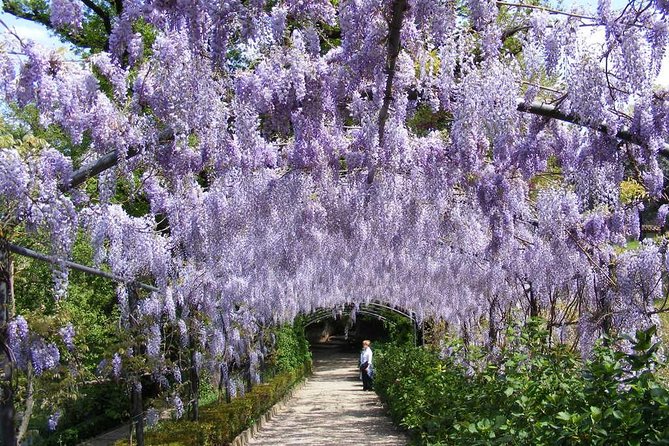
The Buontalenti Grotto is the final major stop. It was created by Buontalenti using limestone concrete stalactites, shells, and terracotta reliefs. Water runs down the walls, adding movement and color to an interior that feels very different from the open avenues outside.
The grotto is one of Boboli’s most distinctive features because it plays with the idea of nature. Its surfaces are shaped and decorated to look rough, irregular, and cave-like, but the effect is carefully made. The guide explains the design details and the secrets behind its construction.
This stop also shows why a guided visit can be worthwhile. A grotto can look strange or decorative at first glance. Once you understand the materials, water, and theatrical purpose, the room becomes easier to appreciate.
Access and opening arrangements can affect what you see, and the supplied information does not promise that every feature will be viewed under identical conditions on every date. Still, the grotto is part of the planned route and one of the main reasons to choose a tour focused on Boboli rather than simply taking a general Florence walking tour.
What the guide and group setup are like
The activity uses an official certified guide and caps the group at 15 people. That is small enough to feel more manageable than a large crowd, though it is still a group tour. The guide may need to keep moving to stay within the one-hour schedule.
Several guide names appear in the available feedback. Matteo is described as friendly and well informed, Iliria as generous with information about Boboli and Florence, and Francesca as especially warm with families and children. These names are useful examples, but you should not assume a particular guide will lead your departure.
The radio system is supposed to make the commentary clear. In a successful tour, that means you can walk a few paces away without losing the explanation. In one poor experience, several people had headset trouble and the guide did not solve it effectively. Check your unit at the start and speak up if it is not working.
Guide quality can also vary in delivery. A strong guide pauses, faces the group, checks that people are keeping up, and explains the sights in a lively way. A weak guide may walk too far ahead or fail to notice that people cannot hear. The small group limit helps, but it cannot replace good group management.
Timing, weather, and the strict meeting rule
The experience lasts about one hour and ends back at the meeting point. It does not include hotel pickup, transportation, food, or drinks. You make your own way to Piazza de’ Pitti and should plan extra time to locate the main palace gate.
Late arrival is the biggest avoidable risk. If you miss the departure, you cannot join later, and the tour will not be rescheduled or refunded. Arriving 15 minutes early is not excessive here, especially if you are crossing Florence from another sight.
The garden does not operate on days with heavy rain, so the tour depends on favorable weather. If poor weather cancels the activity, you are offered another date or a full refund. The tour can also be canceled if fewer than two people book, with an alternative or refund offered.
Free cancellation is available up to 24 hours before the start time. Changes or cancellations made less than 24 hours before departure are not accepted for a refund. Keep an eye on messages before the tour, since schedule changes or cancellations may be sent through the booking system.
Who should book this Boboli tour
I would choose this tour if you want a structured introduction to Boboli and prefer hearing the story of a place rather than wandering without a plan. It is particularly useful if your Florence schedule is tight and you want the main fountains, avenues, sculptures, and grotto covered in one hour.
Families may appreciate the short format and the guide’s explanations, though children still need to manage slopes and steps. Anyone who enjoys sculpture, garden design, or Medici-era Florence will find plenty to notice.
I would think twice if you need a completely level route, dislike strict departure times, or want a quiet solo visit. I would also avoid booking it as your only Boboli time if you hope to explore every path and spend long periods photographing the garden.
Should you book it?
Book this tour if the $54.19 price fits your budget and you value a guide, reserved admission, and a clear route through Boboli’s major sights. The Artichoke Fountain, Neptune’s Fountain, Viottolone, Isolotto, Giardino del Cavaliere, Kaffeehaus, and Buontalenti Grotto make a good one-hour sequence.
Go in prepared for walking, sun, slopes, and the possibility that the guide or headset may not be perfect. Arrive early, test the radio, bring water, and allow extra time after the tour if you want to revisit the views or fountains.
If you want the lowest-cost entry and enjoy setting your own pace, visit independently. If you want someone to explain why this grand garden was designed as it was, this compact guided route can be a sensible Florence add-on.
FAQ
Where does the Boboli Gardens tour begin?
It begins at Piazza de’ Pitti, 50125 Florence, by the main entrance gate of Palazzo Pitti.
Where does the tour end?
The activity ends back at the meeting point.
How long does the tour last?
The guided tour lasts about one hour.
Is admission to Boboli Gardens included?
Yes. The package includes a Boboli Garden ticket with reservation.
Is a guide included?
Yes. An official certified guide leads the tour.
Is a radio headset provided?
Yes. A radio system is provided so you can hear the guide during the walk.
Is the tour offered in English?
Yes. English is the offered tour language.
Is the route suitable for everyone?
Most people can participate, but the route includes slopes, steps, and uphill walking. The tour information does not promise a step-free route.
What happens if the weather is poor or the tour is canceled?
The gardens do not operate on days with heavy rain. If weather cancels the tour, or if the minimum of two participants is not met, you are offered an alternative date or experience, or a full refund.
Recently added around Florence
- Accademia and Uffizi Small-group Guided Tour★ 4.5 · 8 reviews
- The David from Michelangelo.★ 5.0 · 3 reviews
- Combo: Accademia + walking + Uffizi Galleries Guided Tour★ 3.5 · 6 reviews
- The Complete Wine Tour Brunello, Nobile, Chianti wine experience★ 4.0 · 7 reviews
- The Best of Tuscany in 3 Days★ 4.5 · 13 reviews
- The Cooking Lab – Authentic Food Experience★ 5.0 · 113 reviews
- Florence Central Market Food Tour – Private Tour★ 4.0 · 7 reviews
- Family Friendly Florence Private City Tour★ 5.0 · 47 reviews
Pitti Palace and Boboli Gardens Tours, compared.
Uffizi, Pitti Palace & Boboli Combined 5-Day Pass
Read our review →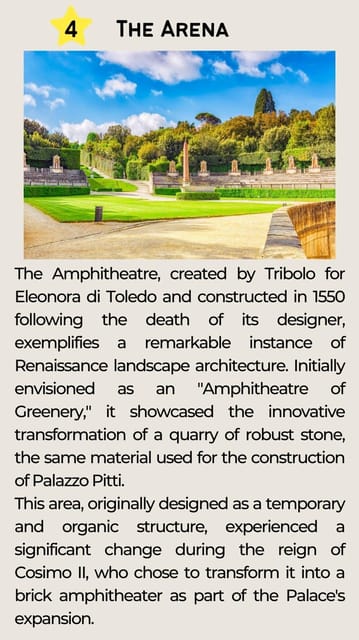
Pitti Palace, Boboli Garden, Palatine Gallery Tour
Read our review →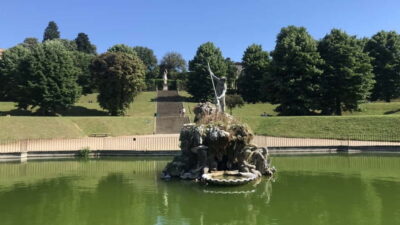
Uffizi, Pitti, Boboli and 7 Attractions 5-Day Pass
Read our review →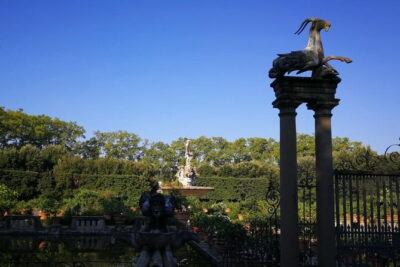
Pitti Palace, Boboli Garden & Palatina Gallery Guided Tour
Read our review →
Pitti Palace and Palatina Gallery Ticket and Tour
Read our review →
Pitti Palace, Palatina Gallery and the Medici: Arts and Power in Florence.
Read our review →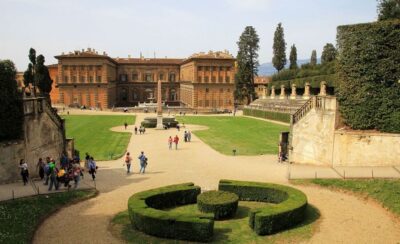
Browse the lists this tour appears in