Reviewed · PRIVATE
Architectural Florence: Private Tour with a Local Expert
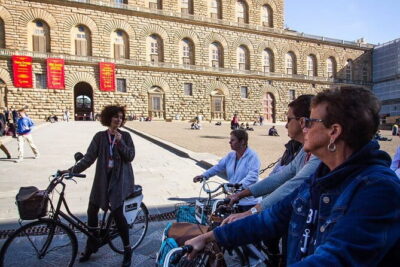
Florence packs an astonishing amount of art and architecture into a compact center. This private walk links Renaissance churches, Gothic monuments, Medici palaces, and the Ponte Vecchio in about two hours, giving you a useful first look without the drag of a large group. I like the one-to-one format, and I like that the independent local guide can adjust the route to your interests and walking pace.
The main trade-off is time. Ten major sights in two hours means this is chiefly an architectural walk, not a series of long interior visits. Museum and monument admission is not included, and the cost is $786.04 for up to two people, so you are paying for privacy and expert attention rather than a low-cost sightseeing stroll.
Key points to know before booking
- Private for up to two people: You get an exclusive guide rather than a mixed group.
- A strong architecture route: The walk connects Santo Spirito, Santa Maria Novella, the Duomo, Uffizi, Ponte Vecchio, Pitti Palace, and more.
- Two hours, with a flexible pace: The guide can adapt the route to your interests, but the schedule favors exterior viewing and explanation.
- Tickets are extra: Transportation, museums, and monument entry are not included in the price.
- Starts in Santo Spirito and ends near Costa San Giorgio: The route crosses central Florence and finishes on the Oltrarno side.
- Best for architecture fans: A local expert can help you understand how Florence’s Gothic and Renaissance buildings fit together.
Why this private Florence walk works
I like this experience because it treats Florence as a connected city rather than a checklist of isolated sights. You begin at Basilica di Santo Spirito, continue through the central monuments, cross the Arno, and finish near Costa San Giorgio. That basic movement gives you a sense of how the city’s religious, civic, artistic, and Medici buildings relate to one another.
The private format matters here. You can ask why Brunelleschi’s dome changed architecture, how the Uffizi fits into Florence’s civic story, or why the Ponte Vecchio carries shops across the river. In a large group, those questions can get lost. With only your party and the guide, you have room to focus on what interests you most.
The guide is described as a local expert, and the strongest praise given to the experience focuses on detailed architectural knowledge. That is exactly what you want from this kind of walk. Florence rewards context: a façade may look pretty at first glance, but the guide can point out its Gothic lines, Renaissance balance, civic meaning, or connection to a powerful family.
At the same time, keep your expectations realistic. The tour lasts approximately two hours. You will not have time to properly tour every church, museum, palace, and garden on the route. Think of it as a guided orientation with selected architectural stops, followed by your own return visits to the interiors that interest you most.
More private tours in Florence:
- Cinque Terre and Pisa Tower Tour from Florence Semi Private
★ 5.0 · 1,406 reviews - From Florence: Private Chianti Hills Tour with Tasting
★ 4.3 · 809 reviews - Private Self-Guided E-Bike Ride in Tuscany with Vineyard Visit
★ 5.0 · 775 reviews
Santo Spirito begins the story
The meeting point is Basilica di Santo Spirito at Piazza Santo Spirito, 30. This is a useful starting place because the church offers a clear example of Renaissance design by Filippo Brunelleschi.
Santo Spirito is known for elegant simplicity and artistic interiors. Its restrained character helps you see what Renaissance architects were trying to achieve: order, proportion, and a calm sense of space rather than the heavier decorative effect often associated with later styles.
I would use this first stop to tell the guide what you want from the walk. If you care most about Brunelleschi, ask for more architectural detail. If you prefer Florence’s political story, ask how the churches and palaces reflect civic power. The itinerary is designed to adapt, so your interests can shape the emphasis.
Because entry is not included, confirm with the guide how much time will be spent inside any religious building. The published details support an architecture-focused visit, but they do not promise admission to every stop.
Santa Maria Novella and the shift from Gothic to Renaissance
Basilica di Santa Maria Novella brings a different architectural mood. Located in Piazza di Santa Maria Novella, it combines Gothic and Renaissance elements and is known for a striking façade and important works of art.
This is an especially useful contrast with Santo Spirito. At Santa Maria Novella, you can look for the meeting of medieval structure and Renaissance design. The building also shows how a church could serve as both a place of worship and a major artistic statement.
The square itself gives the stop a broad urban setting. You are not simply looking at a façade through a museum doorway. You are seeing how the church addresses public space, an important part of understanding Florence’s architecture.
Again, the short duration matters. The guide can explain the building and point out its notable features, but you should not count on a full art visit. If Santa Maria Novella is high on your Florence list, plan separate time for it.
The Duomo and Giotto’s Campanile
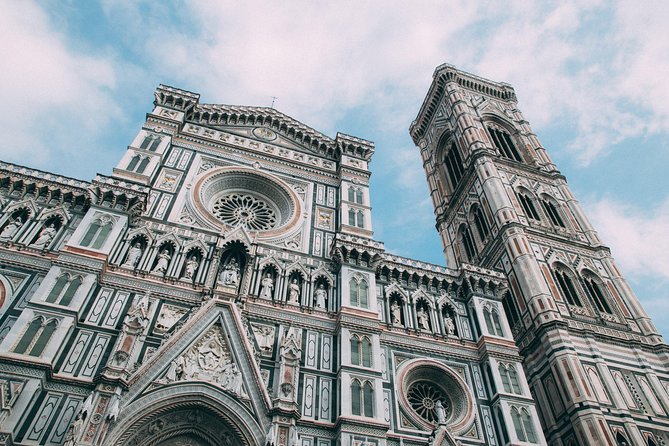
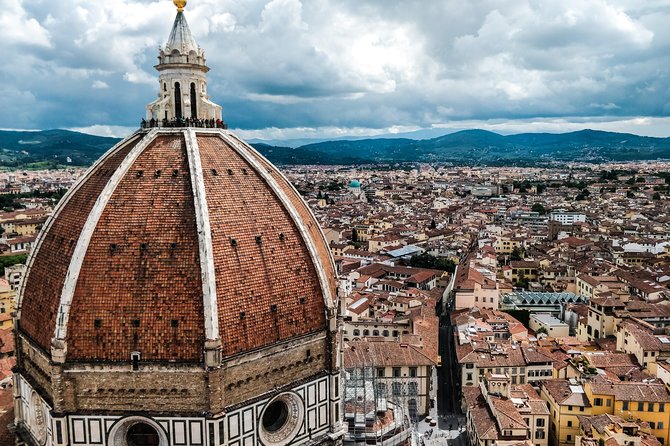
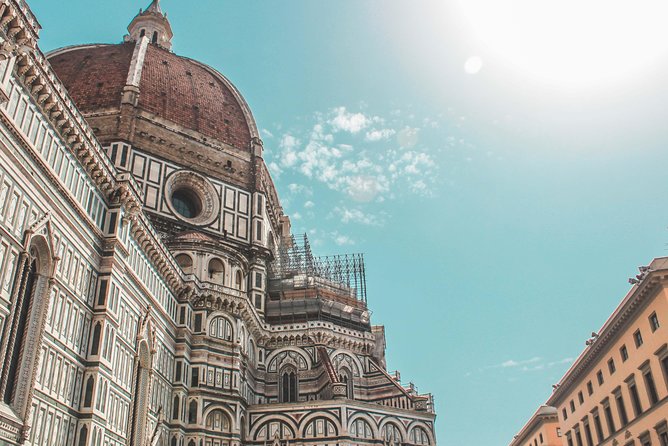
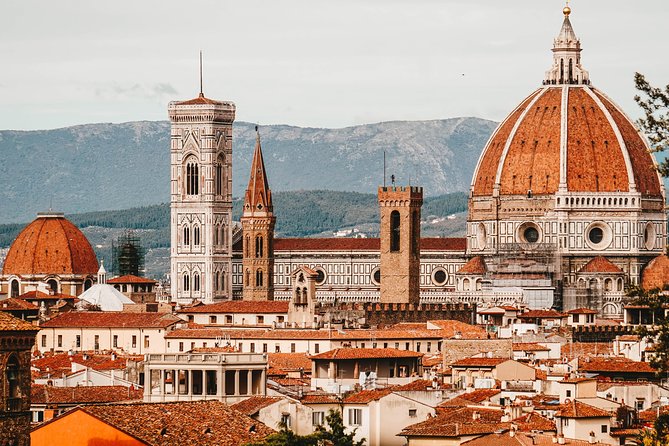
The Cathedral of Santa Maria del Fiore dominates Florence’s center and skyline. Its famous dome, designed by Brunelleschi, is one of the clearest symbols of the city’s artistic ambition.
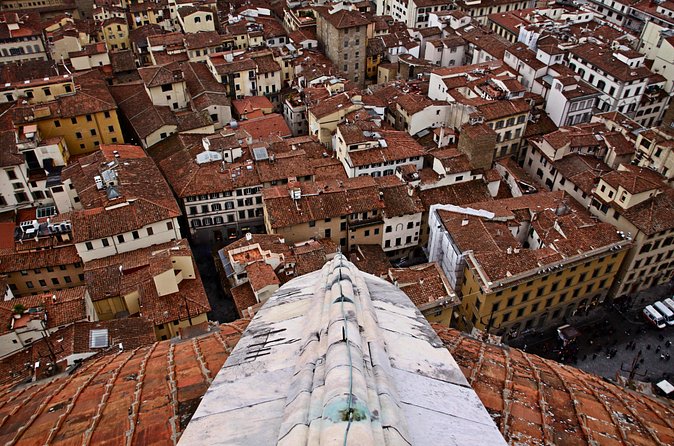
For many people, this is the central moment of the walk. You can study the cathedral’s scale, its colorful exterior treatment, and the way the dome rises above the surrounding buildings. The guide’s architectural explanation is valuable here because the Duomo is easy to admire but harder to understand at a glance.
The nearby bell tower, Giotto’s Campanile, adds a second example of Florentine Gothic architecture. Its detailed vertical design contrasts with the dome’s broad Renaissance form. The tower is also associated with panoramic views of Florence, though this experience does not include a stated climb or entry ticket.
You should treat the Cathedral Square stop as an exterior introduction unless the guide confirms otherwise. Tickets for monuments are excluded, and the tour is too short to include extended visits at every major site. If you want to climb the dome or bell tower, arrange that separately and allow much more time.
A completely different way to spend an afternoon in Florence:
- Florence: Skip-The-Line Uffizi Gallery Timed Entry Ticket
★ 4.5 · 27,832 reviews - Tuscany Day Trip from Florence: Siena, San Gimignano, Pisa and Lunch at a Winery
★ 5.0 · 21,634 reviews - Florence: Timed Entrance Ticket to Michelangelo’s David
★ 4.6 · 16,983 reviews - Florence: Michelangelo’s David Skip-the-Line Entry Ticket
★ 4.5 · 12,764 reviews
Piazza della Signoria and civic Florence
The route continues to Palazzo Vecchio, the medieval palace overlooking Piazza della Signoria. Its crenellated tower gives it a fortress-like appearance, a sharp contrast to the balanced lines of Renaissance churches.
Palazzo Vecchio represents Florence’s civic power. The building housed important government functions and remains one of the city’s most recognizable symbols. The surrounding square adds sculpture and public drama, making this one of the best places to connect architecture with politics.
I like this stop for a practical reason: it helps you read the city beyond churches and museums. Florence was not shaped only by artists and religious institutions. Its public buildings also expressed authority, independence, and competition among powerful families.
The palace houses historic chambers and artworks, but admission is not included. In a two-hour route, you are most likely to receive an exterior explanation unless you use your own ticket and the timing allows entry. Ask about this before booking if an interior visit is essential to you.
Santa Croce and the city’s great names
Basilica di Santa Croce, in Piazza di Santa Croce, is Florence’s principal Franciscan church. It combines Gothic and Renaissance elements and is known for art treasures and the tombs of notable Italians.
This stop adds a human side to the architecture. Santa Croce is not only a large church with an impressive façade. Its interior and tombs connect the building with the figures who helped shape Italian art, science, literature, and public life.
The church also gives you another chance to compare styles. After the cathedral, Palazzo Vecchio, and the earlier basilicas, you begin to see that Florence is not one uniform architectural city. Different periods and patrons left their mark close together.
As with the other major monuments, entry is not part of the stated price. If Santa Croce is a priority, use the walk to get your bearings and return for a dedicated visit later.
The Uffizi, where architecture frames art
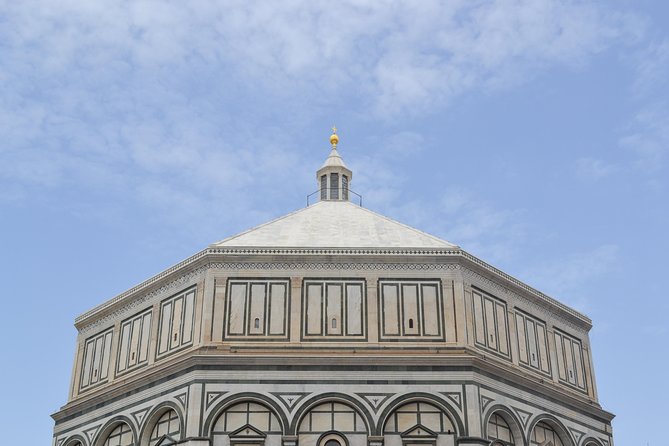
The Uffizi Gallery is one of the world’s best-known art museums, housed in a historic building near Piazza degli Uffizi. Its design is closely tied to Florence’s civic and Medici story, so it belongs on an architecture route even if you do not enter.
The Uffizi is often treated only as a container for Renaissance paintings. I think it is worth looking at the building itself: its long, ordered design shapes the space around it and leads your eye toward the river.
The description highlights exploring the Uffizi with ease, but museum entry is specifically excluded. That distinction is important. You should expect the guide to help you understand the building and its place in Florence, not to provide an included museum tour.
If you want to see the collection, plan a separate reservation and several hours. This private walk can help you decide how the Uffizi fits into the rest of your visit, but it cannot replace time inside the gallery.
Crossing the Arno on Ponte Vecchio
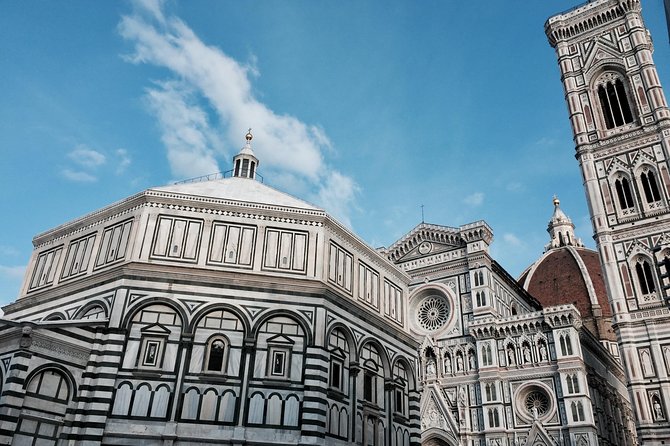
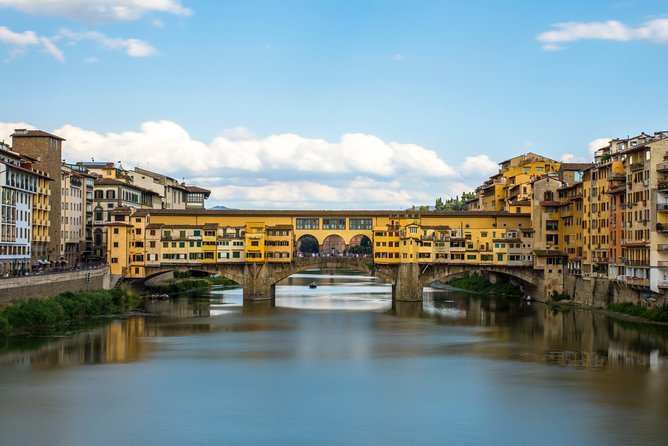
The Ponte Vecchio is the route’s most theatrical outdoor stop. This medieval stone bridge crosses the Arno and is famous for its shops built along the span.
You will notice how different it feels from the formal squares and grand church façades. The bridge is narrow, layered, and commercial. Its shops give it a distinctive look, while its position over the river provides one of Florence’s most memorable city views.
Ponte Vecchio also links the central part of Florence with the Oltrarno. That makes it a natural midpoint between the Uffizi and the Pitti side of the route. The guide can help you understand the bridge as both an architectural structure and a working part of the city.
The bridge can be busy, and the route does not promise a quiet photo stop. Still, this is one place where simply walking through gives you a strong sense of Florence.
Pitti Palace and Medici ambition
On the other side of the river, the route reaches Pitti Palace in Piazza de’ Pitti. This Renaissance palace houses several museums and reflects the grandeur of the Medici family and Florence’s artistic culture.
Pitti Palace is an important counterpoint to the civic buildings on the north side of the Arno. Its scale and setting convey wealth and status. The open piazza also lets you appreciate the palace as a grand residence rather than just another museum entrance.
The palace museums require separate admission. The experience does not include transportation, museum, or monument tickets, so budget for those costs if you intend to go inside.
For me, the value of seeing Pitti Palace with a local guide is the connection between architecture and power. You can look at the building and ask who commissioned it, how it functioned, and why this side of the river became so important to Florence’s ruling family.
The final view from villa and gardens
The final stop is a villa with beautiful gardens and views over Florence. The supplied details do not name the villa, but they describe it as a place that reflects Renaissance culture and the connection between art, architecture, and nature.
This ending gives the walk a change of pace. After dense streets, churches, squares, and palace façades, a garden setting lets you look back across the city. The view can help you understand Florence as a whole, with the dome, towers, river, and surrounding hills forming one visual arrangement.
The tour ends at Costa San Giorgio, 2, in Florence. Since the final stop and ending point are listed separately from the named museums and monuments, confirm with the guide exactly how the villa and garden visit will work on your date. Stops may change with weather, and admission is not included.
Price, timing, and walking demands
The price is $786.04 per group of up to two people. That works out to $393.02 per person if two people share the booking. It is expensive compared with a standard group walk, but the comparison is not quite like for like.
You are paying for a private guide, an exclusive itinerary, and the ability to adjust the route to your interests and walking speed. That can be worthwhile if you have limited time, care deeply about architecture, or want to ask detailed questions without competing with a group.
It is harder to justify the price if you mainly want a quick introduction or plan to visit only one or two monuments. In that case, a less expensive group tour may give you enough basic orientation.
The walk is approximately two hours and uses city streets, squares, and bridges. The information says it is not recommended for people with impaired mobility. Most people can participate, and service animals are allowed, but you should be comfortable walking between multiple stops.
Transportation tickets are not included. The meeting point is at Santo Spirito, and the end is at Costa San Giorgio, so check your plans for getting to the starting point and continuing afterward.
Who should book this experience
I would choose this tour if you want a focused architectural introduction to Florence and prefer private attention. It suits couples, friends, or a pair of family members who want to shape the conversation around their own interests.
It is also a good fit for a first day in Florence. The route gives you a broad sense of the city and helps you decide which churches, museums, and palaces deserve a longer visit later.
I would not choose it as your only museum experience. The Uffizi, Santa Croce, Santa Maria Novella, Pitti Palace, and Palazzo Vecchio all deserve more time than this route can provide. Use the walk to understand the city, then return to your priorities with admission arranged.
FAQ
How long does the Architectural Florence tour last?
The tour lasts approximately two hours.
Is the tour private?
Yes. It is an exclusive private activity for your group only, with a local expert guide.
How many people can join?
The listed price covers a group of up to two people.
What is included in the price?
The price includes a local expert guide, an exclusive private tour, and a tailored itinerary.
Are museum and monument tickets included?
No. Transportation, museum, and monument entry tickets are not included. Personal expenses are also excluded.
Where does the tour start and end?
The tour starts at Basilica di Santo Spirito, Piazza Santo Spirito, 30, Florence. It ends at Costa San Giorgio, 2, Florence.
Can the itinerary change?
Yes. The itinerary adapts to your interests and walking pace, and stops may vary depending on weather conditions.
Should you book this Florence architecture tour?
Book it if you value privacy, want detailed architectural context, and can accept that two hours will provide an overview rather than full museum visits. The most praised part of the experience is the guide’s detailed understanding of Florence and its architecture, and that is the reason to choose it.
Skip it if your main goal is to enter the Uffizi, climb the Duomo, or tour several churches in depth. Those activities need separate tickets and more time. For a pair willing to pay for a tailored introduction, this is a concentrated way to connect Florence’s churches, palaces, bridge, river, and gardens before exploring the city on your own.
Recently added around Florence
- Accademia and Uffizi Small-group Guided Tour★ 4.5 · 8 reviews
- The David from Michelangelo.★ 5.0 · 3 reviews
- Combo: Accademia + walking + Uffizi Galleries Guided Tour★ 3.5 · 6 reviews
- The Complete Wine Tour Brunello, Nobile, Chianti wine experience★ 4.0 · 7 reviews
- The Best of Tuscany in 3 Days★ 4.5 · 13 reviews
- The Cooking Lab – Authentic Food Experience★ 5.0 · 113 reviews
- Florence Central Market Food Tour – Private Tour★ 4.0 · 7 reviews
- Family Friendly Florence Private City Tour★ 5.0 · 47 reviews
Private, compared.
Cinque Terre and Pisa Tower Tour from Florence Semi Private
Read our review →
Private Self-Guided E-Bike Ride in Tuscany with Vineyard Visit
Read our review →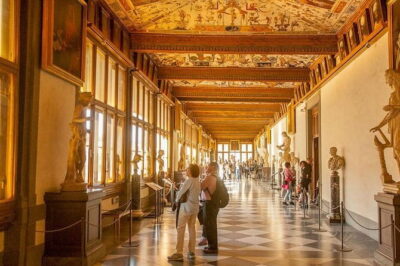
Private Uffizi Gallery Discovery Tour with Ticket
Read our review →
Florence Exclusive PRIVATE Food Tour with 6 or 10 Tastings
Read our review →
Uffizi Highlights, In-Depth Masterclass or Private Tour
Read our review →